Common around oceanic islands and coral atolls in tropical seas globally. Bold and inquisitive around divers; considered potentially dangerous when food is present.
Habitat
Found inshore and offshore (but not pelagic) near or on continental and insular shelves from the surface to at least 590 ft [180 m].
Distribution
Tropical & subtropical seas worldwide
Circumtropical.
Behavior
The Galapagos shark is aggressive, but it will give way to a Silvertip shark - Carcharhinus albimarginatus. This species is dominant over the Blacktip shark - Carcharhinus limbatus. Like the Grey reef shark - Carcharhinus amblyrhynchos, the Galapagos shark may make a threat display (arched back, raised head, lowered pectoral and caudal fins while swimming in a twisting rolling motion). An attack may follow the threat display.
Human Safety
Danger to humans – this species was reported to have been involved in a few non-fatal incidents. Divers report that the shark is very inquisitive and attempts to sample divers’ swim fins and hands. Aggressive actions taken by divers may startle the shark but it often circles back, bringing more sharks in its wake.
Biology
Diet
The shark feeds primarily on bottom fishes such as sea bass, flatfish, triggerfish and eels, but it will also feed on flyingfish, octopus, squid, and sometimes consumes garbage.
Reproduction
Viviparous, with a yolk-sac placenta
Birth Size
80cm
Male Maturity
2.36m
Appearance
Dorsal
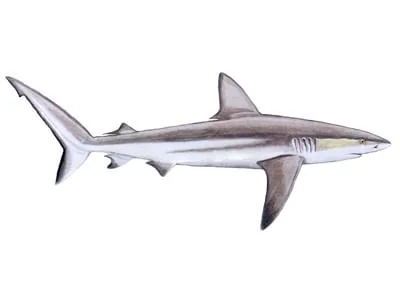
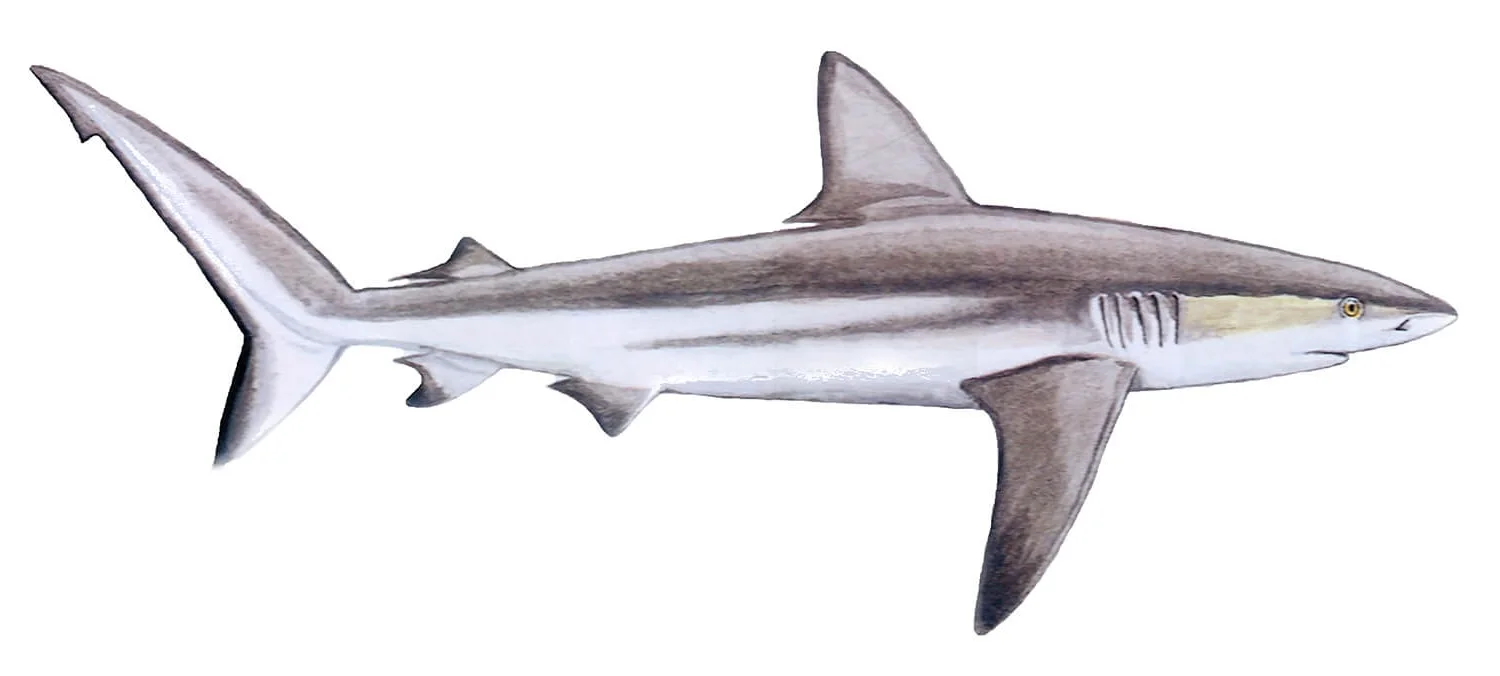
Brown gray above, white below. Most fins have dusky tips and the shark has a faint white band on its flank.
Dentition
Upper jaw
Triangular serrated slightly oblique teeth in upper jaw, and narrow erect teeth in
Counts are based on the species field of the Global Shark Attack File. Identifications by witnesses are often uncertain; treat figures as recorded incidents, not authoritative totals.
Frequently Asked Questions
How many shark attacks have been recorded involving the galapagos shark?▾
9 incidents in the Global Shark Attack File mention the galapagos shark, of which 1 were fatal (11.1%). Note that witness species identifications are often uncertain, so this is the count of recorded incidents.
Where do most galapagos shark incidents occur?▾
The countries with the most recorded galapagos shark incidents are United States, Ecuador.
Is the galapagos shark dangerous to humans?▾
The galapagos shark is considered relevant to human-shark incidents and has been recorded in the Global Shark Attack File. As with any large shark, encounters in the wild should be avoided.
Where does this species data come from?▾
Species profiles are compiled from peer-reviewed taxonomy and published references. Incident data is sourced from the Global Shark Attack File and joined to species records by name match.

 Shark Data Lab