Shark Data Lab logoShark Data Lab
Dusky Shark
CarcharhiniformesAttack Relevant

Dusky Shark

Carcharhinus obscurus

Back to species

Max Length

4.2m

Litter Size

3 to 4 pups

Overview

A large, wide-ranging coastal-oceanic species. One of the slowest-growing and latest-maturing sharks, taking 20+ years to reach sexual maturity, making it extremely vulnerable to overfishing.

Habitat

The shark is found on continental and insular shelves and oceanic water adjacent to them. It ranges from the surf zone to far out to sea, and from the surface down to 1312 ft [400 m].

Distribution

Tropical & subtropical seas worldwide

Cosmopolitan in warm temperate and tropical seas.

Behavior

The shark is migratory in temperate and subtropical areas of the northern Pacific and western north Atlantic, moving south in winter and north in summer. Young sharks form feeding aggregations.

Human Safety

Danger to humans – because of its size and dentition the shark is considered potentially dangerous, and it has been implicated in a number of GSAF cases. In Australia, both the dusky shark and the copper shark are referred to as bronze whalers.

Biology

Diet
Small sharks feed on bottom dwelling animals. Large specimens feed on a variety of reef and pelagic fish including sardines, tunas, eels, lizardfishes and flatfishes, smaller sharks, rays, skates, squid, octopus, cuttlefish, crabs, lobsters, starfish, barnacles, bryzoans and even whale meat and garbage.
Reproduction
Viviparous, with a yolk-sac placenta
Birth Size
100cm
Male Maturity
2.8m

Appearance

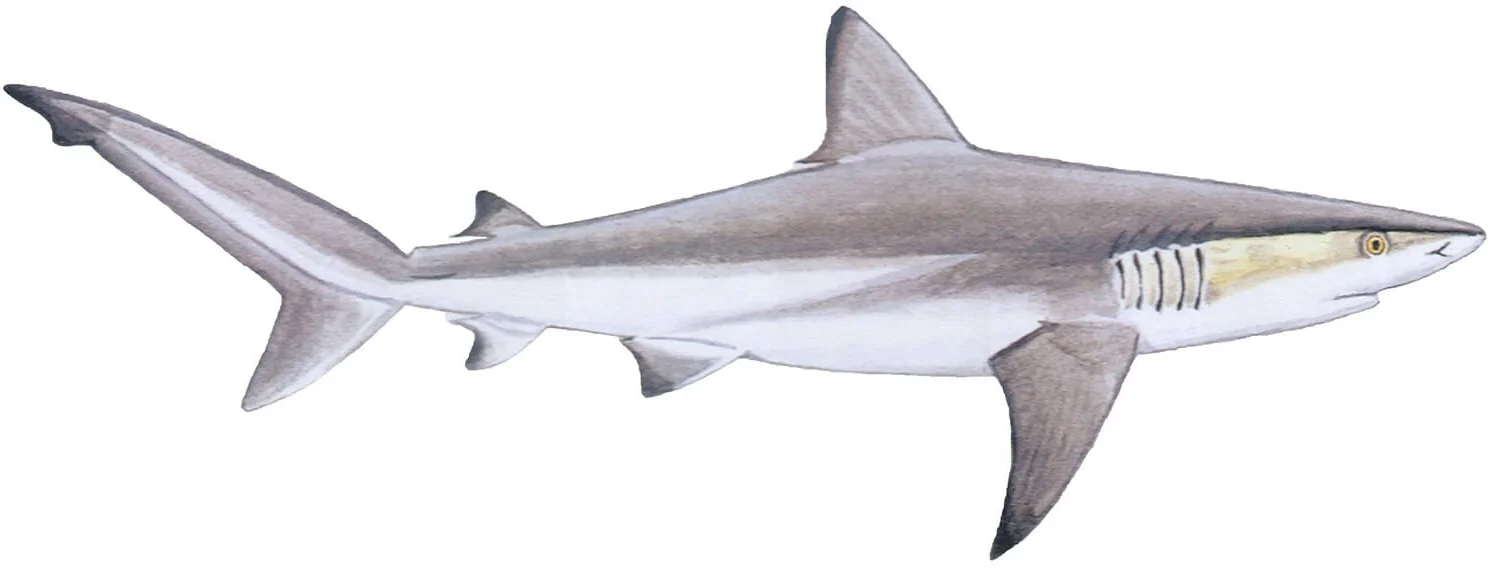
Dusky Shark illustration
Dorsal
Gray to bluish gray above, white below

Dentition

Upper jaw
Broad serrated teeth in upper jaw, narrow serrated teeth in
Lower jaw
jaw.
Sources:sharksorg

Recorded incidents involving the dusky shark

Recorded

15

Fatal

1

Fatality rate

6.7%

Years

1923–2025

Years with most incidents

Counts are based on the species field of the Global Shark Attack File. Identifications by witnesses are often uncertain; treat figures as recorded incidents, not authoritative totals.

Frequently Asked Questions

How many shark attacks have been recorded involving the dusky shark?
15 incidents in the Global Shark Attack File mention the dusky shark, of which 1 were fatal (6.7%). Note that witness species identifications are often uncertain, so this is the count of recorded incidents.
Where do most dusky shark incidents occur?
The countries with the most recorded dusky shark incidents are South Africa, United States, Bermuda.
Is the dusky shark dangerous to humans?
The dusky shark is considered relevant to human-shark incidents and has been recorded in the Global Shark Attack File. As with any large shark, encounters in the wild should be avoided.
Where does this species data come from?
Species profiles are compiled from peer-reviewed taxonomy and published references. Incident data is sourced from the Global Shark Attack File and joined to species records by name match.