
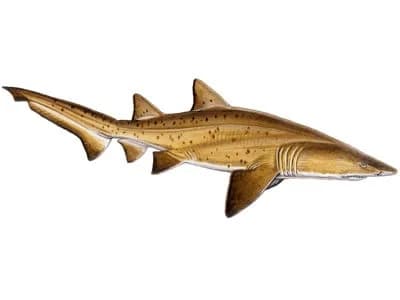
Carcharias taurus
Max Length
3.2m
Overview
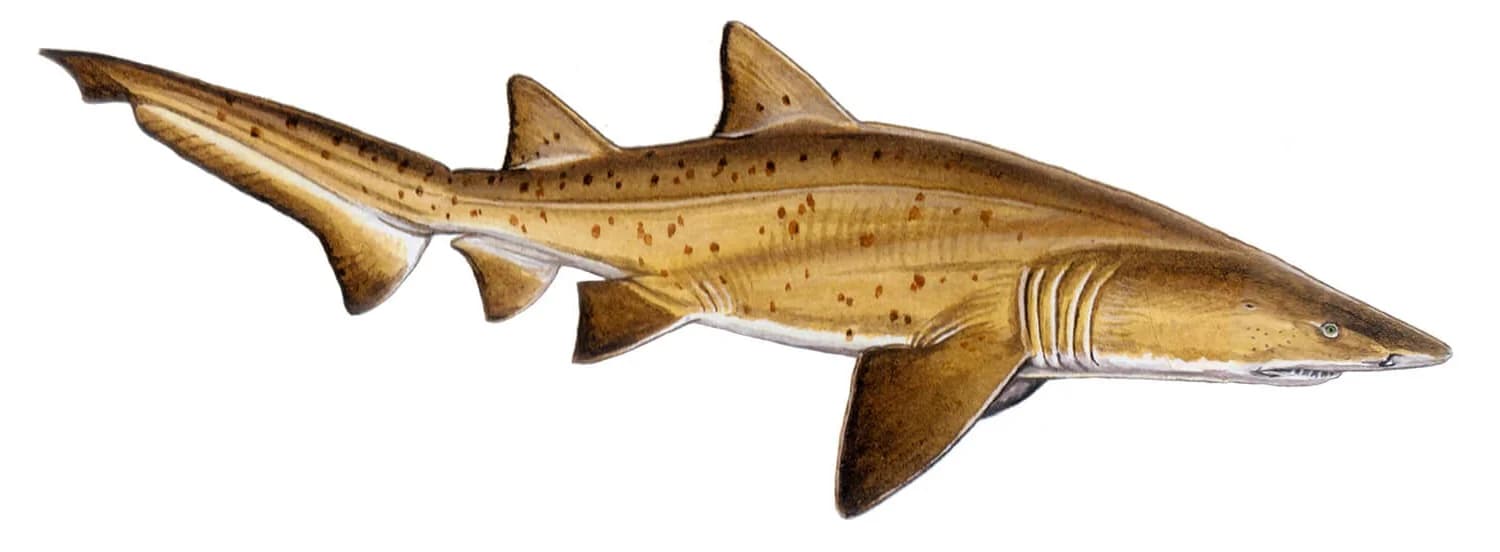
Known as grey nurse shark in Australia. Despite its fearsome appearance — it constantly displays its teeth — it is one of the least aggressive large sharks. The only shark known to gulp air at the surface to achieve neutral buoyancy.
Habitat
Inshore from surf zone, shallow bays, rock and coral reefs, to at least 630 ft [190 m].
Distribution
Warm and temperate waters throughout the world.
Behavior
The shark often swims with its mouth ajar and its teeth visible. Divers usually see the shark close to the bottom, cruising 4 to 6 ft [1.2 to 1.8 m] above the sea floor, or hovering almost motionless in cuts in the reef or out on the sand where the current is strongest. Sexual segregation occurs with this species. The shark comes into the shallows at night to feed. This species is migratory, moving to deeper water in winter.
Human Safety
The shark is generally placid, despite its ferocious appearance. If approached too closely by a diver the shark will thump its tail with force, creating a loud booming sound that will make the diver’s ears ring.
Biology
Appearance
Dentition
 Shark Data Lab