
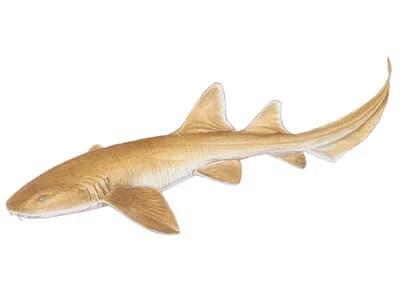
Ginglymostoma cirratum
Max Length
3.0m
Overview
A bottom-dwelling Atlantic buccal pumper. Slow-moving and generally non-aggressive, but capable of powerful bites if provoked or harassed. Often rests in piles with other nurse sharks. Frequently seen by divers.
Habitat
Inshore from intertidal to depths of 165 ft [ 50 m] on rock and coral reefs, in channels in mangrove keys and reef flats.
Distribution
Western Atlantic from southern Brazil to Cape Hatteras with strays to Rhode Island, including Gulf of Mexico and the Caribbean Sea. Eastern Atlantic in Cape Verde Islands and along the coast of west Africa. Eastern Pacific from southern Baja to Peru.
Behavior
The shark is nocturnal; it is an active strong swimmer at night, but is sluggish by day. The shark uses its muscular pectoral fins to clamber over the bottom, but divers usually see the shark lying motionless on the bottom, often with its head in a crevice. By day, Nurse sharks may rest in aggregates of 2 to more than 30 individuals, leaning against or atop one another. The shark has a well-defined fixed home range and it may return to the same daytime resting site for long periods of time.
Human Safety
Placid and usually indifferent to divers.
Biology
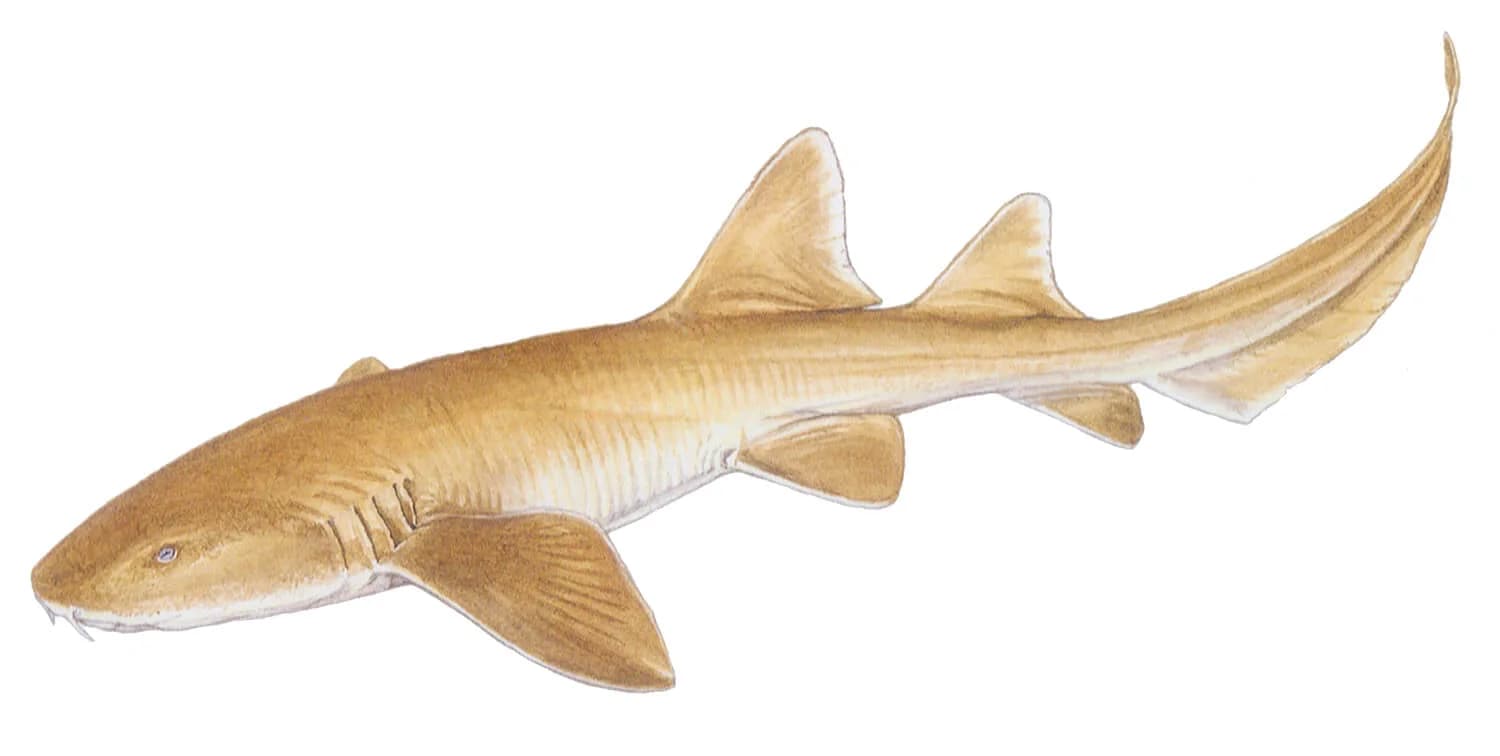
Appearance
Dentition
Recorded
110
Fatal
1
Fatality rate
0.9%
Years
1922–2025
Top countries
Counts are based on the species field of the Global Shark Attack File. Identifications by witnesses are often uncertain; treat figures as recorded incidents, not authoritative totals.
 Shark Data Lab