
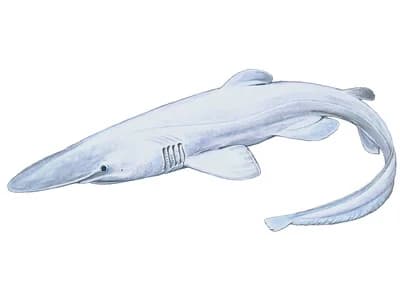
Mitsukurina owstoni
Max Length
3.8m
Overview
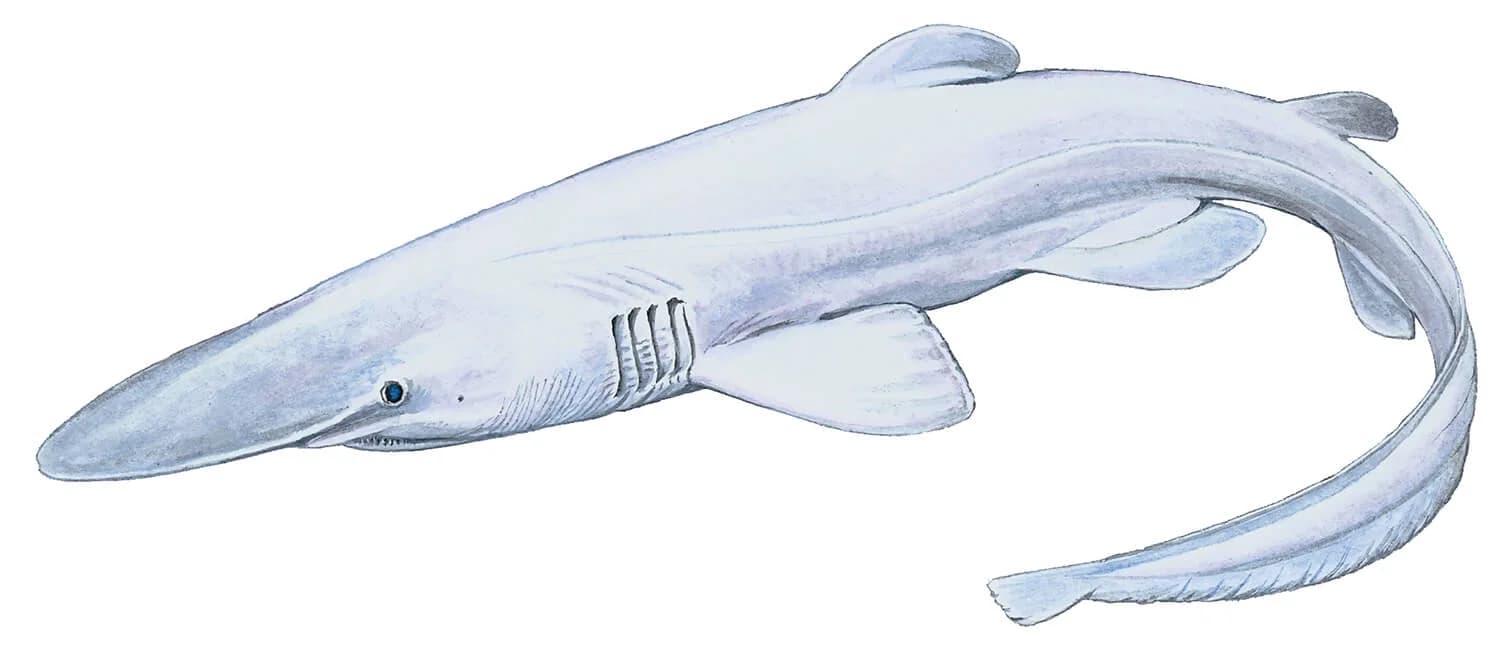
Deep-sea species characterized by a distinctive elongated rostrum and highly protrusible jaws that shoot forward to engulf prey. Bioluminescent and rarely observed alive. Represents the oldest living shark lineage.
Habitat
These sharks prefer deepwater, outer continental shelves, upper slopes and off seamounts. They very rarely surface, and usually remain at depths of 885.8 to 3149.6 ft [270 to 960 m], to at least 4265.1 ft [1300 m].
Distribution
Very patchy distribution in the Atlantic, western Indian and Pacific Oceans.
Behavior
This shark’s body form suggests that it is a poor swimmer. Its blade-like snout may be used to detect prey, and its highly specialized jaws can shoot forward rapidly to snap up prey. Its slender front teeth suggest a diet of small, soft-bodied fishes and squid, but its back teeth are modified to crush food.
Biology
Appearance
Dentition
Recorded
2
Fatal
0
Fatality rate
0.0%
Years
2008–2014
Counts are based on the species field of the Global Shark Attack File. Identifications by witnesses are often uncertain; treat figures as recorded incidents, not authoritative totals.
 Shark Data Lab