
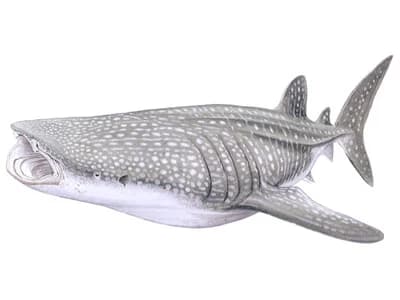
Rhincodon typus
Max Length
18m
Overview
The largest fish on Earth. A filter feeder that consumes plankton, small fish, and fish spawn by ram-filtering seawater through its gill rakers. Completely harmless to humans. Aggregates seasonally at Ningaloo Reef and the Yucatán.
Habitat
Pelagic, open ocean to close inshore off beaches, coral reefs and islands, and surface to more than 2500 ft [762 m]. SRI has deployed satellite tags on a number of whale sharks, and a number of the sharks whale dived to 2500 ft (the maximum depth the tag could record), sometimes several times a day.
Distribution
Circumglobal, all tropical and warm temperate seas except the Mediterranean.
Behavior
Whale sharks are known to divers as “gentle giants” due to their placid nature. SRI has placed visual and satellite tags on more than 800 whale sharks in an effort to discover their migratory routes. Long-distance, long-term migrations are undertaken; the longest so far recorded was 8077.8 miles [13,000 km] (in one direction only) over a 37 month timespan. Tagging and photo-identification of individuals indicate regular visits to favored feeding sites to feed at annual, seasonal, or lunar fish and invertebrate spawning events. The high density of plankton produced on these occasions is consumed by suction feeding and gulping, often while hanging vertically.
Biology
Appearance
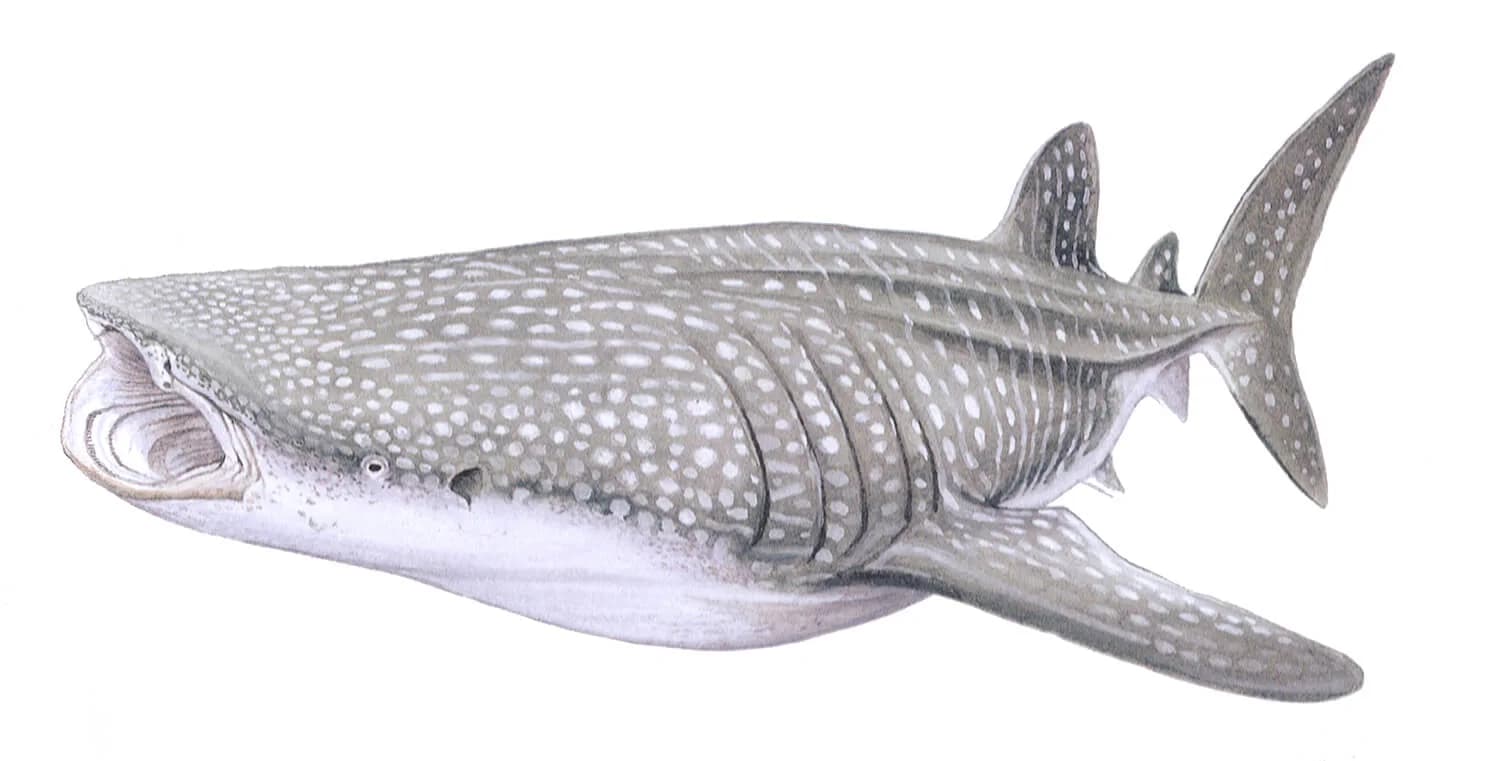
Recorded
3
Fatal
0
Fatality rate
0.0%
Years
1976–2009
Top countries
Counts are based on the species field of the Global Shark Attack File. Identifications by witnesses are often uncertain; treat figures as recorded incidents, not authoritative totals.
 Shark Data Lab