
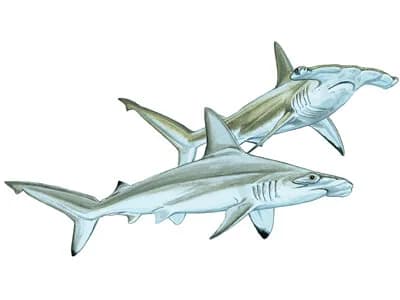
Sphyrna lewini
Max Length
4.3m
Litter Size
14 to 26 pups
Overview
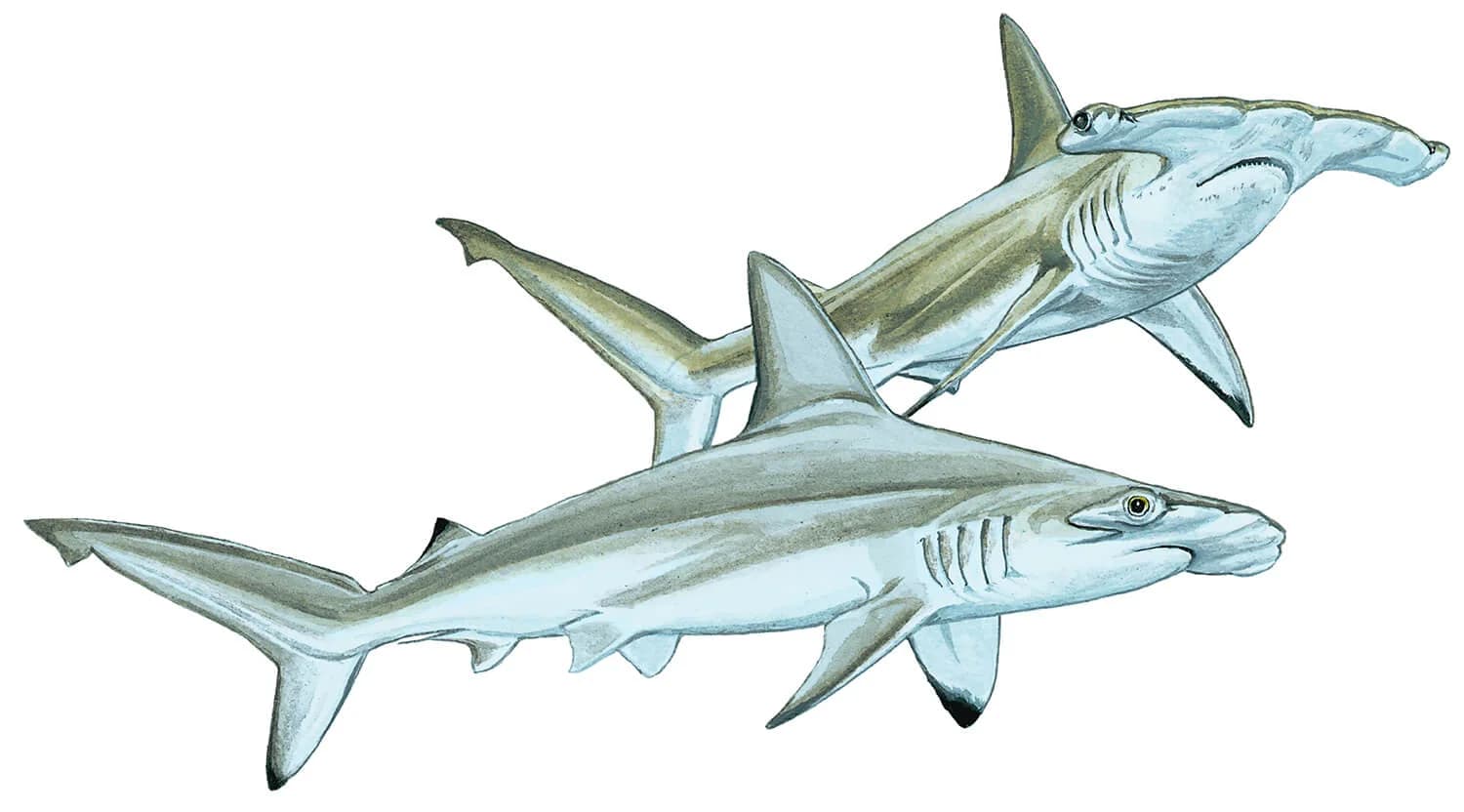
Recognizable by the scalloped front edge of its cephalofoil. Forms large daytime schools of hundreds of individuals — one of the few sharks to do so. Critically endangered due to the global fin trade and bycatch.
Habitat
These sharks prefer to be over continental and insular shelves, adjacent to deep water. They can range from the surface to more than 902.2 ft [275 m] deep, but are often close inshore and in enclosed bays and estuaries. Juveniles mainly stay inshore.
Distribution
Scalloped hammerhead sharks are found world-wide in warm temperate and tropical seas. They are a migratory, schooling, coastal-pelagic, semi-oceanic species that travel within the EEZ of many coastal nations. These sharks aggregate in huge numbers, making them extremely vulnerable to commercial and illegal fishing. Many scientists believe, like the passenger pigeons, scalloped hammerhead sharks may only breed when they form large aggregations.
Behavior
They are seasonally migratory, and also are schooling sharks. They are a coastal-pelagic and semi-oceanic shark as well.
Biology
Appearance
Recorded
1
Fatal
0
Fatality rate
0.0%
Years
1968–1968
Top countries
Years with most incidents
Counts are based on the species field of the Global Shark Attack File. Identifications by witnesses are often uncertain; treat figures as recorded incidents, not authoritative totals.
 Shark Data Lab