
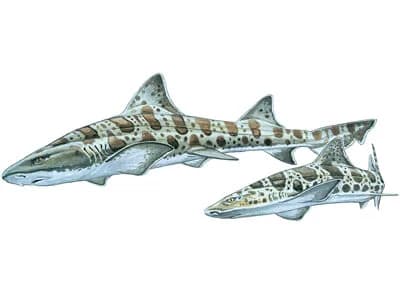
Triakis semifasciata
Max Length
1.8m
Litter Size
4-29 pups
Overview
A slender, harmless shark with striking dark saddle markings over a pale body. Common in kelp beds and sandy flats along the California coast. Often seen resting in aggregations on the seafloor.
Habitat
These sharks prefer cool to warm temperate inshore and offshore of the continental shelf. They are common on or near the bottom from intertidal to 13.1 ft [4 m]. They have also been recorded to 298.6 ft [91 m] deep. They prefer shallow, enclosed, muddy bays, flat and sandy areas, mud flats, and rock-strewn areas near rocky reefs and kelp beds.
Distribution
Northeast Pacific from Oregon to the Gulf of California, Mexico.
Behavior
These are active, strong-swimming sharks. They form large, nomadic schools (sometimes with Smoothhounds - Mustelus mustelus and Piked dogfish). Most have a small range, but some travel up to 93.2 miles [150 km]. Sometimes seen resting on the sand among rocks.
Human Safety
They are common to abundant where they occur. They have valuable flesh, so intensive commercial and spots fishing led to their population declines. However, the U.S. population is now well-managed. Their status in Mexico is unknown. They are very hardy and readily adapt to captivity when they are young, and some have been maintained in aquaria for more than 20 years.
Biology
Appearance
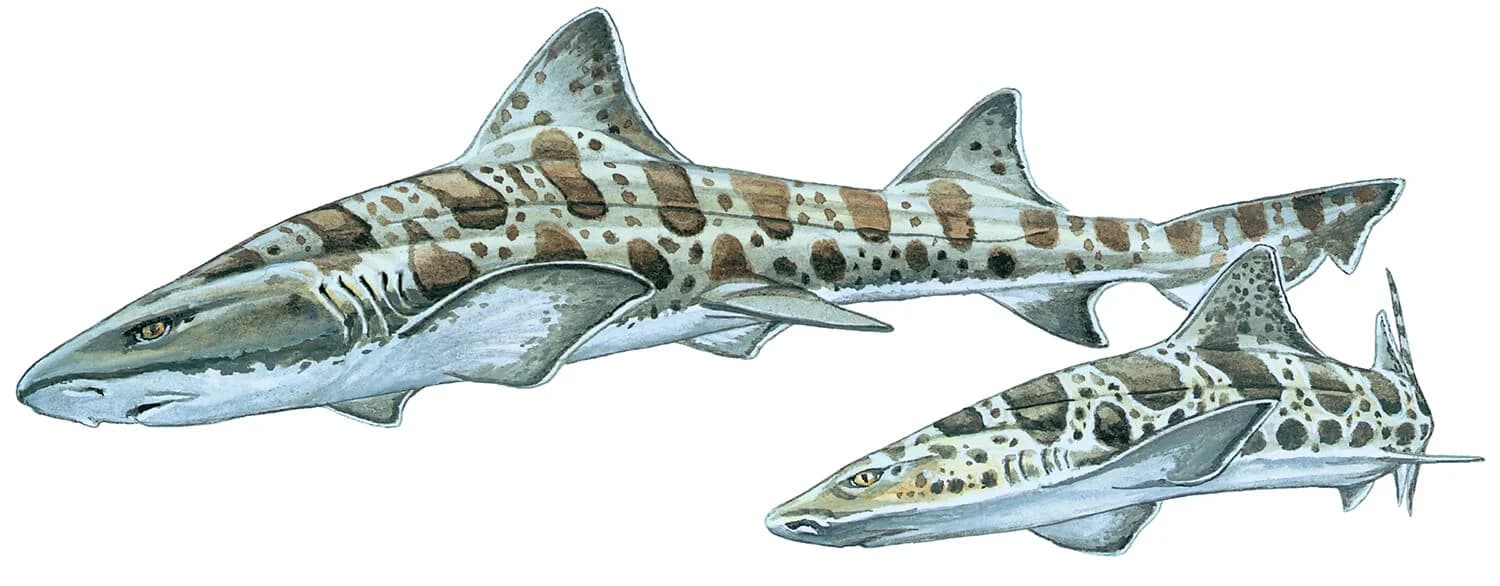
Recorded
2
Fatal
0
Fatality rate
0.0%
Years
1955–1995
Top countries
Counts are based on the species field of the Global Shark Attack File. Identifications by witnesses are often uncertain; treat figures as recorded incidents, not authoritative totals.
 Shark Data Lab