
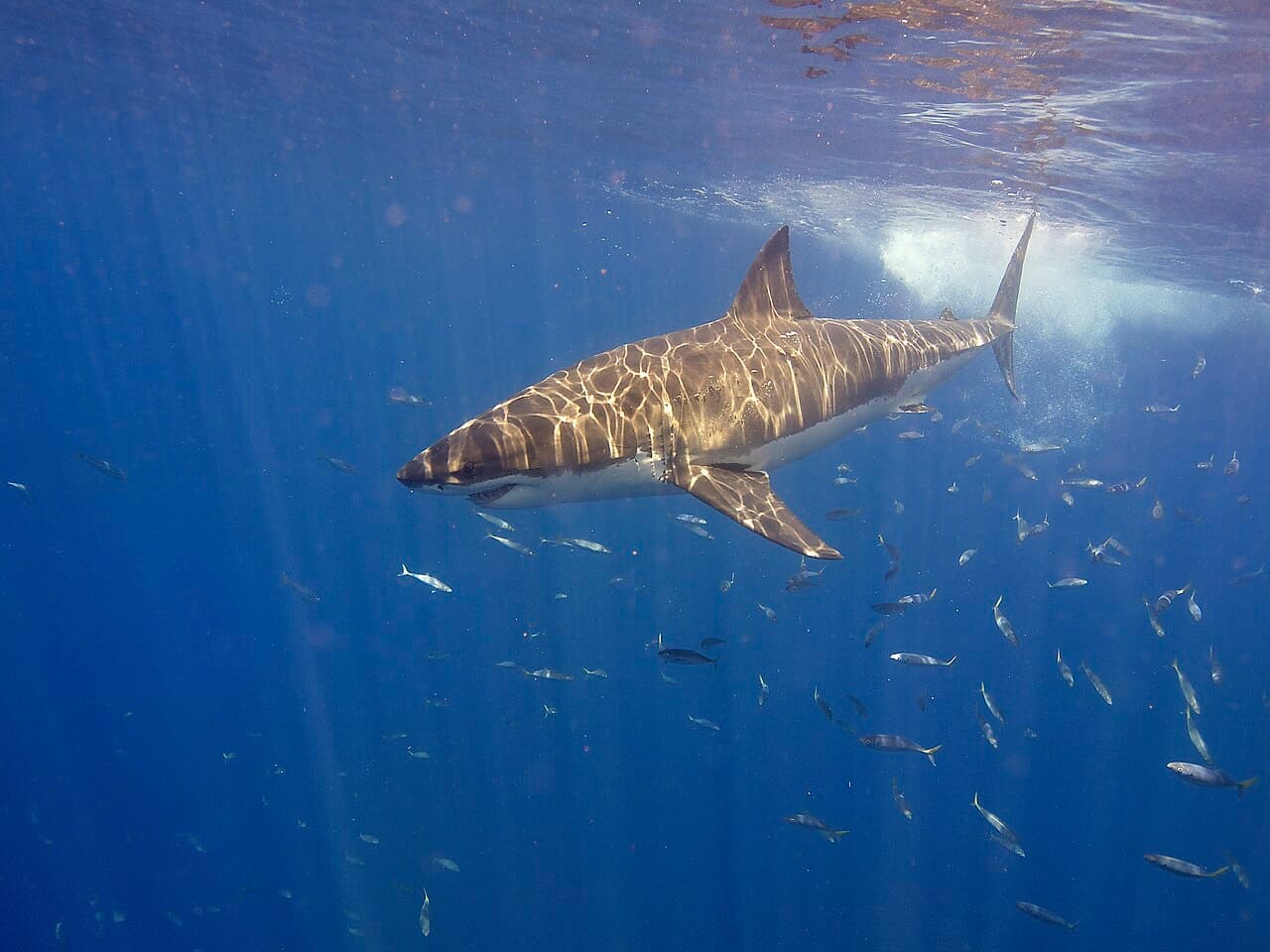
Using decades of incident data overlaid with satellite tagging studies, we explore how great white shark migration corridors correlate with seasonal attack peaks in California and South Africa.
Great white sharks (Carcharodon carcharias) are highly migratory animals. Satellite tagging programs — including Stanford's Tagging of Pacific Predators project and South Africa's Oceans Research programme — have mapped regular migration routes that span ocean basins. Understanding these routes helps explain why shark incidents follow predictable seasonal patterns.
Along the California coast, great white incidents concentrate between August and November. This aligns with the seasonal presence of juvenile great whites near pinniped haul-out sites, where they learn to hunt seals. The "Red Triangle" — a loosely defined zone between Bodega Bay, the Farallon Islands, and Año Nuevo — accounts for a disproportionate share of California incidents.
Satellite data shows individual great whites returning to the same areas year after year with striking consistency — within days of their prior arrival. One tagged individual, dubbed "Mary Lee," completed documented migrations along the US East Coast for nearly three years, demonstrating the precision of these routes.
At South Africa's False Bay, the famous aerial predation behavior — breaching — occurs most frequently from June through September. This corresponds with the winter months, when Cape fur seals are most concentrated on the rocky islands, and water visibility is lower.
Incidents at South Africa beaches follow a similar pattern, with a secondary peak in early summer (November–December) as water temperatures climb and recreational activity increases.
OCEARCH data from the US East Coast revealed that great whites follow a temperature corridor — staying within the 12–18°C band year-round. In summer they move north toward New England; in winter they converge off Florida and the Carolinas. Human beach activity and shark presence coincide most heavily at the mid-Atlantic states during autumn shoulder season.
Seasonality data is the most actionable output from migration research. Knowing when and where large predators concentrate allows beach managers to time closures, adjust lifeguard protocols, and issue science-based public communications rather than reactive responses.
 Shark Data Lab