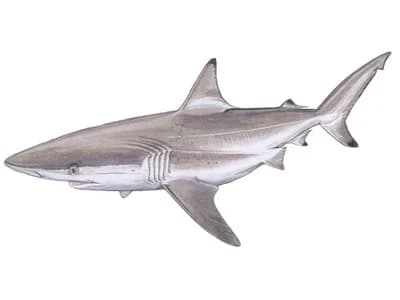
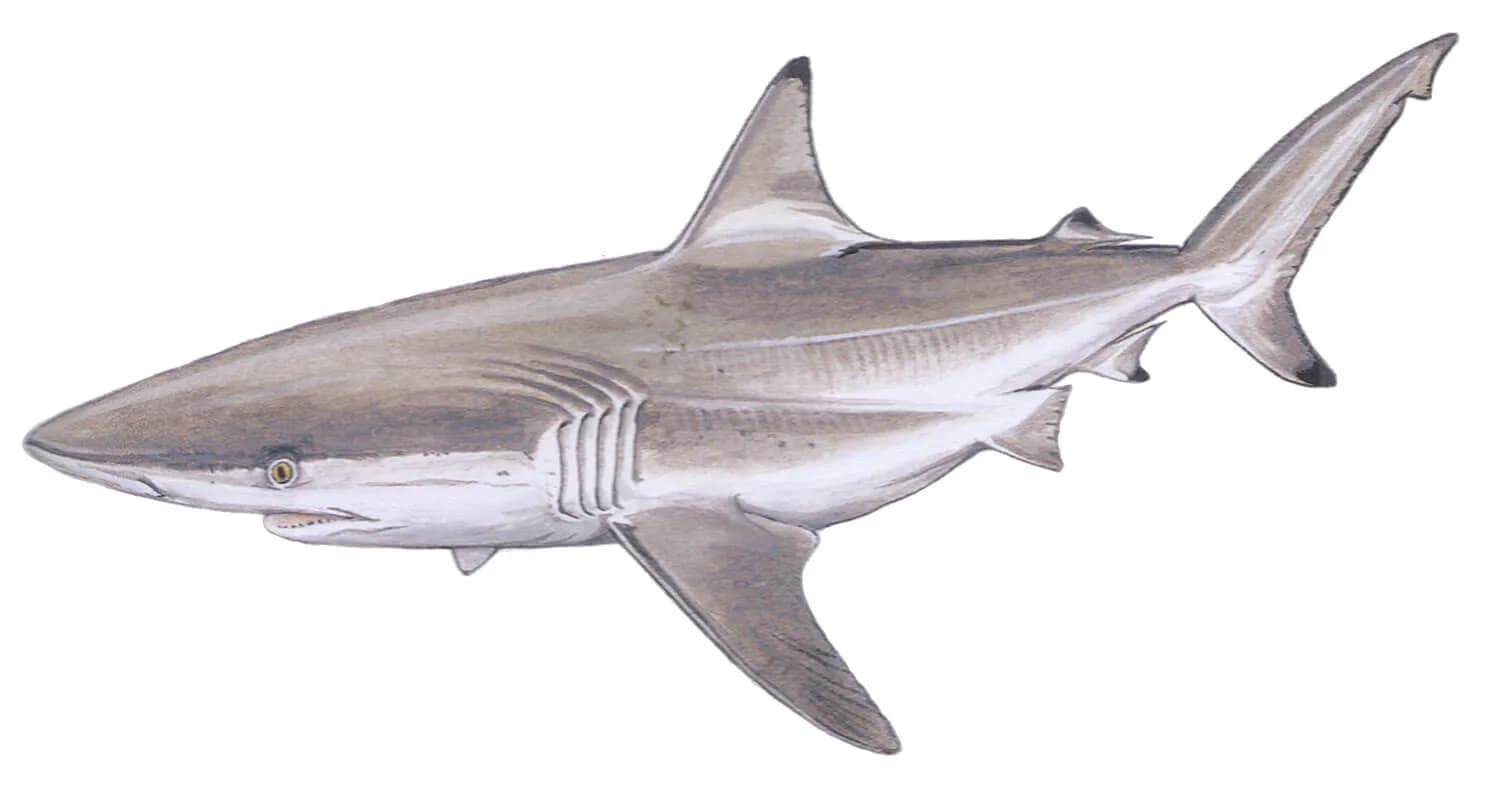
Similaire au requin à pointe noire mais plus élancé, avec un œil proportionnellement plus petit. Nommé pour son habitude de tournoyer hors de l'eau en spirales serrées lorsqu'il chasse des bancs d'appâts. Commun dans les eaux côtières chaudes.
Habitat
Côtier-pélagique sur les plateaux continentaux et insulaires, commun dans les eaux côtières peu profondes de la surface au fond.
Distribution
Tropical & subtropical seas worldwide
Atlantique tropical et tempéré chaud, Méditerranée et Indo-Pacifique.
Behavior
C'est un requin actif et grégaire. Il effectue souvent des attaques alimentaires à travers des bancs de poissons se terminant par un saut rotatif hors de l'eau.
Human Safety
Les requins-spinner sont parfois attirés par les plongeurs qui pratiquent la pêche à la lance. Bien qu'aucun requin-spinner n'ait jamais été impliqué dans une mort, l'espèce a mordu des humains.
Biology
Diet
Principalement des poissons, mais aussi des raies et des céphalopodes.
Reproduction
Vivipare (ovovivipare) avec des embryons nourris par un placenta vitellin
Birth Size
75cm
Male Maturity
2.03m
Appearance
Dorsal
Gray to bronze above, white underside, with a faint white bank on its flank. The second dorsal, anal, and pectoral fins as well as the lower lobe of the caudal fin have black or dark gray tips in large juveniles and adults. The pelvic, first dorsal, and dorsal caudal lobe may also have black tips, but not always. The fins of young sharks are unmarked.
Dentition
Upper jaw
This species has a narrow jaw and small narrow-cusped teeth of a fish-eating shark.
Counts are based on the species field of the Global Shark Attack File. Identifications by witnesses are often uncertain; treat figures as recorded incidents, not authoritative totals.
Frequently Asked Questions
How many shark attacks have been recorded involving the spinner shark?▾
50 incidents in the Global Shark Attack File mention the spinner shark, of which 0 were fatal (0.0%). Note that witness species identifications are often uncertain, so this is the count of recorded incidents.
Where do most spinner shark incidents occur?▾
The countries with the most recorded spinner shark incidents are United States, South Africa, Tunisia.
Is the spinner shark dangerous to humans?▾
The spinner shark is considered relevant to human-shark incidents and has been recorded in the Global Shark Attack File. As with any large shark, encounters in the wild should be avoided.
Where does this species data come from?▾
Species profiles are compiled from peer-reviewed taxonomy and published references. Incident data is sourced from the Global Shark Attack File and joined to species records by name match.

 Shark Data Lab