Shark Data Lab logoShark Data Lab
Megamouth Shark
Lamniformes

Megamouth Shark

Megachasma pelagios

Back to species

Max Length

5.5m

Overview

Un filtreur découvert seulement en 1976. Nage lentement avec une grande bouche béante pour engloutir le zooplancton et les méduses. Moins de 300 spécimens ont jamais été enregistrés. L'un des requins les plus rares de la Terre.

Habitat

Océanique, côtier et hauturier, 5 à 40 m [16,4 à 131,2 pi] sur le plateau continental, 8 à 166 m [26,2 à 544,6 pi] au large sur très grande profondeur.

Distribution

Tropical & subtropical seas worldwide

Probablement mondiale dans les tropiques (peu de données).

Behavior

Probablement migre verticalement avec le plancton, proche de la surface la nuit et plus profond le jour.

Biology

Diet
Se nourrit de plancton, particulièrement de crevettes, probablement par succion.
Reproduction
Inconnue, mais présumée vivipare avec oohagie

Appearance

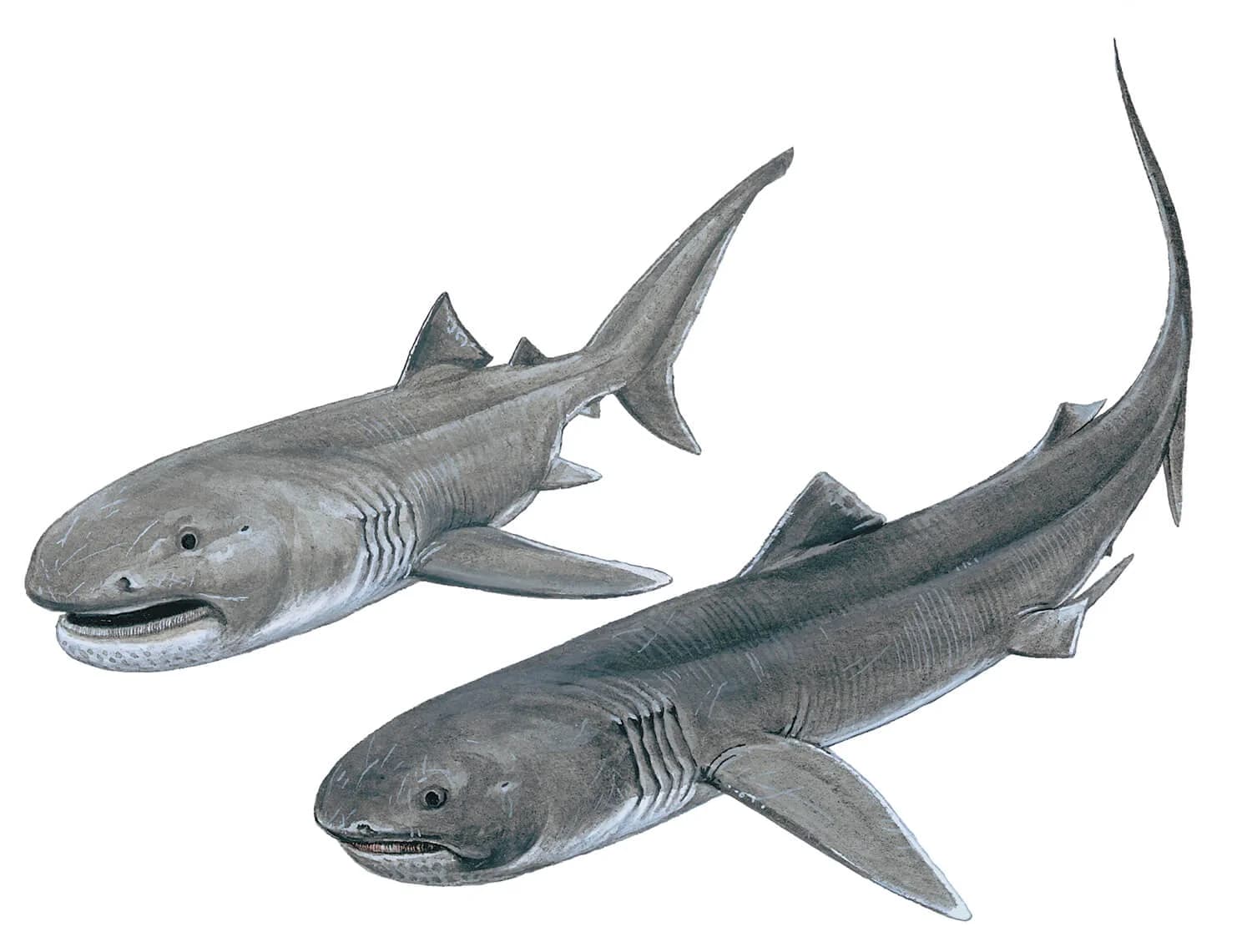
Megamouth Shark illustration
Dorsal
The body is grey on the top (light margins to blackish pectoral and pelvic fins), and white below with dark spotting on the lower jaw.

Dentition

Upper jaw
Numerous small, hooked teeth.
Sources:sharksorg

Frequently Asked Questions

Is the megamouth shark dangerous to humans?
The megamouth shark is not considered dangerous to humans under normal conditions. There are few or no recorded incidents involving this species.
Where does this species data come from?
Species profiles are compiled from peer-reviewed taxonomy and published references. Incident data is sourced from the Global Shark Attack File and joined to species records by name match.