
Shark Data Lab logoShark Data Lab
Bahamas Sawshark
Pristiophoriformes

Bahamas Sawshark

Pristiophorus schroederi

Back to species

Max Length

0.8m

Overview

Un petit requin-scie des eaux profondes possédant un long rostre armé de dents rostrales utilisées pour trancher les proies. À ne pas confondre avec la scie de mer, qui est très éloignée sur le plan phylogénétique. Trouvé dans les eaux profondes des Bahamas et des Caraïbes.

Habitat

Sur ou près du fond des pentes continentales et insulaires, entre 1437 à 3123,4 pi [438 à 952 m] de profondeur.

Distribution

Western Atlantic & Caribbean

Atlantique Nord-Ouest entre la Floride, Cuba et les Bahamas.

Behavior

Inconnu.

Appearance
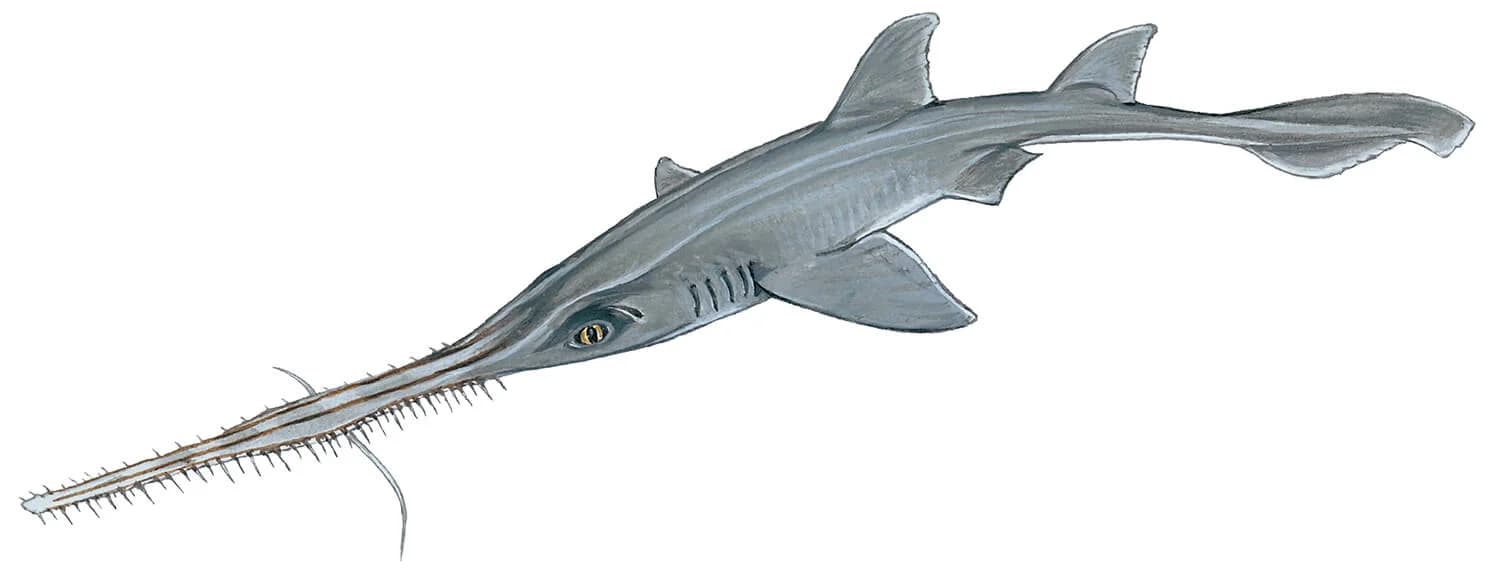
Bahamas Sawshark illustration
Dorsal
Uniform, un-patterned light grey above and whitish below. It has darker brownish stripes along its rostrum midline and edges. Its pectoral fins are light-edged and the dorsal fins of juveniles have a dark anterior edge.

Dentition

Upper jaw
The shark has 23 large, lateral sawteeth, 13 before and 10 behind the barbels. Juveniles usually have one smaller tooth between its large lateral teeth.
Sources:sharksorg

Frequently Asked Questions

Is the bahamas sawshark dangerous to humans?
The bahamas sawshark is not considered dangerous to humans under normal conditions. There are few or no recorded incidents involving this species.
Where does this species data come from?
Species profiles are compiled from peer-reviewed taxonomy and published references. Incident data is sourced from the Global Shark Attack File and joined to species records by name match.