
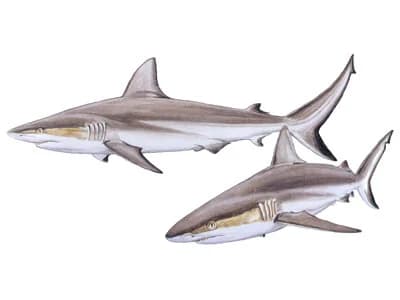
Carcharhinus amblyrhynchos
Max Length
2.6m
Litter Size
1 to 6 pups
Overview
A common reef shark throughout the Indo-Pacific. Performs a distinctive arching threat display — hunched back, lowered pectorals — before biting. Territorial around reef drop-offs and channel entrances.
Habitat
A coastal-pelagic and inshore species common on coral reefs, often in deeper areas near drop-offs to the open sea, and in shallow lagoons adjacent to areas of strong currents. It is often seen cruising near the bottom but will visit the surface, particularly to investigate food sources. Frequently found on leeward sides of small coral islands.
Distribution
Indian Ocean, and Western Pacific eastward to Hawaiian Islands.
Behavior
This is an active, strong-swimming social species that forms daytime aggregations in reef passes and lagoons; at night the groups disperse. Groups of juveniles remain together on pupping grounds.
Human Safety
Gray reef sharks are inquisitive, and in seldom-frequented areas divers have been approached very closely by several of these sharks, particularly when they initially enter the water. However, once the sharks’ curiosity is satisfied they usually retreat and remain at a distance.
Biology
Appearance
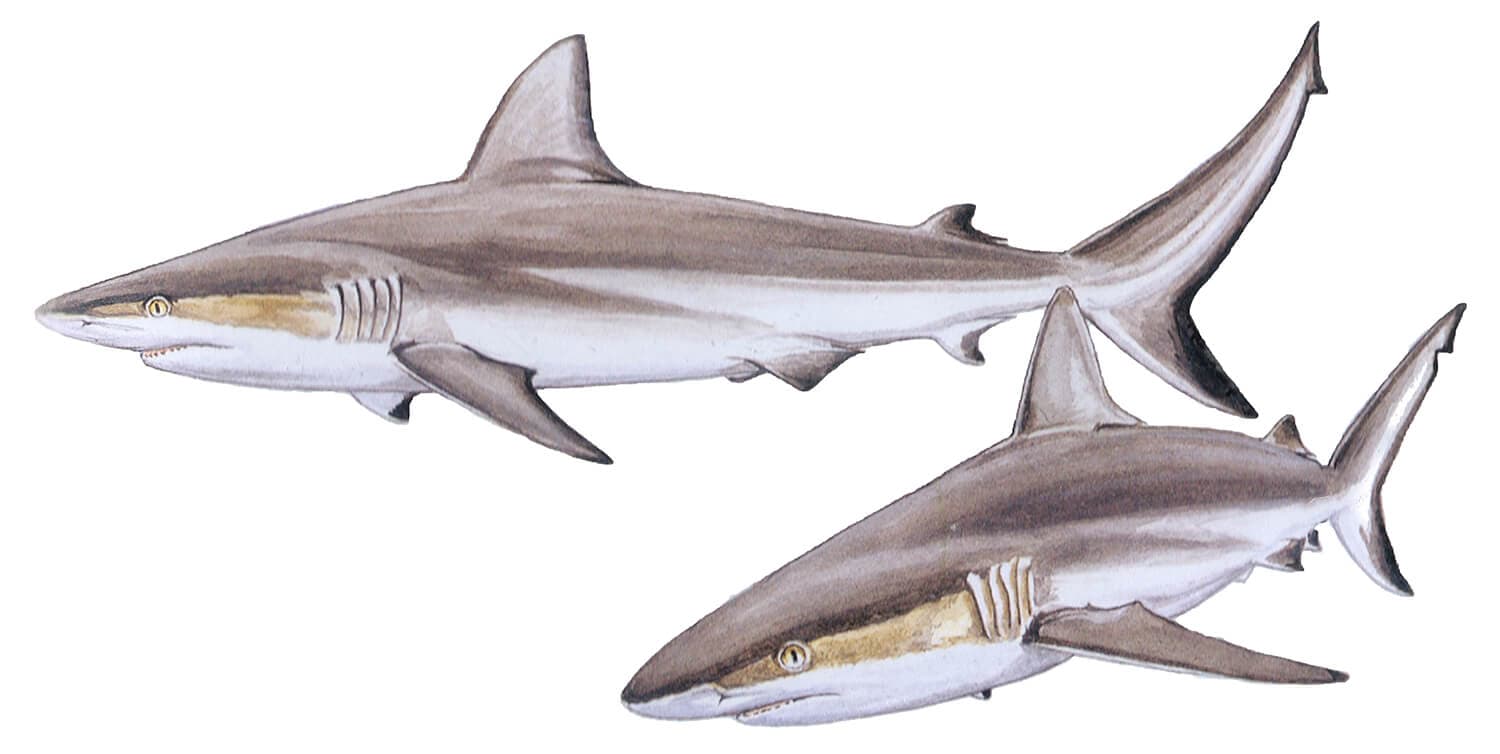
Dentition
Recorded
21
Fatal
0
Fatality rate
0.0%
Years
1961–2023
Top countries
Counts are based on the species field of the Global Shark Attack File. Identifications by witnesses are often uncertain; treat figures as recorded incidents, not authoritative totals.
 Shark Data Lab