Shark Data Lab logoShark Data Lab
Caribbean Reef Shark
CarcharhiniformesAttack Relevant

Caribbean Reef Shark

Carcharhinus perezii

Back to species

Max Length

3.0m

Litter Size

4 to 6 pups

Overview

The most common large shark on Caribbean coral reefs. Regularly observed resting motionless on the seafloor — one of the few sharks capable of buccal pumping. Implicated in dive-related incidents.

Habitat

The shark is a tropical inshore bottom dweller of the continental and insular shelves. It is often found on coral reefs and adjacent to drop offs.

Distribution

Western Atlantic & Caribbean

Western Atlantic from Florida to southern Brazil, Bahamas, Gulf of Mexico and the Caribbean Sea. It is the commonest shark on coral reefs in the Caribbean.

Behavior

This species has been observed in caves and lying motionless on the bottom.

Human Safety

In staged “shark feeds” in the Bahamas the shark may make close passes at divers. It is rarely aggressive, but four incidents have been recorded.

Biology

Diet
Thought to feed on fishes and rays.
Reproduction
Viviparous
Birth Size
75cm

Appearance

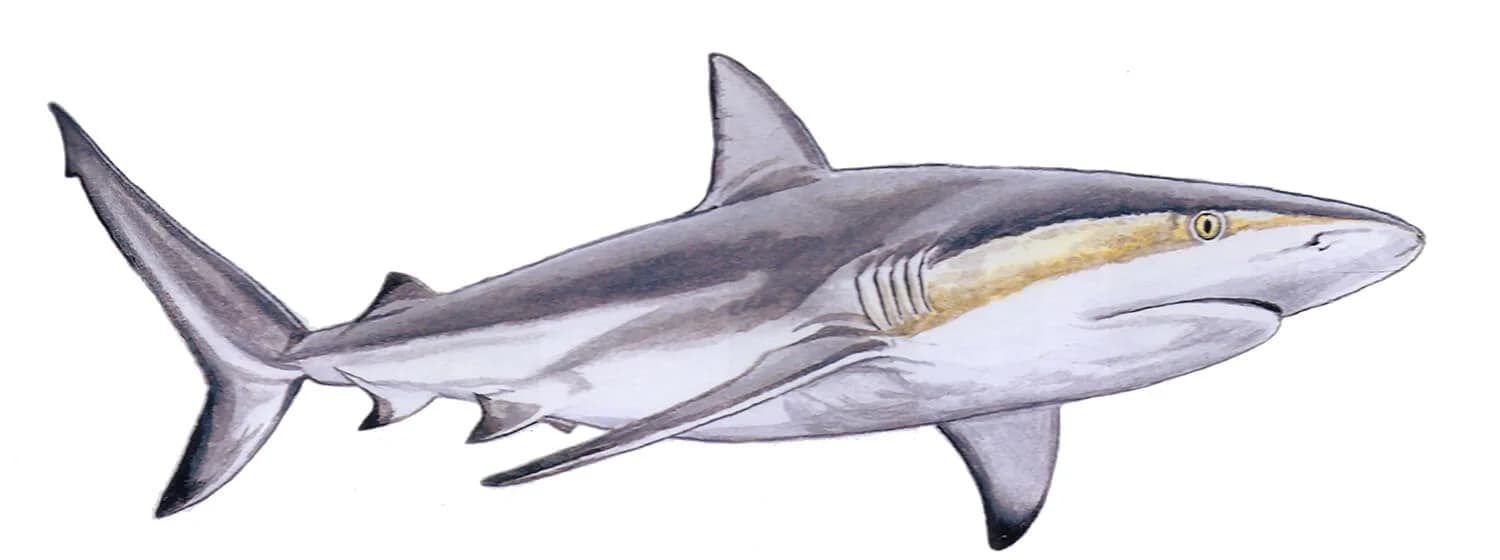
Caribbean Reef Shark illustration
Dorsal
Gray brown to olive above, white to yellowish below.

Dentition

Upper jaw
Teeth in both jaws are serrated. Teeth of the upper jaw have narrow cusps and broad bases and are semi-erect to oblique, teeth of the
Lower jaw
jaw are narrow and erect with triangular cusps and broad bases.
Sources:sharksorg

Recorded incidents involving the caribbean reef shark

Recorded

19

Fatal

0

Fatality rate

0.0%

Years

1968–2024

Years with most incidents

Counts are based on the species field of the Global Shark Attack File. Identifications by witnesses are often uncertain; treat figures as recorded incidents, not authoritative totals.

Frequently Asked Questions

How many shark attacks have been recorded involving the caribbean reef shark?
19 incidents in the Global Shark Attack File mention the caribbean reef shark, of which 0 were fatal (0.0%). Note that witness species identifications are often uncertain, so this is the count of recorded incidents.
Where do most caribbean reef shark incidents occur?
The countries with the most recorded caribbean reef shark incidents are Bahamas, Turks & Caicos, Colombia.
Is the caribbean reef shark dangerous to humans?
The caribbean reef shark is considered relevant to human-shark incidents and has been recorded in the Global Shark Attack File. As with any large shark, encounters in the wild should be avoided.
Where does this species data come from?
Species profiles are compiled from peer-reviewed taxonomy and published references. Incident data is sourced from the Global Shark Attack File and joined to species records by name match.