
Reference
60 shark species across 8 taxonomic orders. Illustrations and taxonomy via sharks.org; attack-relevance data from the GSAF.
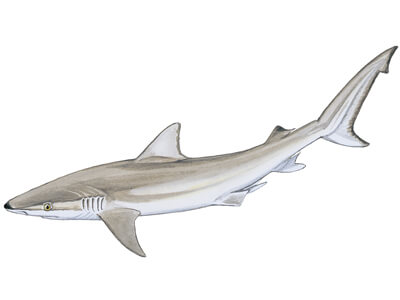
Carcharhinus acronotus
A small, slender requiem shark of the western Atlantic and Caribbean, common in shallow nearshore waters over sand and coral. Not considered dangerous to humans.
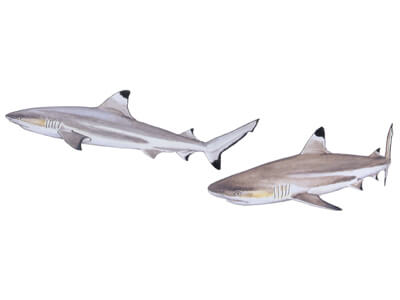
Carcharhinus melanopterus
Easily identified by the distinctive black tips on all fins. Abundant on Indo-Pacific and Red Sea reef flats, often in water less than 30 cm deep. Responsible for minor wading incidents.
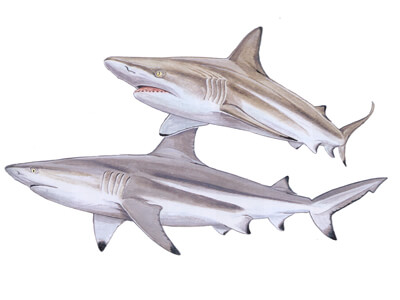
Carcharhinus limbatus
A fast-moving coastal species common in subtropical and tropical shallows worldwide. Known to spin out of the water when chasing baitfish schools. One of the most frequently implicated species in Florida incidents.
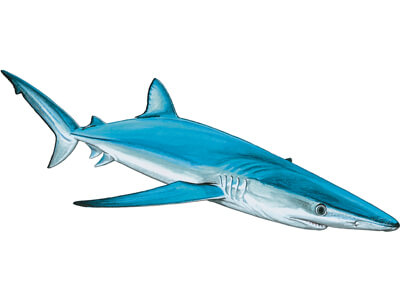
Prionace glauca
The most wide-ranging shark on Earth, found from polar to tropical seas. Built for sustained open-ocean cruising. The most heavily fished shark globally — estimated tens of millions killed annually as longline bycatch.
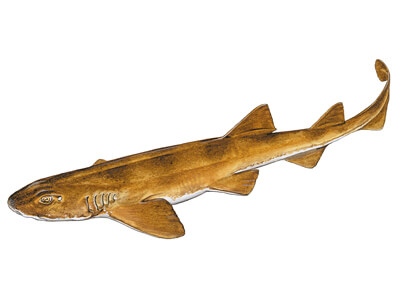
Haploblepharus fuscus
A small catshark endemic to South Africa. When threatened, it curls into a tight ball and covers its eyes with its tail — hence the name "shyshark." Harmless.
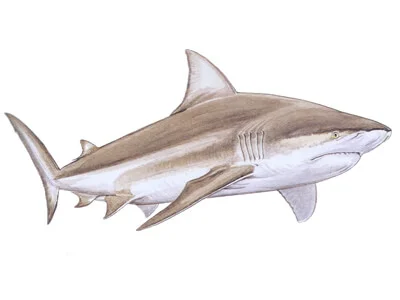
Carcharhinus leucas
One of the most dangerous sharks due to its aggression, territorial behavior, and unique ability to survive in both salt and freshwater. Responsible for many attacks in murky coastal and river waters worldwide.
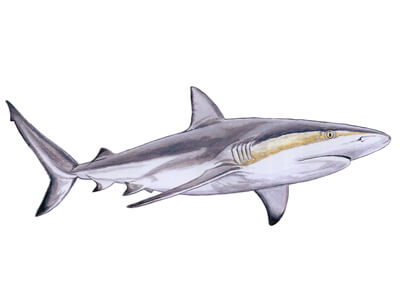
Carcharhinus perezii
The most common large shark on Caribbean coral reefs. Regularly observed resting motionless on the seafloor — one of the few sharks capable of buccal pumping. Implicated in dive-related incidents.
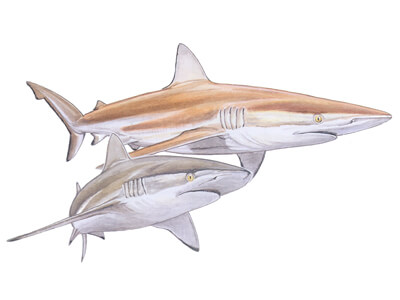
Carcharhinus brachyurus
Also called the copper shark. The only predominantly temperate-water Carcharhinus. Forms large seasonal aggregations during sardine and yellowtail migrations off South Africa, Australia, and New Zealand.
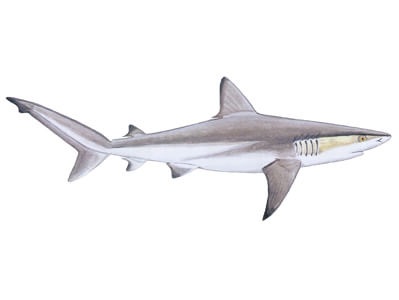
Carcharhinus obscurus
A large, wide-ranging coastal-oceanic species. One of the slowest-growing and latest-maturing sharks, taking 20+ years to reach sexual maturity, making it extremely vulnerable to overfishing.
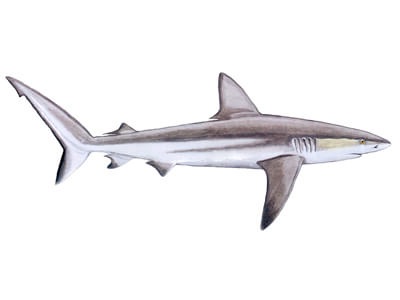
Carcharhinus galapagensis
Common around oceanic islands and coral atolls in tropical seas globally. Bold and inquisitive around divers; considered potentially dangerous when food is present.

Sphyrna mokarran
The largest hammerhead species, distinguished by a nearly straight cephalofoil front edge and a very tall first dorsal fin. A specialist stingray predator — its electroreception can detect rays buried under sand. Critically endangered.
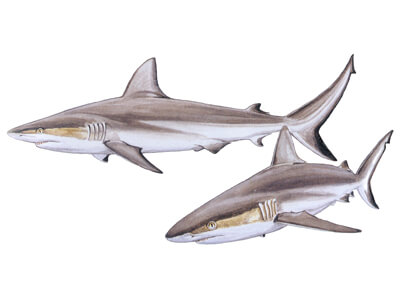
Carcharhinus amblyrhynchos
A common reef shark throughout the Indo-Pacific. Performs a distinctive arching threat display — hunched back, lowered pectorals — before biting. Territorial around reef drop-offs and channel entrances.

Negaprion brevirostris
Named for its yellowish-brown coloring, providing camouflage over sandy seafloors. Common in shallow subtropical Atlantic waters. One of the most-studied sharks in both captivity and the field, used extensively in behavioral research.
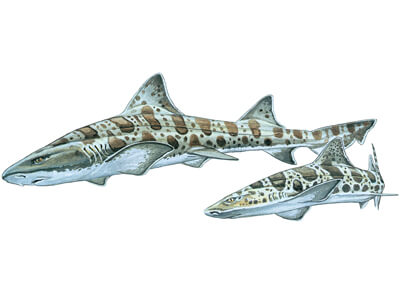
Triakis semifasciata
A slender, harmless shark with striking dark saddle markings over a pale body. Common in kelp beds and sandy flats along the California coast. Often seen resting in aggregations on the seafloor.
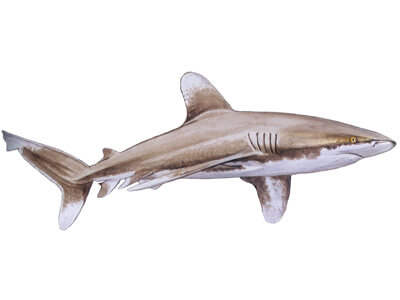
Carcharhinus longimanus
Historically responsible for mass-casualty incidents at open-ocean shipwrecks and air crashes. Once extremely abundant; now critically endangered due to overfishing for the fin trade. Characterized by distinctive rounded, white-tipped fins.
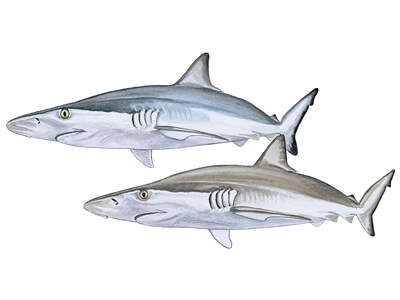
Rhizoprionodon longurio
A small, slender requiem shark endemic to the eastern Pacific coast of the Americas. Common in shallow nearshore waters. Not dangerous to humans.
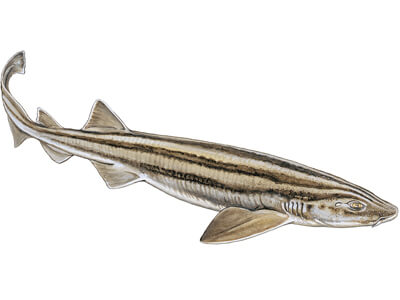
Poroderma africanum
A small, striped catshark endemic to South Africa. Active at night, resting in crevices and caves by day. Named for its distinctive dark longitudinal stripes. Harmless to humans.
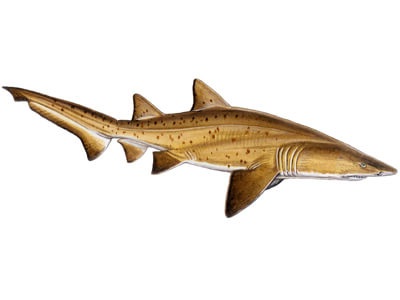
Carcharias taurus
Known as grey nurse shark in Australia. Despite its fearsome appearance — it constantly displays its teeth — it is one of the least aggressive large sharks. The only shark known to gulp air at the surface to achieve neutral buoyancy.
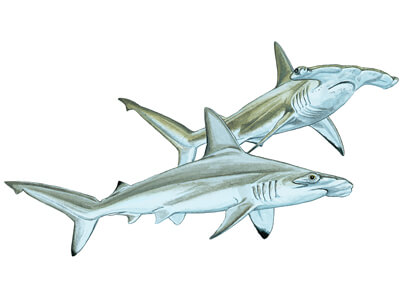
Sphyrna lewini
Recognizable by the scalloped front edge of its cephalofoil. Forms large daytime schools of hundreds of individuals — one of the few sharks to do so. Critically endangered due to the global fin trade and bycatch.
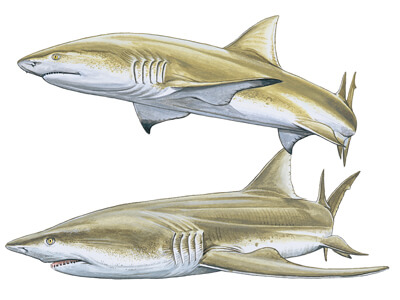
Negaprion acutidens
The Indo-Pacific counterpart of the lemon shark. Common in coastal shallows, estuaries, and mangrove habitats across the Indian and Pacific Oceans. Considered potentially dangerous due to its size and coastal habits.
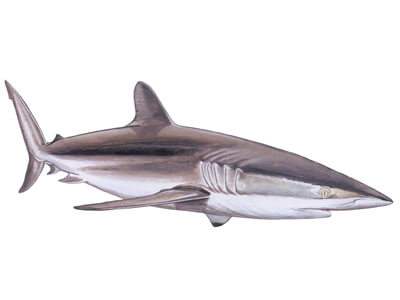
Carcharhinus falciformis
Named for its smooth, silky skin texture. One of the most abundant large oceanic sharks, often found around offshore seamounts and fish aggregating devices. Highly vulnerable to tropical tuna longline bycatch.
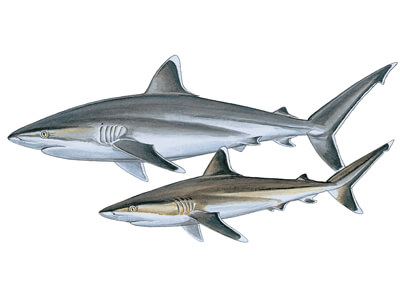
Carcharhinus albimarginatus
Recognized by prominent white tips and margins on all fins. Typically dominant over other reef sharks of similar size. Found around islands and offshore reefs throughout the Indo-Pacific.
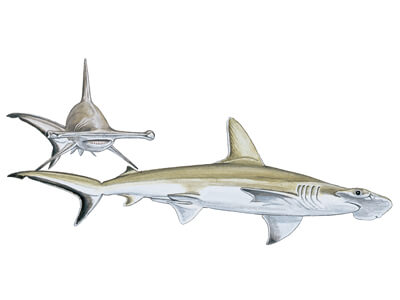
Sphyrna zygaena
The most wide-ranging hammerhead, distinguished from the scalloped by a smooth, arched front margin on the cephalofoil. Found in temperate and tropical seas globally. Vulnerable due to the fin trade.
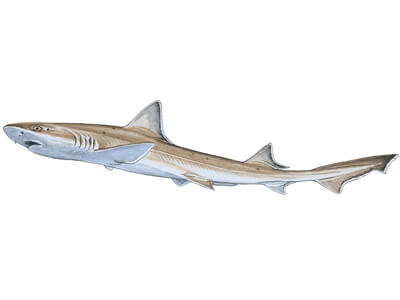
Mustelus mustelus
A small, harmless houndshark common in the eastern Atlantic and Mediterranean. Feeds on crustaceans and small fish over sandy and muddy inshore habitats. Often taken as bycatch.
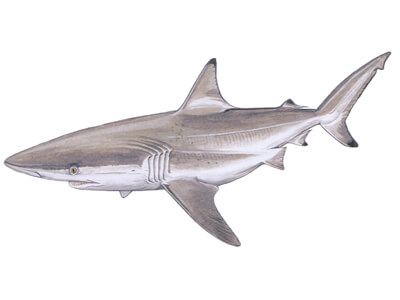
Carcharhinus brevipinna
Similar to the blacktip shark but slenderer, with a proportionally smaller eye. Named for its habit of spinning out of the water in tight spirals when chasing baitfish schools. Common in warm coastal waters.
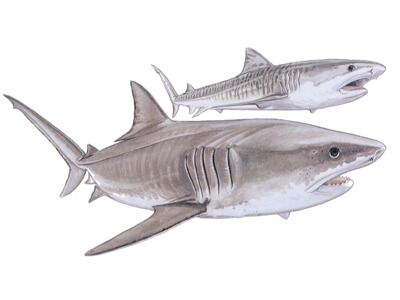
Galeocerdo cuvier
Second only to the great white in recorded unprovoked attacks. Indiscriminate diet — the most diverse documented of any shark. Patrols shallow tropical and subtropical coastal reefs.
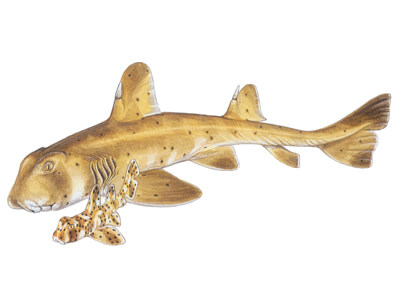
Heterodontus francisci
A sluggish bottom-dweller native to the Pacific coast of North America. Has two different tooth types — pointed front teeth for grabbing and molariform rear teeth for crushing hard-shelled invertebrates. Harmless.
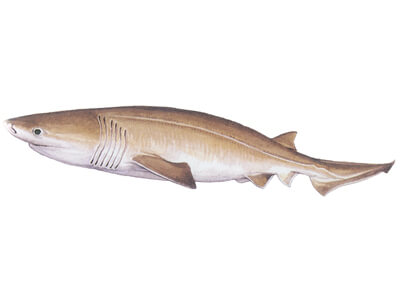
Hexanchus griseus
One of the largest bottom-dwelling sharks globally. Its six gill slits reflect a primitive anatomy unchanged for millions of years. Typically inhabits deep water, rising toward the surface at night to feed.
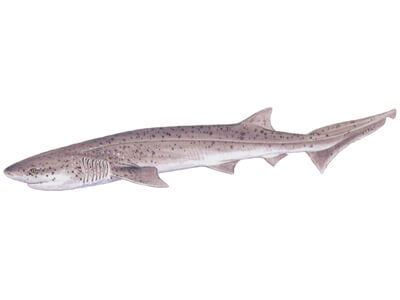
Notorynchus cepedianus
A primitive seven-gilled shark inhabiting cool coastal bays in temperate seas. A powerful pack predator of marine mammals; has been documented in cooperative hunting behavior. Responsible for incidents in San Francisco Bay.
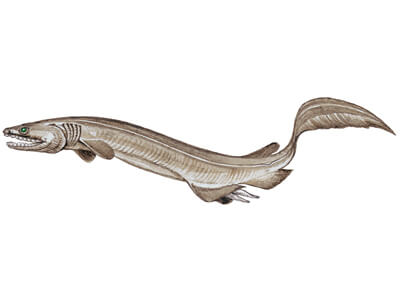
Chlamydoselachus anguineus
A deep-sea relic with an eel-like body, 300 trident-shaped teeth, and a lineage stretching back 80 million years. Rarely observed alive. Swallows prey whole; possibly ambushes prey by bending its body like a snake.
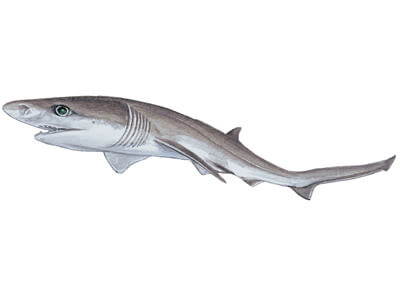
Heptranchias perlo
A slender, deep-water sevengill shark with a narrow head and large green eyes. Found globally in temperate and tropical seas. Occasionally caught as bycatch. Not a threat to humans.
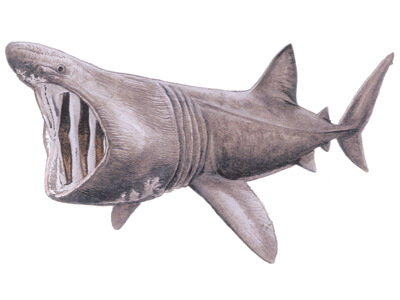
Cetorhinus maximus
The second-largest fish on Earth. A passive filter feeder that swims slowly with its enormous mouth agape, straining plankton. Completely harmless to humans. Seasonally aggregates in productive coastal waters.
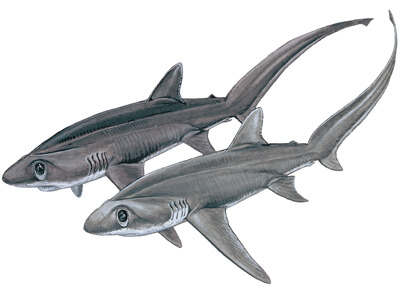
Alopias superciliosus
Distinguished by its disproportionately large eyes — an adaptation for hunting in the dim mesopelagic zone. Uses its long upper caudal fin to stun prey fish. Vulnerable to longline bycatch.
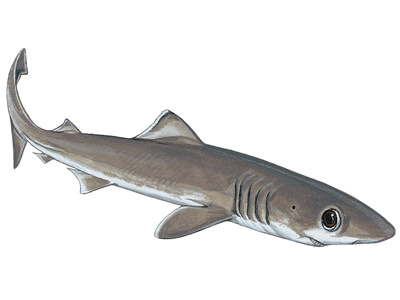
Pseudocarcharias kamoharai
The smallest lamniform shark. A deep-water oceanic species with disproportionately large eyes and needle-like teeth for catching squid and small fish. Named for its snapping, crocodile-like biting behavior when caught.
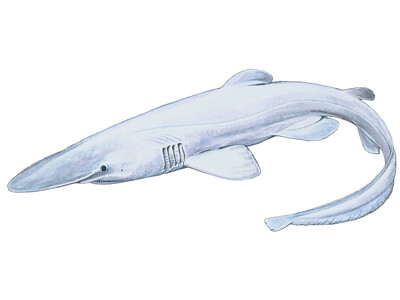
Mitsukurina owstoni
Deep-sea species characterized by a distinctive elongated rostrum and highly protrusible jaws that shoot forward to engulf prey. Bioluminescent and rarely observed alive. Represents the oldest living shark lineage.

Isurus paucus
The less-common relative of the shortfin mako, distinguished by longer pectoral fins. Found in tropical open oceans. Critically endangered due to overfishing and its very low reproductive rate.
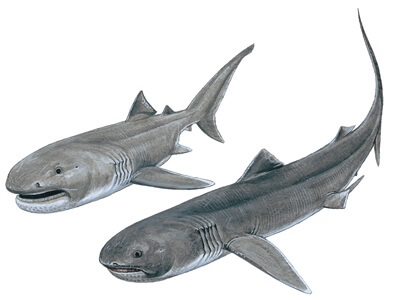
Megachasma pelagios
A filter feeder discovered only in 1976. Swims slowly with a large gaping mouth to engulf zooplankton and jellyfish. Fewer than 300 specimens have ever been recorded. One of the rarest sharks on Earth.
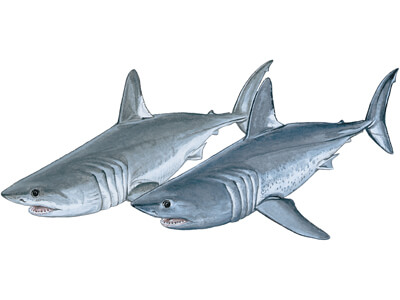
Lamna nasus
A cold-water lamnid shark of the North Atlantic and Southern Ocean. Endothermic, like the great white. Heavily fished for its meat; vulnerable globally. Sometimes confused with the great white due to similar body plan.
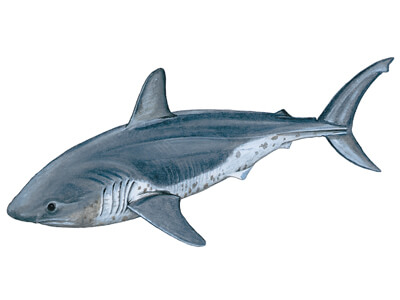
Lamna ditropis
The North Pacific counterpart of the porbeagle. Endothermic — can maintain body temperatures up to 20°C warmer than the surrounding water. Follows salmon migrations through cold North Pacific waters.
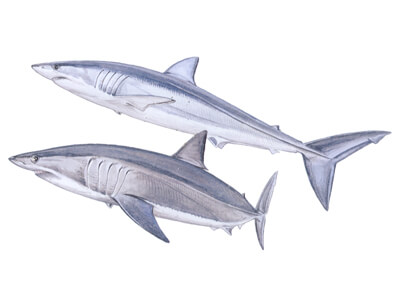
Isurus oxyrinchus
The fastest shark species, capable of sustained speeds over 35 km/h with bursts above 70 km/h. Endothermic like the great white. A highly migratory open-ocean predator that targets tuna and billfish. Endangered globally.
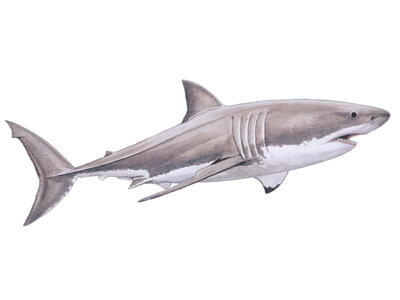
Carcharodon carcharias
The largest predatory fish on Earth. Responsible for the most recorded unprovoked attacks on humans globally. Endothermic. Bite-and-release behavior is the norm with humans — most victims are not consumed.
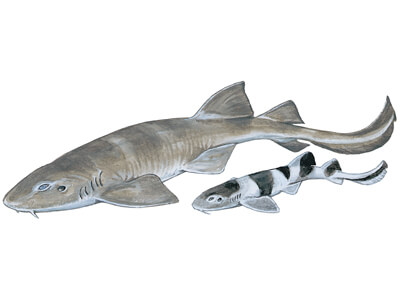
Geteroscyllium colcloughi
A small, rarely seen carpetshark endemic to a narrow stretch of southeast Queensland, Australia. Critically endangered with a very restricted range. Harmless.
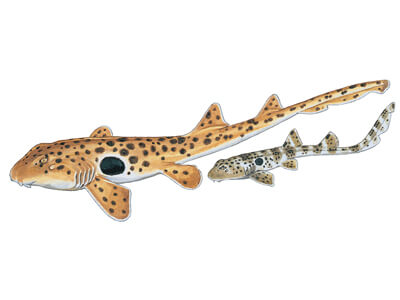
Hemiscyllium ocellatus
Uses its muscular pectoral fins to "walk" across reef flats and through tide pools. Can survive brief exposure to air and hypoxic conditions — an adaptation for hunting in isolated pools at low tide. Harmless.
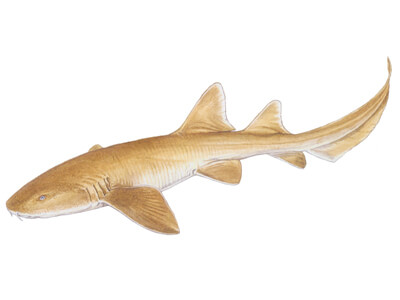
Ginglymostoma cirratum
A bottom-dwelling Atlantic buccal pumper. Slow-moving and generally non-aggressive, but capable of powerful bites if provoked or harassed. Often rests in piles with other nurse sharks. Frequently seen by divers.
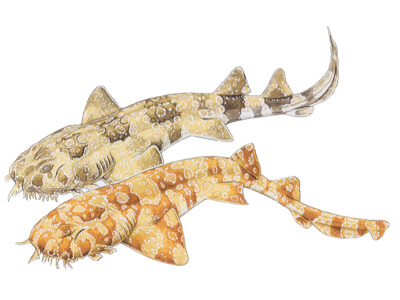
Orectolobus maculatus
A highly camouflaged ambush predator of Australian coastal reefs. Uses elaborate skin flaps and a mottled pattern to blend into the seafloor. Responsible for a small number of incidents, nearly always when inadvertently stepped on.
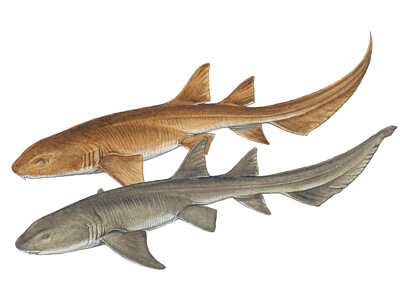
Nebrius ferrugineus
The Indo-Pacific counterpart of the nurse shark. Commonly found resting in caves, under ledges, and in crevices during the day. Nocturnal feeder on reef invertebrates. Harmless unless provoked.
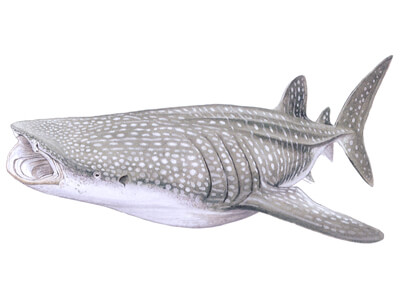
Rhincodon typus
The largest fish on Earth. A filter feeder that consumes plankton, small fish, and fish spawn by ram-filtering seawater through its gill rakers. Completely harmless to humans. Aggregates seasonally at Ningaloo Reef and the Yucatán.

Chiloscyllium plagiosum
A small, slender shark common in Indo-Pacific shallow reef habitats. One of the most frequently kept sharks in public aquariums due to its hardiness and manageable size. Harmless.
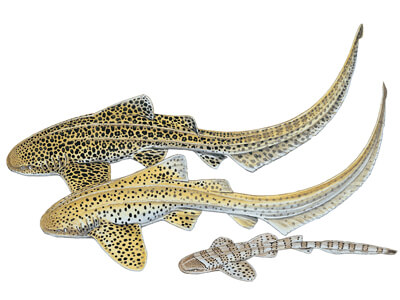
Stegostoma fasciatum
Adults have a leopard-like spotted pattern; juveniles have striking zebra-like stripes — hence both common names (also called leopard shark in some regions). Rests on the seafloor by day. Harmless to humans.
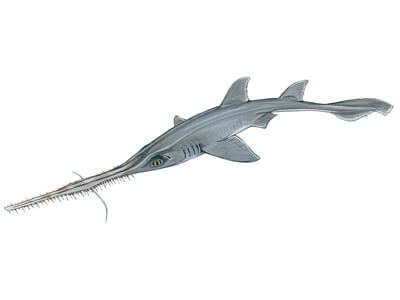
Pristiophorus schroederi
A small deep-water sawshark with a long rostrum armed with rostral teeth used to slash prey. Not to be confused with the distantly related sawfish. Found in the deep waters of the Bahamas and Caribbean.
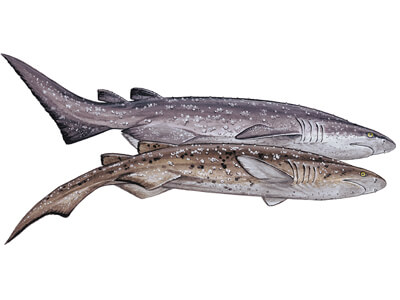
Echinorhinus brucus
A rare, sluggish deep-water shark covered in distinctive thorn-like denticles that give it a bramble-covered appearance. One of the most primitive living sharks. Found in scattered deep-water locations globally.
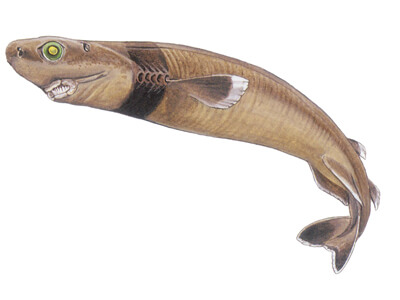
Isistius brasiliensis
A small parasitic shark that takes neat, round plugs of flesh from large marine animals — and occasionally submarine cables and human swimmers. Bioluminescent belly lures prey. Performs large nightly vertical migrations.

Etmopterus princeps
A deep-sea dogfish shark that produces bioluminescence through photophores along its belly, likely for counter-illumination and communication. Found in the deep North Atlantic. Rarely encountered.
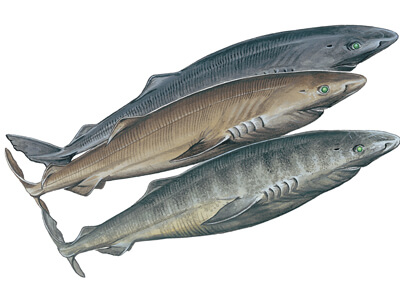
Somniosus microcephalus
The longest-lived vertebrate on Earth — some individuals exceed 500 years old, reaching sexual maturity at around 150 years. Moves extremely slowly through frigid Arctic and North Atlantic waters. Flesh is toxic if not specially prepared.
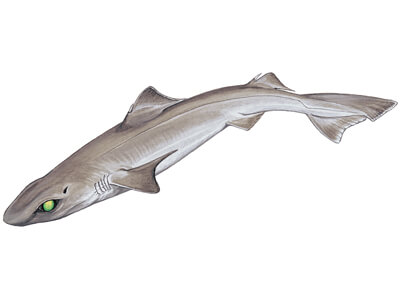
Centrophorus granulosus
A deep-water dogfish shark targeted heavily for its squalene-rich liver oil, used in cosmetics and industrial lubricants. Extremely vulnerable to overexploitation due to a very low reproductive rate — just one pup per litter.
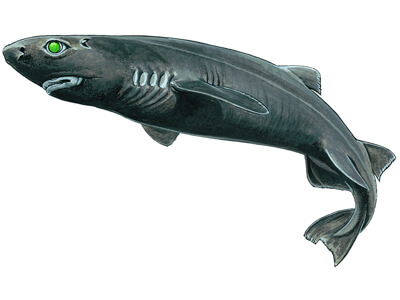
Dalatias licha
The largest known bioluminescent vertebrate on Earth, producing a blue-green glow along its belly. A deep-sea species found globally. Discovered to be bioluminescent only in 2021.

Somniosus pacificus
The Pacific counterpart of the Greenland shark. Similarly slow-moving and cold-water adapted. Found throughout the North Pacific from Japan to the Gulf of Alaska. Can dive to depths exceeding 2,000 m.
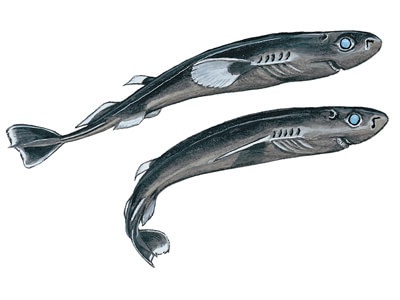
Euprotomicrus bispinatus
One of the smallest shark species, reaching just 27 cm. Undertakes remarkable daily vertical migrations of hundreds of meters — rising to surface waters at night and descending to depths exceeding 1,500 m by day. Bioluminescent.

Squalus acanthias
The most studied shark in the world and historically the most abundant. Bears venomous spines in front of each dorsal fin. Once so plentiful it was used as fertilizer; populations have collapsed due to overfishing. Now vulnerable globally.
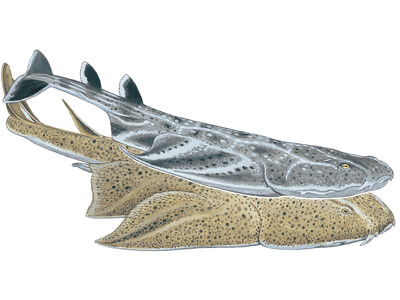
Squatina squatina
A flat, ray-like shark that lies buried in sand to ambush passing prey. Critically endangered in the Mediterranean and eastern Atlantic. Responsible for occasional bites on divers who disturb it. Once widespread; now locally extinct across much of its historic range.
60 species
 Shark Data Lab