Shark Data Lab logoShark Data Lab
Frilled Shark
Hexanchiformes

Frilled Shark

Chlamydoselachus anguineus

Back to species

Max Length

2.0m

Litter Size

6-12 pups

Overview

A deep-sea relic with an eel-like body, 300 trident-shaped teeth, and a lineage stretching back 80 million years. Rarely observed alive. Swallows prey whole; possibly ambushes prey by bending its body like a snake.

Habitat

Benthic, epibenthic and pelagic. These sharks frequent off-shore shelves and upper continental and island slopes of 164 to 4921.3 ft [50 to1500 m] deep, but are occasionally located at the surface.

Distribution

Worldwide

Widely but patchily distributed world-wide, rare to uncommon, usually in deep water.

Behavior

In captivity, they have a habit of swimming with the mouth open and it may be that their conspicuous white teeth are used to lure prey.

Biology

Diet
Deepwater actively-swimming squid and fishes. Pups in a litter may feed on huge uterine eggs 4.3-4.7 inches [11-12 cm] long.
Reproduction
Ovoviviparous, with 6-12 pups per litter

Appearance

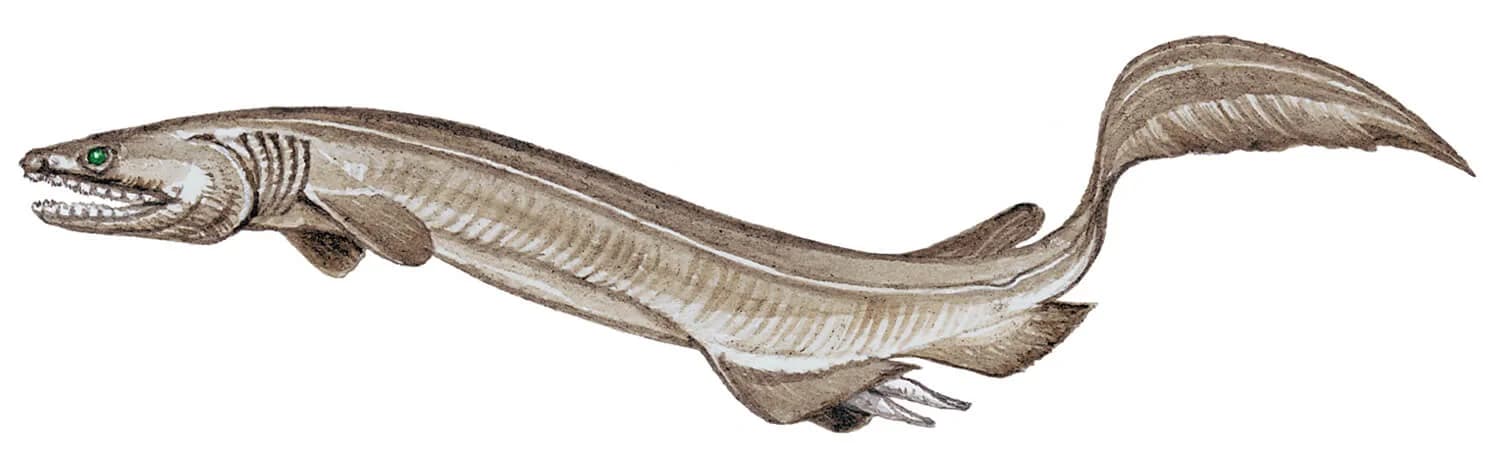
Frilled Shark illustration
Dorsal
Dark chocolate-brown, brownish-grey, or brownish-black.

Dentition

Upper jaw
Widely spaced, needle-sharp, slender three-cusped teeth.
Sources:sharksorg

Frequently Asked Questions

Is the frilled shark dangerous to humans?
The frilled shark is not considered dangerous to humans under normal conditions. There are few or no recorded incidents involving this species.
Where does this species data come from?
Species profiles are compiled from peer-reviewed taxonomy and published references. Incident data is sourced from the Global Shark Attack File and joined to species records by name match.