Shark Data Lab logoShark Data Lab
Sharpnose Sevengill Shark
Hexanchiformes

Sharpnose Sevengill Shark

Heptranchias perlo

Back to species

Max Length

1.4m

Litter Size

6-20 pups

Overview

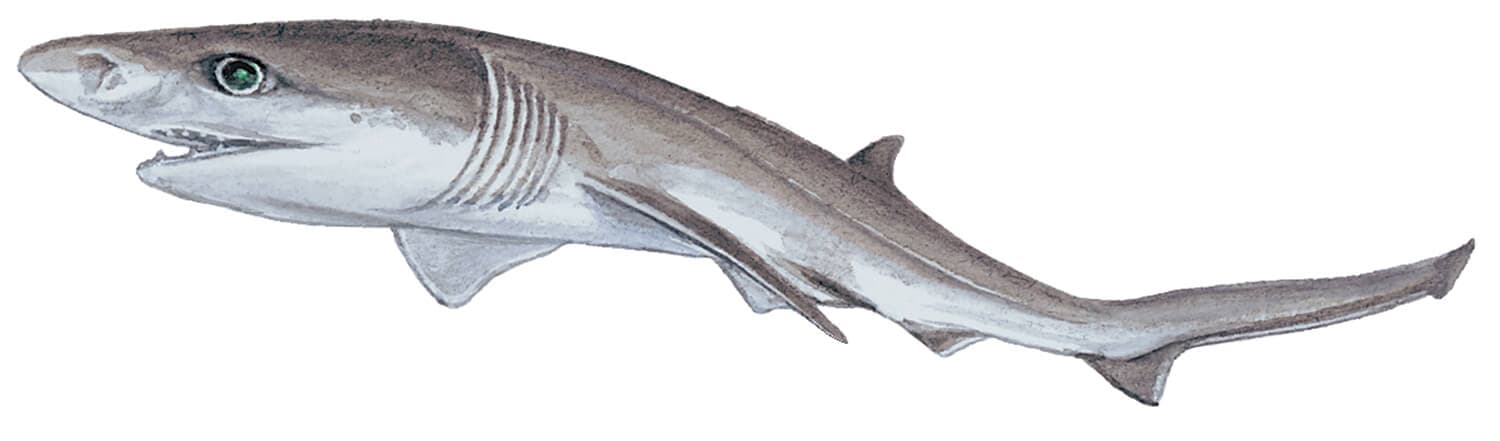
A slender, deep-water sevengill shark with a narrow head and large green eyes. Found globally in temperate and tropical seas. Occasionally caught as bycatch. Not a threat to humans.

Habitat

These are mainly deepwater sharks found from depths of 88.6 to 2362.2 ft [27 to 720 m], but no deeper than 3280.8 ft [1000 m]. The sharks prefer continental and island shelves and upper slopes, but occasionally venture into shallower water close inshore. They are benthic and epibenthic, and may also swim well off the bottom of the ocean.

Distribution

Worldwide

These sharks are wide-ranging but patchily distributed in tropical and temperate seas, but not in the northeast Pacific.

Behavior

Poorly known. They are probably strong, active swimmers, and will bite when captured.

Biology

Diet
Small to moderately large demersal and pelagic fishes, small sharks, crustaceans, squid, and cuttlefish.
Reproduction
Ovoviviparous, with 6-20 pups per litter

Appearance

Sharpnose Sevengill Shark illustration
Dorsal
The young shark has a black blotch on the tip of its dorsal fin and upper caudal lobe, but these markings fade or are absent in adults.

Dentition

Upper jaw
Five rows of comb-shaped teeth in their
Lower jaw
jaw.
Sources:sharksorg

Frequently Asked Questions

Is the sharpnose sevengill shark dangerous to humans?
The sharpnose sevengill shark is not considered dangerous to humans under normal conditions. There are few or no recorded incidents involving this species.
Where does this species data come from?
Species profiles are compiled from peer-reviewed taxonomy and published references. Incident data is sourced from the Global Shark Attack File and joined to species records by name match.