Shark Data Lab logoShark Data Lab
Salmon Shark
Lamniformes

Salmon Shark

Lamna ditropis

Back to species

Max Length

3.0m

Litter Size

2-5 pups

Overview

The North Pacific counterpart of the porbeagle. Endothermic — can maintain body temperatures up to 20°C warmer than the surrounding water. Follows salmon migrations through cold North Pacific waters.

Habitat

This shark prefers cool coastal and oceanic waters, from 0 to at least 738.2 ft [225 m] deep.

Distribution

North Pacific

These sharks are in the north Pacific (males are common the west, and females are common the east).

Behavior

These sharks are seasonally migratory (following their prey), and they segregate by age and sex (adults move further north than the young).

Biology

Diet
Schooling fishes (salmon, herring, and sardines).
Reproduction
They have litters of 2-5 pups which are born in the spring in nursery grounds
Male Maturity
2.2m
Female Maturity
2.2m

Appearance

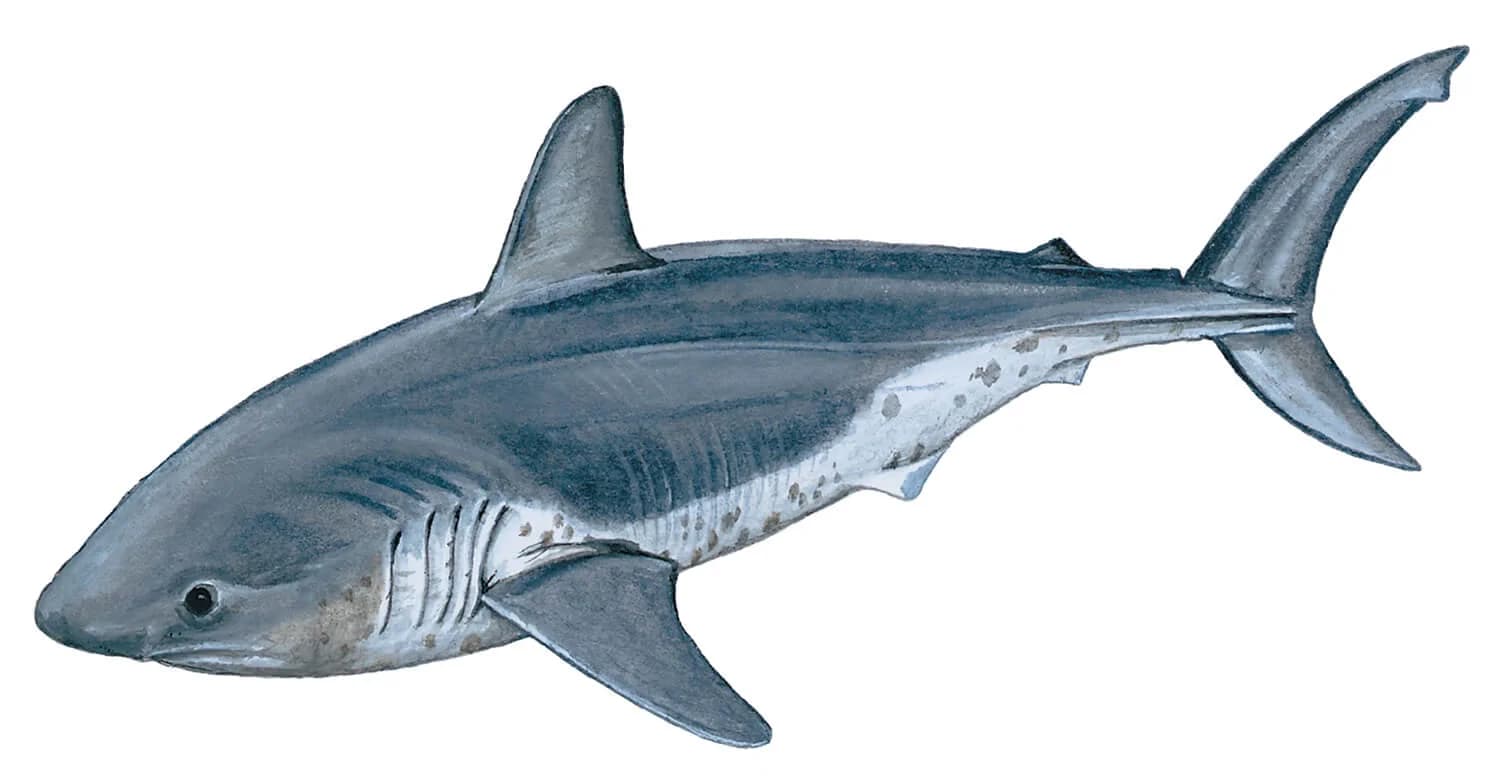
Salmon Shark illustration
Dorsal
Dark grey or blackish on top, with the underside being white with dusky blotches. It has a white patch under the pectoral base.
Sources:sharksorg

Recorded incidents involving the salmon shark

Recorded

4

Fatal

0

Fatality rate

0.0%

Years

2000–2018

Top countries

Years with most incidents

Counts are based on the species field of the Global Shark Attack File. Identifications by witnesses are often uncertain; treat figures as recorded incidents, not authoritative totals.

Frequently Asked Questions

How many shark attacks have been recorded involving the salmon shark?
4 incidents in the Global Shark Attack File mention the salmon shark, of which 0 were fatal (0.0%). Note that witness species identifications are often uncertain, so this is the count of recorded incidents.
Where do most salmon shark incidents occur?
The countries with the most recorded salmon shark incidents are United States, Canada.
Is the salmon shark dangerous to humans?
The salmon shark is not considered dangerous to humans under normal conditions. There are few or no recorded incidents involving this species.
Where does this species data come from?
Species profiles are compiled from peer-reviewed taxonomy and published references. Incident data is sourced from the Global Shark Attack File and joined to species records by name match.