
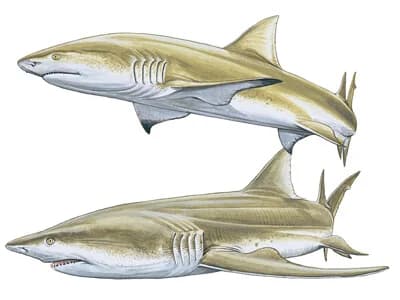
Negaprion acutidens
Max Length
3.8m
Litter Size
1-13 pups
Overview
The Indo-Pacific counterpart of the lemon shark. Common in coastal shallows, estuaries, and mangrove habitats across the Indian and Pacific Oceans. Considered potentially dangerous due to its size and coastal habits.
Habitat
Inshore, on or near the bottom between the surface and 98.4 ft [30 m]. The shark prefers turbid, still water in bays, estuaries, sandy plateaus, outer reef shelves and reef lagoons. Young sharks are found on very shallow reef flats with the dorsal fins exposed.
Distribution
Tropical Indo-west and central Pacific Oceans.
Behavior
These sharks are often sluggish, swimming slowly near or resting on the bottom. They may surface when stimulated by food, but tend to be shy and reluctant to approach divers. It can be aggressive if provoked. Young sharks may be more inquisitive.
Biology
Appearance
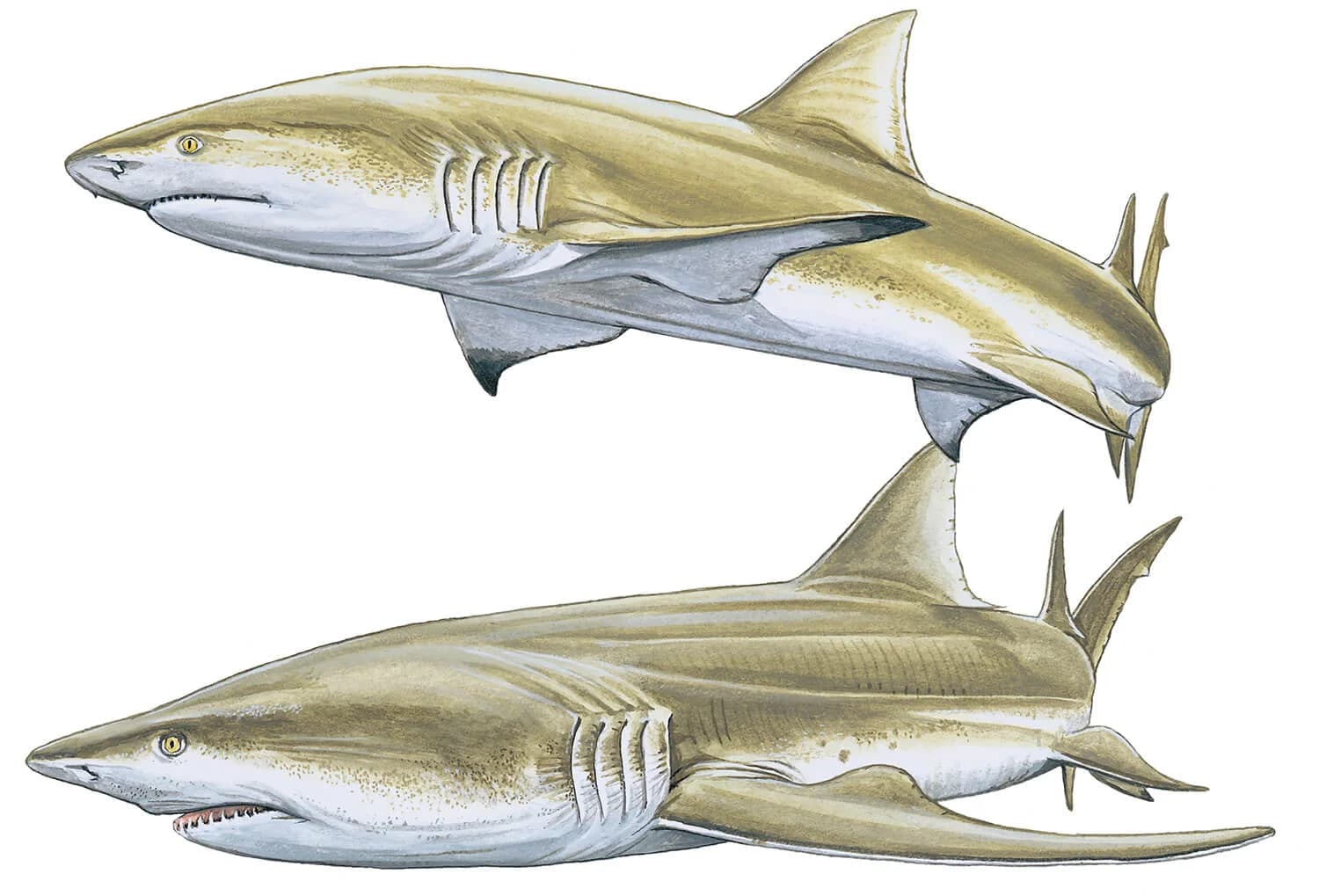
Dentition
 Shark Data Lab