Shark Data Lab logoShark Data Lab
Pacific Sleeper Shark
Squaliformes

Pacific Sleeper Shark

Somniosus pacificus

Back to species

Max Length

4.4m

Overview

The Pacific counterpart of the Greenland shark. Similarly slow-moving and cold-water adapted. Found throughout the North Pacific from Japan to the Gulf of Alaska. Can dive to depths exceeding 2,000 m.

Habitat

The shark prefers continental shelves and slopes, to depths of more than 6561.7 ft [2000 m]. They range into littoral in the north (once found trapped in a tide pool), and they go very deep in the south.

Distribution

North Pacific

North Pacific from Japan to Mexico.

Behavior

These are lumbering and sluggish sharks. Their small mouth and large oral cavity suggest suction feeding. There is a possible sexual segregation (pregnant females not recorded).

Biology

Diet
They feed on a wide variety of surface and bottom animals. Seal remains in their stomach may have been scavenged or taken alive.
Reproduction
They are probably ovoviviparous and have up to 300 large eggs per female

Appearance

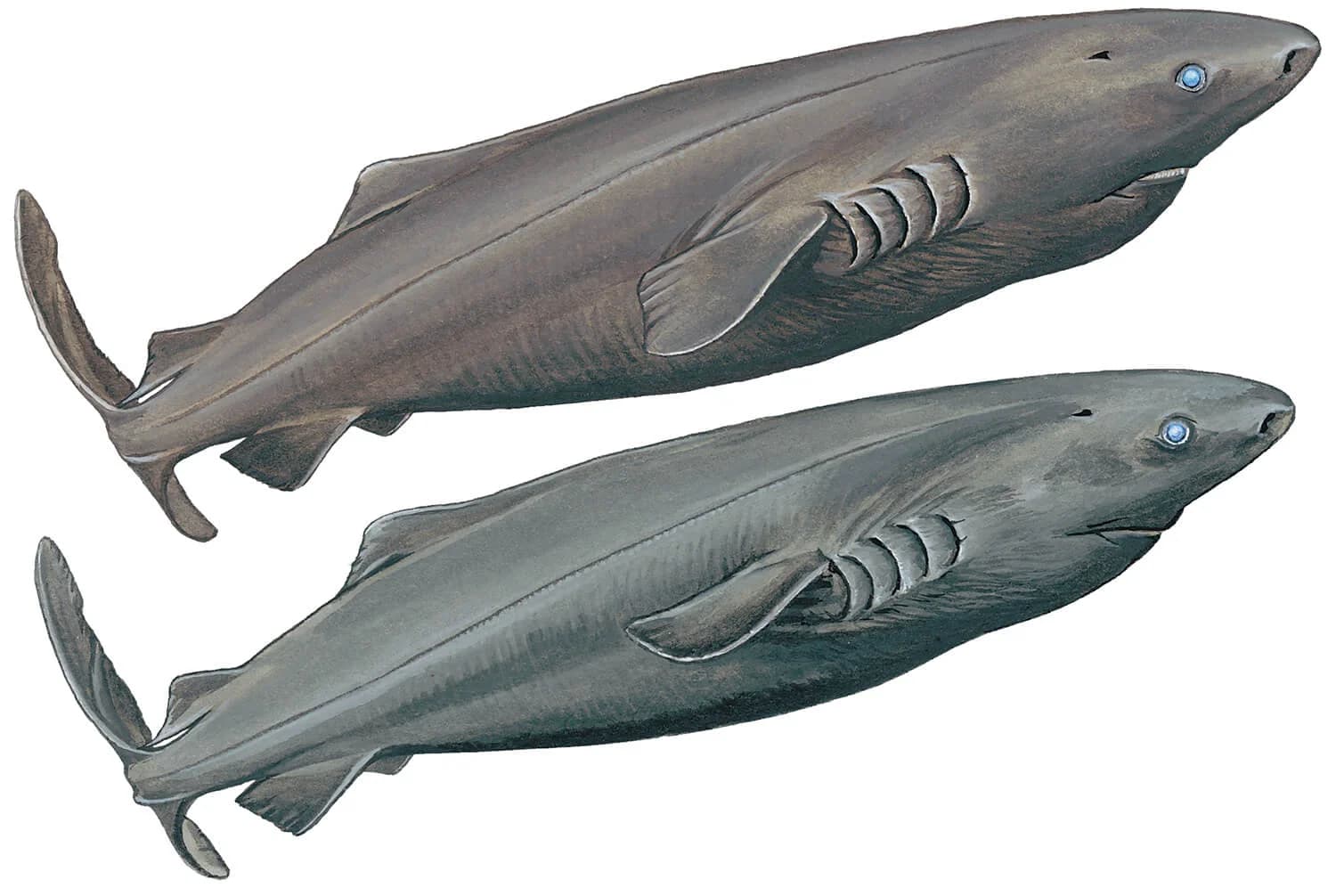
Pacific Sleeper Shark illustration
Dorsal
A uniform greyish body and fins.

Dentition

Upper jaw
The shark has spear-like upper teeth and slicing
Lower jaw
teeth with low bent cusps and high roots.
Sources:sharksorg

Frequently Asked Questions

Is the pacific sleeper shark dangerous to humans?
The pacific sleeper shark is not considered dangerous to humans under normal conditions. There are few or no recorded incidents involving this species.
Where does this species data come from?
Species profiles are compiled from peer-reviewed taxonomy and published references. Incident data is sourced from the Global Shark Attack File and joined to species records by name match.