Shark Data Lab logoShark Data Lab
Zebra Shark
Orectolobiformes

Zebra Shark

Stegostoma fasciatum

Back to species

Max Length

3.5m

Overview

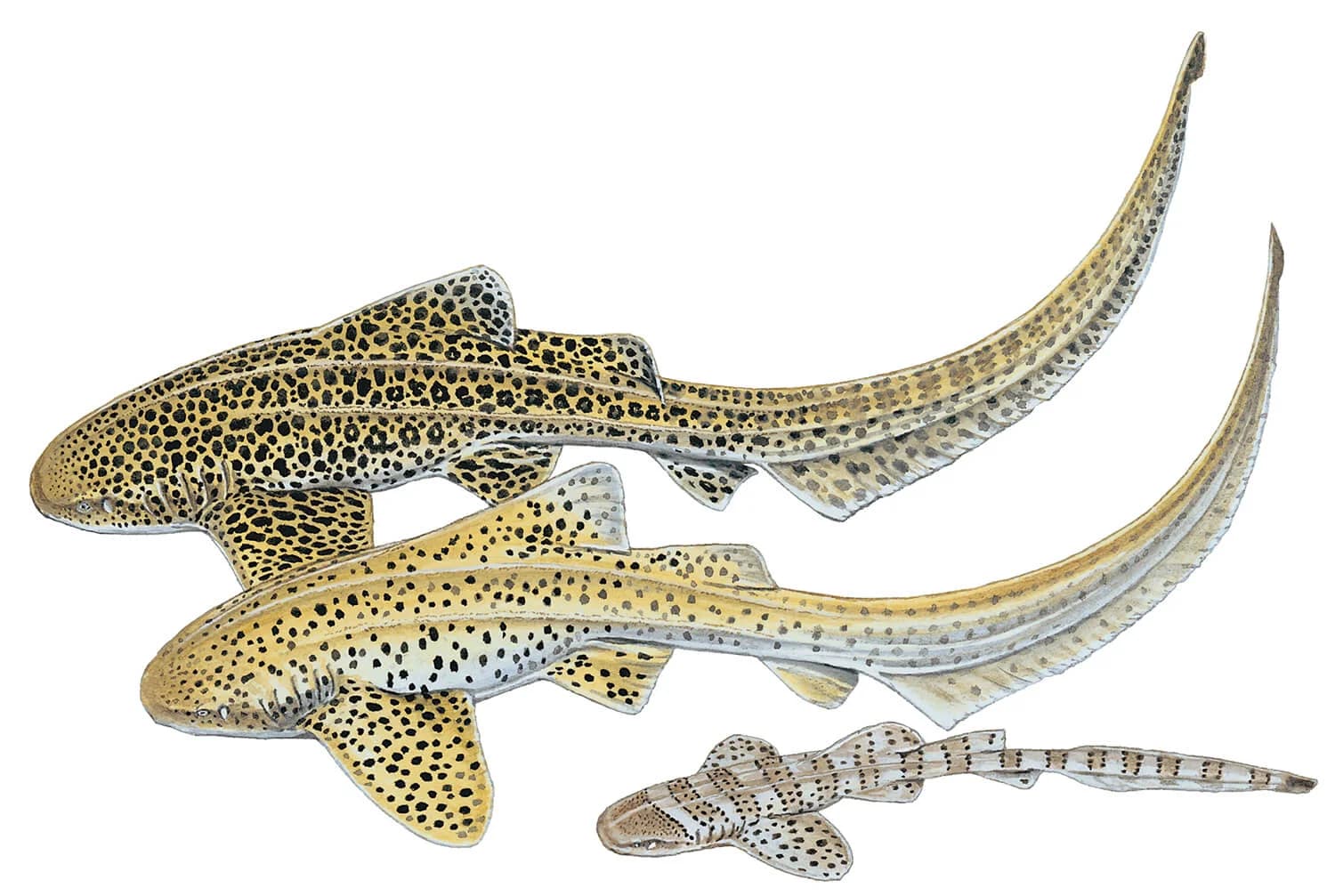
Adults have a leopard-like spotted pattern; juveniles have striking zebra-like stripes — hence both common names (also called leopard shark in some regions). Rests on the seafloor by day. Harmless to humans.

Habitat

Coral reefs and offshore sediments. Intertidal to 203 ft [62 m]. Adults and juveniles rest in coral reef lagoons and channels, but the striped young are rarely seen and may be in deeper water (>50 m).

Distribution

Indo-Pacific Ocean

Indo-west Pacific; tropical and continental and insular shelves, eastern Africa to Japan, New Caledonia and Palau.

Behavior

Often seen resting, propped up on their pectoral fins, mouth open, facing the current. Tend to be sluggish by day and more active at night.

Biology

Diet
Mollusks, crustaceans and small bony fishes.
Reproduction
Oviparous

Appearance

Zebra Shark illustration
Dorsal
The young are yellowish below, dark brown above with vertical yellow stripes and spots separating dark saddles. These saddles break up into spots in sharks 20 to 35 inches [50 to 90 cm] in length, and are more uniformly distributed on large sharks.
Sources:sharksorg

Frequently Asked Questions

Is the zebra shark dangerous to humans?
The zebra shark is not considered dangerous to humans under normal conditions. There are few or no recorded incidents involving this species.
Where does this species data come from?
Species profiles are compiled from peer-reviewed taxonomy and published references. Incident data is sourced from the Global Shark Attack File and joined to species records by name match.