Shark Data Lab logoShark Data Lab
Bigeye Thresher
Lamniformes

Bigeye Thresher

Alopias superciliosus

Back to species

Max Length

4.9m

Litter Size

2 to 4 pups

Overview

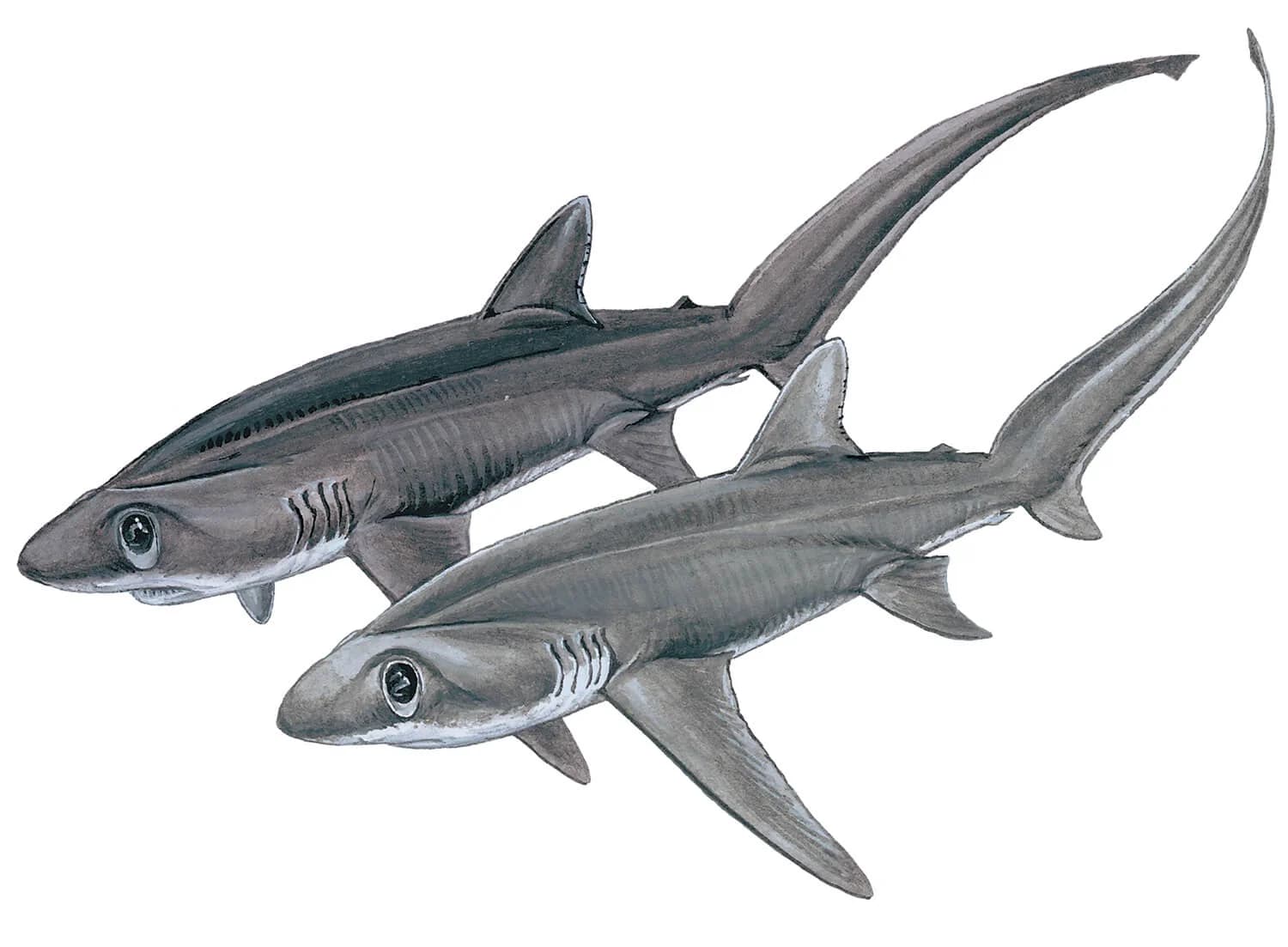
Distinguished by its disproportionately large eyes — an adaptation for hunting in the dim mesopelagic zone. Uses its long upper caudal fin to stun prey fish. Vulnerable to longline bycatch.

Habitat

These sharks frequent tropical and temperate seas, close inshore to open ocean. They range from the surface to over 1640.4 ft [500 m] deep, but mostly between the surface and 328.1 ft [100 m].

Distribution

Tropical & subtropical seas worldwide

World-wide, oceanic and coastal.

Behavior

Uses its tail to stun pelagic fishes on which it feeds.

Biology

Diet
Pelagic fishes.
Reproduction
Ovoviviparous, 2 to 4 pups per litter

Appearance

Bigeye Thresher illustration
Dorsal
Purplish-grey or grey-brown above, light grey to white below.
Sources:sharksorg

Frequently Asked Questions

Is the bigeye thresher dangerous to humans?
The bigeye thresher is not considered dangerous to humans under normal conditions. There are few or no recorded incidents involving this species.
Where does this species data come from?
Species profiles are compiled from peer-reviewed taxonomy and published references. Incident data is sourced from the Global Shark Attack File and joined to species records by name match.