Named for its smooth, silky skin texture. One of the most abundant large oceanic sharks, often found around offshore seamounts and fish aggregating devices. Highly vulnerable to tropical tuna longline bycatch.
Habitat
The shark is found near edges of continental and insular shelves as well as the open sea. The shark has been found at a depth of 1,640 ft [500 m], but it also occurs inshore at the surface and in areas where the water is only 18 inches [45 cm] deep. The shark, abundant offshore and inshore, is oceanic, epipelagic and littoral. This species prefers sea temperatures from 73.5º to 75ºF [23º to 24ºC].
Distribution
Tropical & subtropical seas worldwide
Circumtropical.
Behavior
This is an active, fast and aggressive shark. It is frequently found with schools of tuna. The shark will give way to an Oceanic whitetip shark - Carcharhinus longimanus.
Human Safety
The shark usually ignores divers but make may a threat display when approached by divers, however, it has been implicated in several incidents.
Biology
Diet
Pelagic and inshore bony fishes including tuna, albacore mullet and porcupine fish, as well as squid and crabs. Reproduction - Viviviparous, with a yolk-sac placenta
Reproduction
Viviviparous, with a yolk-sac placenta
Birth Size
87cm
Male Maturity
2.18m
Appearance
Dorsal
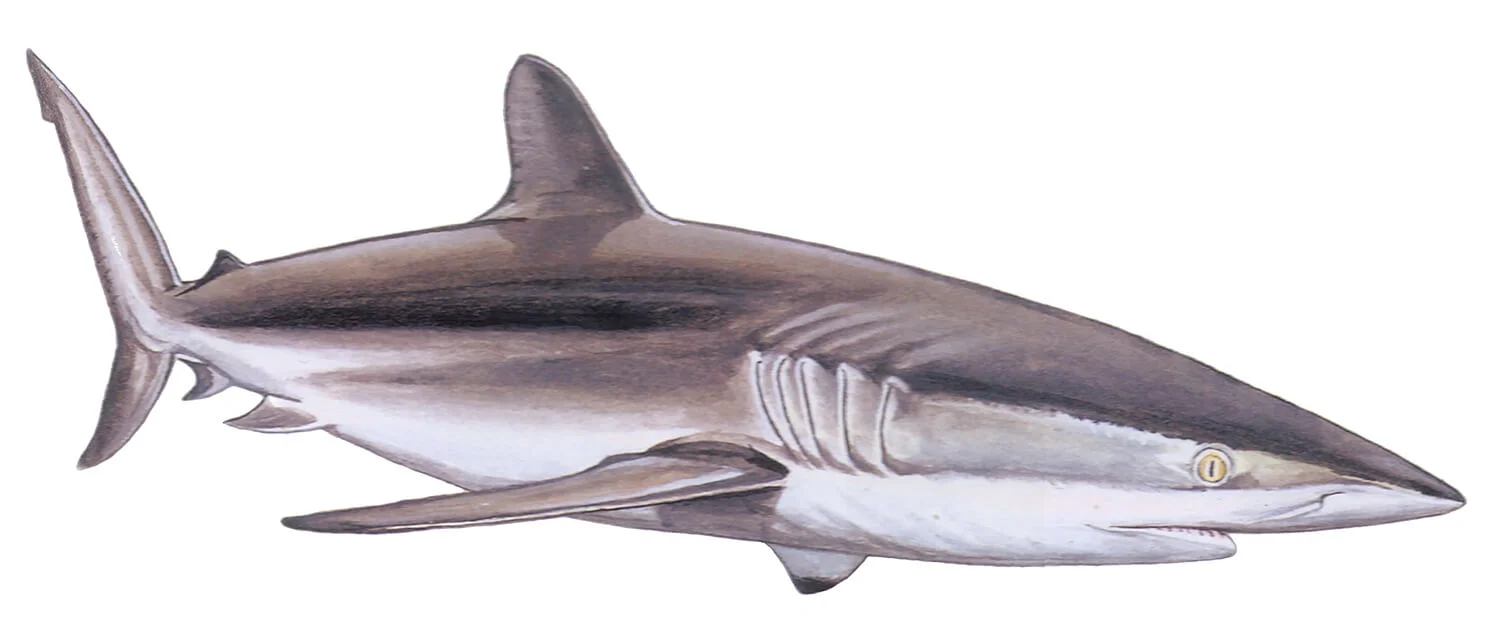
Dark brown to bronze above, white below. The shark has dusky fin tips and a faint white band on its flank.
Dentition
Upper jaw
The teeth of the upper jaw are serrated and have oblique to erect cusps, and the
Counts are based on the species field of the Global Shark Attack File. Identifications by witnesses are often uncertain; treat figures as recorded incidents, not authoritative totals.
Frequently Asked Questions
How many shark attacks have been recorded involving the silky shark?▾
4 incidents in the Global Shark Attack File mention the silky shark, of which 0 were fatal (0.0%). Note that witness species identifications are often uncertain, so this is the count of recorded incidents.
Where do most silky shark incidents occur?▾
The countries with the most recorded silky shark incidents are United States, Spain.
Is the silky shark dangerous to humans?▾
The silky shark is considered relevant to human-shark incidents and has been recorded in the Global Shark Attack File. As with any large shark, encounters in the wild should be avoided.
Where does this species data come from?▾
Species profiles are compiled from peer-reviewed taxonomy and published references. Incident data is sourced from the Global Shark Attack File and joined to species records by name match.


 Shark Data Lab