Shark Data Lab logoShark Data Lab
Bluntnose Sixgill Shark
HexanchiformesAttack Relevant

Bluntnose Sixgill Shark

Hexanchus griseus

Back to species

Max Length

4.8m

Overview

One of the largest bottom-dwelling sharks globally. Its six gill slits reflect a primitive anatomy unchanged for millions of years. Typically inhabits deep water, rising toward the surface at night to feed.

Habitat

Marine or benthic and pelagic. The shark is found on continental and insular shelves and upper slopes, from the surface to 6,150 ft [1875 m]. Juveniles are often found close inshore.

Distribution

Worldwide

Temperate and tropical seas.

Behavior

The shark is sluggish, but it is a strong swimmer. Apparently it is nocturnal and very sensitive to high light levels.

Human Safety

Unknown. Danger to humans – due to the shark’s large size and dentition it should be treated with caution.

Biology

Diet
Fish, small sharks and cephalopods.
Reproduction
Ovoviviparous
Birth Size
70cm

Appearance

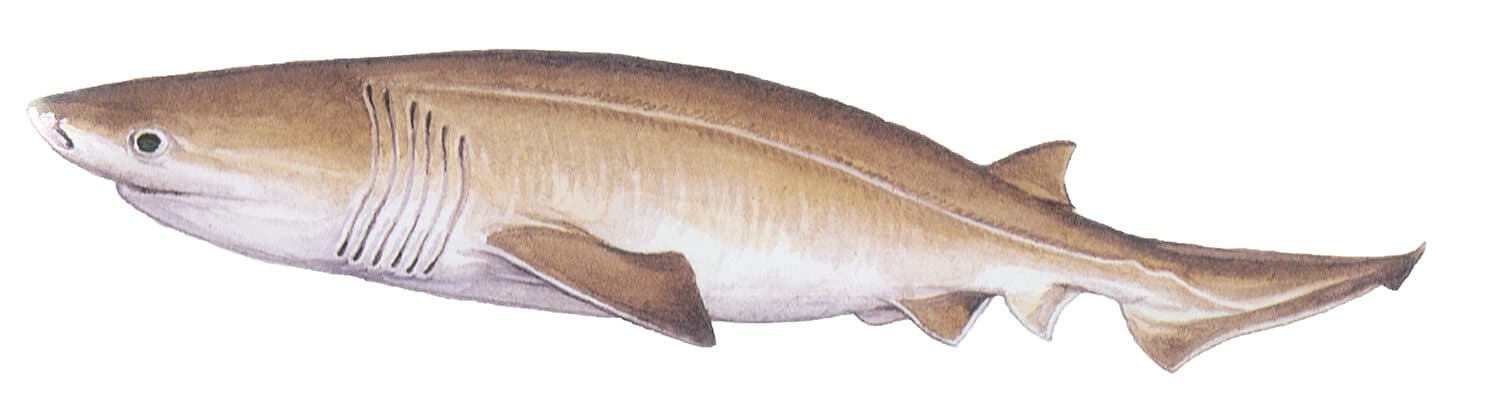
Bluntnose Sixgill Shark illustration
Dorsal
Brown to dark gray above; off-white below. Its fins have thin white trailing edges.

Dentition

Upper jaw
Fang-like teeth in upper jaw, broad saw-like teeth in
Lower jaw
jaw.
Sources:sharksorg

Frequently Asked Questions

Is the bluntnose sixgill shark dangerous to humans?
The bluntnose sixgill shark is considered relevant to human-shark incidents and has been recorded in the Global Shark Attack File. As with any large shark, encounters in the wild should be avoided.
Where does this species data come from?
Species profiles are compiled from peer-reviewed taxonomy and published references. Incident data is sourced from the Global Shark Attack File and joined to species records by name match.