
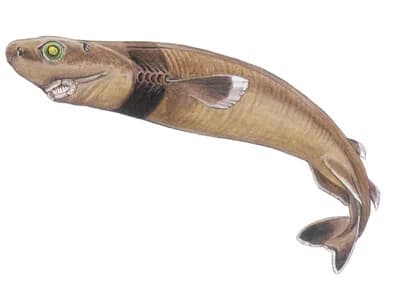
Isistius brasiliensis
Max Length
0.5m
Litter Size
6-7 pups
Overview
A small parasitic shark that takes neat, round plugs of flesh from large marine animals — and occasionally submarine cables and human swimmers. Bioluminescent belly lures prey. Performs large nightly vertical migrations.
Habitat
The shark is a wide-ranging tropical oceanic shark, epipelagic to bathypelagic. It can range from the surface to more than 11482.9 ft [3500 m] deep, but usually range from 278.9 to 11482.9 ft [85-3500 m]. These sharks are often found near islands, which are possibly their pupping grounds or where concentrations of prey are located.
Distribution
Atlantic, southern Indian and Pacific Oceans.
Behavior
Cookiecutter sharks are poor swimmers, and generally only caught at night. They probably migrate vertically from deep water [2000-3000 m] to midwater or surface at night. They are an ectoparasite on large fish and cetaceans, which are possibly lured to the shark by its bioluminescent light organs. Its thick lips and modified pharynx are used to attach itself to the prey, then razor-sharp lower teeth bite into the skin and twisting movements cut out a plug of flesh. Once cut out, the shark pulls free, holding the plug of tissue by its hook-like upper teeth and leaving behind a crater wound. Reported to have attacked rubber sonar domes on nuclear submarines and there is a case (GSAF 2009.03.17) in which a long-distance swimmer was bitten by a Cookiecutter shark. Can be active and bite when caught.
Biology
Appearance
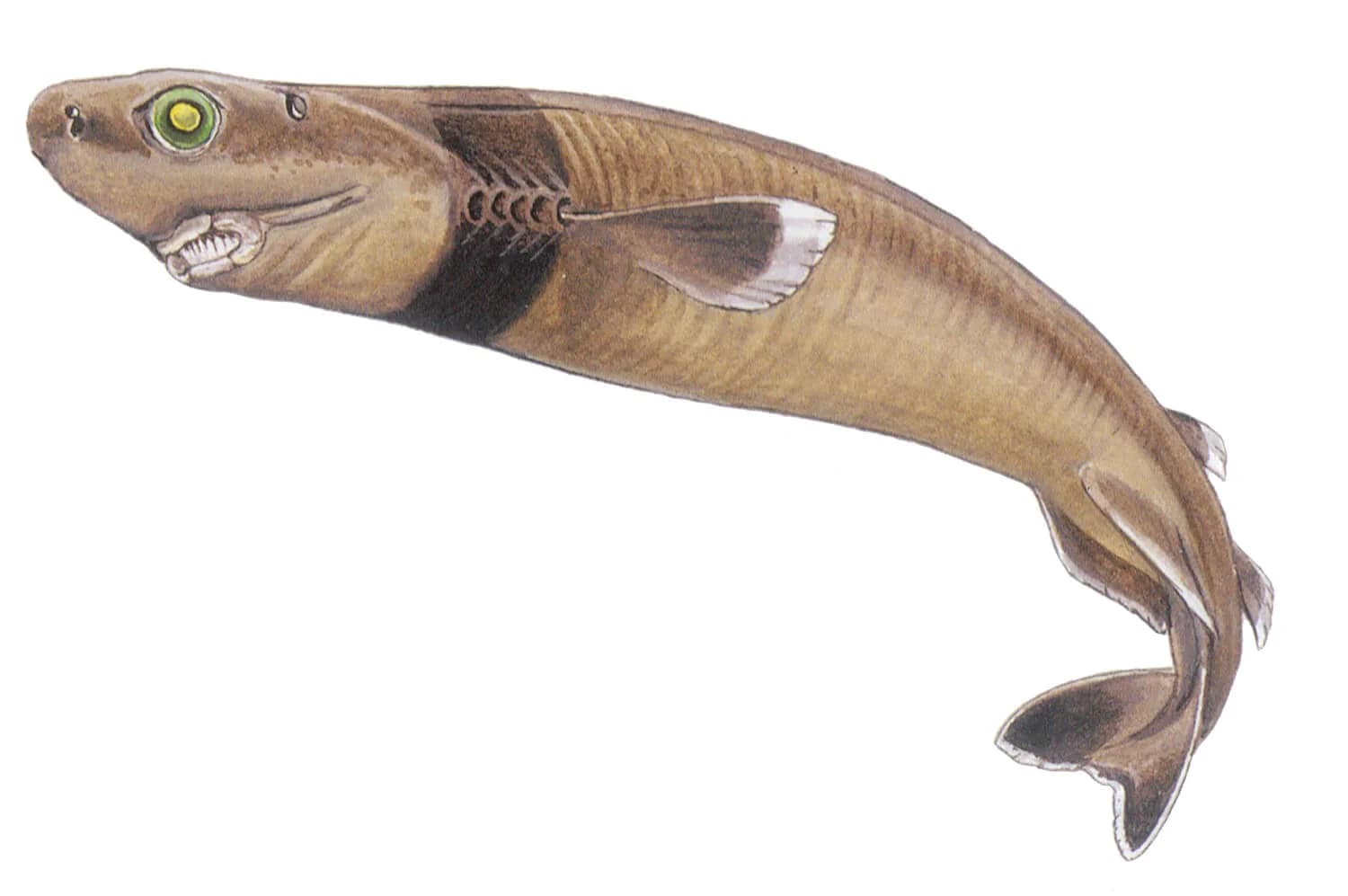
Dentition
Recorded
6
Fatal
0
Fatality rate
0.0%
Years
2009–2023
Counts are based on the species field of the Global Shark Attack File. Identifications by witnesses are often uncertain; treat figures as recorded incidents, not authoritative totals.
 Shark Data Lab