
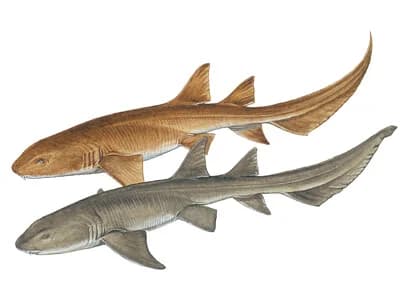
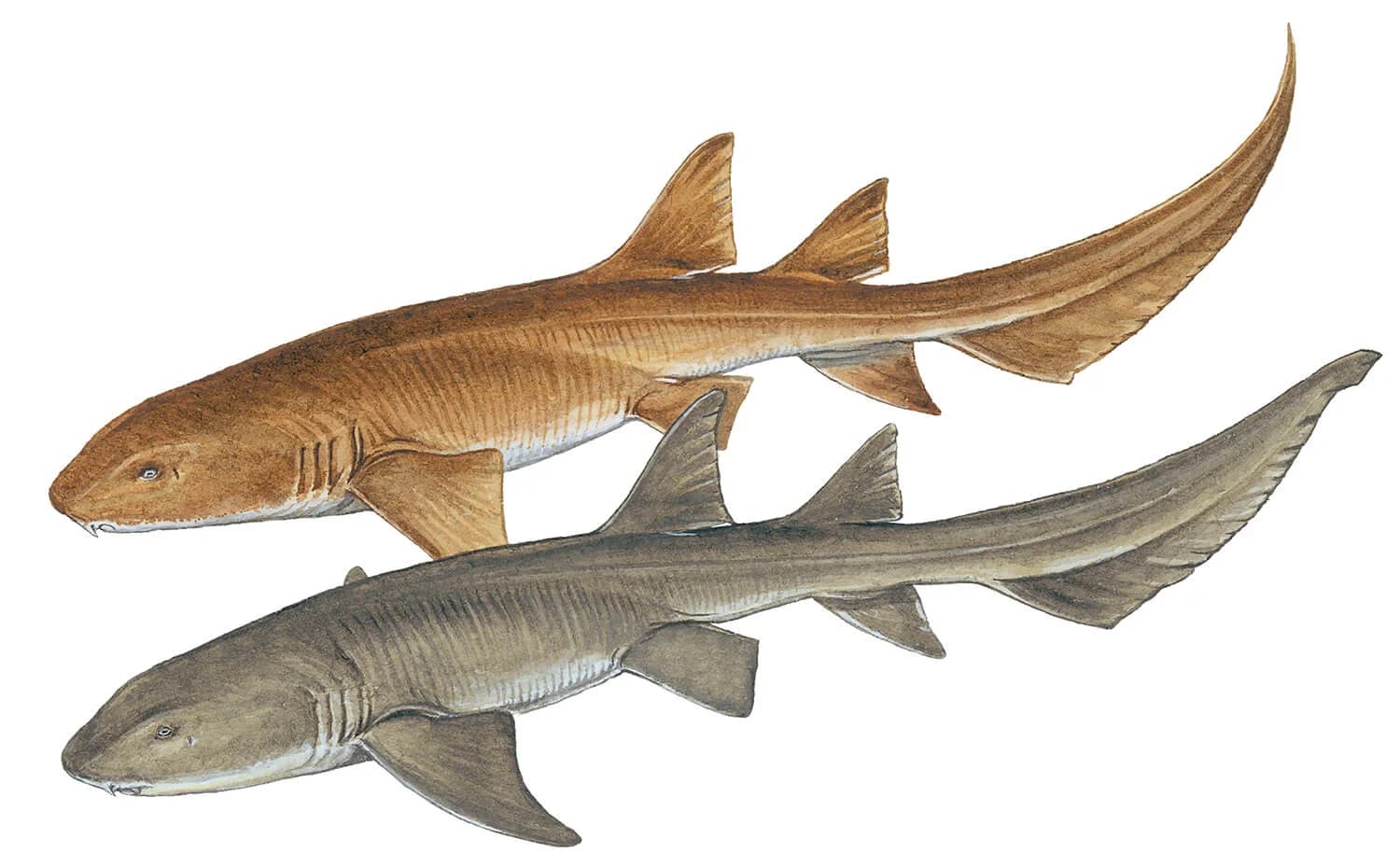
Nebrius ferrugineus
Max Length
3.2m
Overview
The Indo-Pacific counterpart of the nurse shark. Commonly found resting in caves, under ledges, and in crevices during the day. Nocturnal feeder on reef invertebrates. Harmless unless provoked.
Habitat
These sharks are found on or near the bottom in sheltered areas: lagoons (particularly juveniles), channels, crevices and caves in outer coral and rocky reef edges, seagrass, and sand, on and near reefs and off beaches. They range from intertidal to depths of more than 229.7 ft [70 m], but mostly range from 16.4 to 98.4 ft [5 to 30 m].
Distribution
These sharks are wide-ranging in the tropical Indo-Pacific Ocean from South Africa to the Red Sea and Gulf, East Asia north to Japan, Australia to Marshall Islands, and Tahiti.
Behavior
These sharks are mostly nocturnal, and prowl reeds at night in search of prey to suck out of crevices. The sharks aggregate in shelter by the day. They have a limited home range, and often return to the same resting place. They may ‘spit’ water when caught and spin on the line when hooked. They are docile and popular with divers, but may bite if they are harassed. They are hardy in aquaria.
Biology
Appearance
Recorded
3
Fatal
0
Fatality rate
0.0%
Years
2012–2018
Counts are based on the species field of the Global Shark Attack File. Identifications by witnesses are often uncertain; treat figures as recorded incidents, not authoritative totals.
 Shark Data Lab