Shark Data Lab logoShark Data Lab
Lemon Shark
CarcharhiniformesAttack Relevant

Lemon Shark

Negaprion brevirostris

Back to species

Max Length

3.4m

Litter Size

4 to 19 pups

Overview

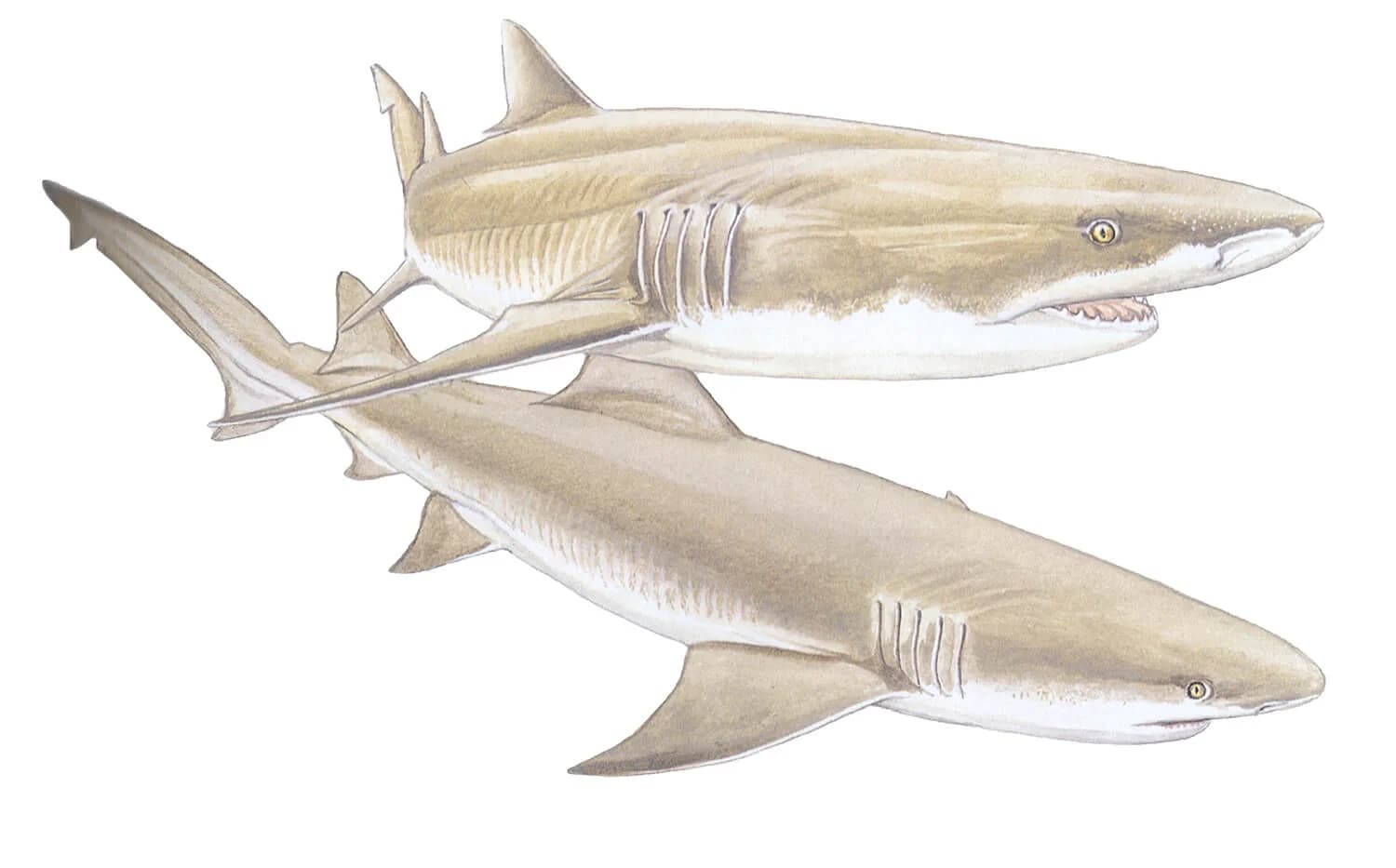
Named for its yellowish-brown coloring, providing camouflage over sandy seafloors. Common in shallow subtropical Atlantic waters. One of the most-studied sharks in both captivity and the field, used extensively in behavioral research.

Habitat

Inshore species that may enter fresh water.

Distribution

Western Atlantic & Caribbean

Western Atlantic from New Jersey to southern Brazil, including the Gulf of Mexico and Caribbean Sea. Eastern North Atlantic including Senegal and Ivory Coast. Eastern Pacific from southern Baja to Ecuador.

Behavior

The shark is nocturnal; it is active at night close inshore: around docks, saltwater creeks, estuaries, bays and inlets.

Human Safety

This species has been involved in unprovoked incidents in South Carolina, Florida and Texas. It may become very aggressive toward divers if molested.

Biology

Diet
Bony fishes, rays, small sharks, crustaceans, mollusks and sea birds.
Reproduction
Viviparous with a yolk-sac placenta
Birth Size
65cm
Male Maturity
2.24m

Appearance

Lemon Shark illustration
Dorsal
Dark brown, olive or pale yellowish-brown above; yellowish below.

Dentition

Upper jaw
Teeth in upper jaw have narrow triangular smooth-edged cusps and broad finely-serrated bases.
Lower jaw
jaw teeth have narrow erect smooth-edged cusps.
Sources:sharksorg

Frequently Asked Questions

Is the lemon shark dangerous to humans?
The lemon shark is considered relevant to human-shark incidents and has been recorded in the Global Shark Attack File. As with any large shark, encounters in the wild should be avoided.
Where does this species data come from?
Species profiles are compiled from peer-reviewed taxonomy and published references. Incident data is sourced from the Global Shark Attack File and joined to species records by name match.