
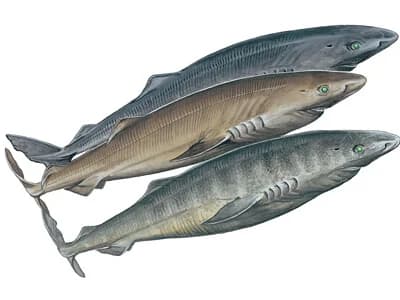
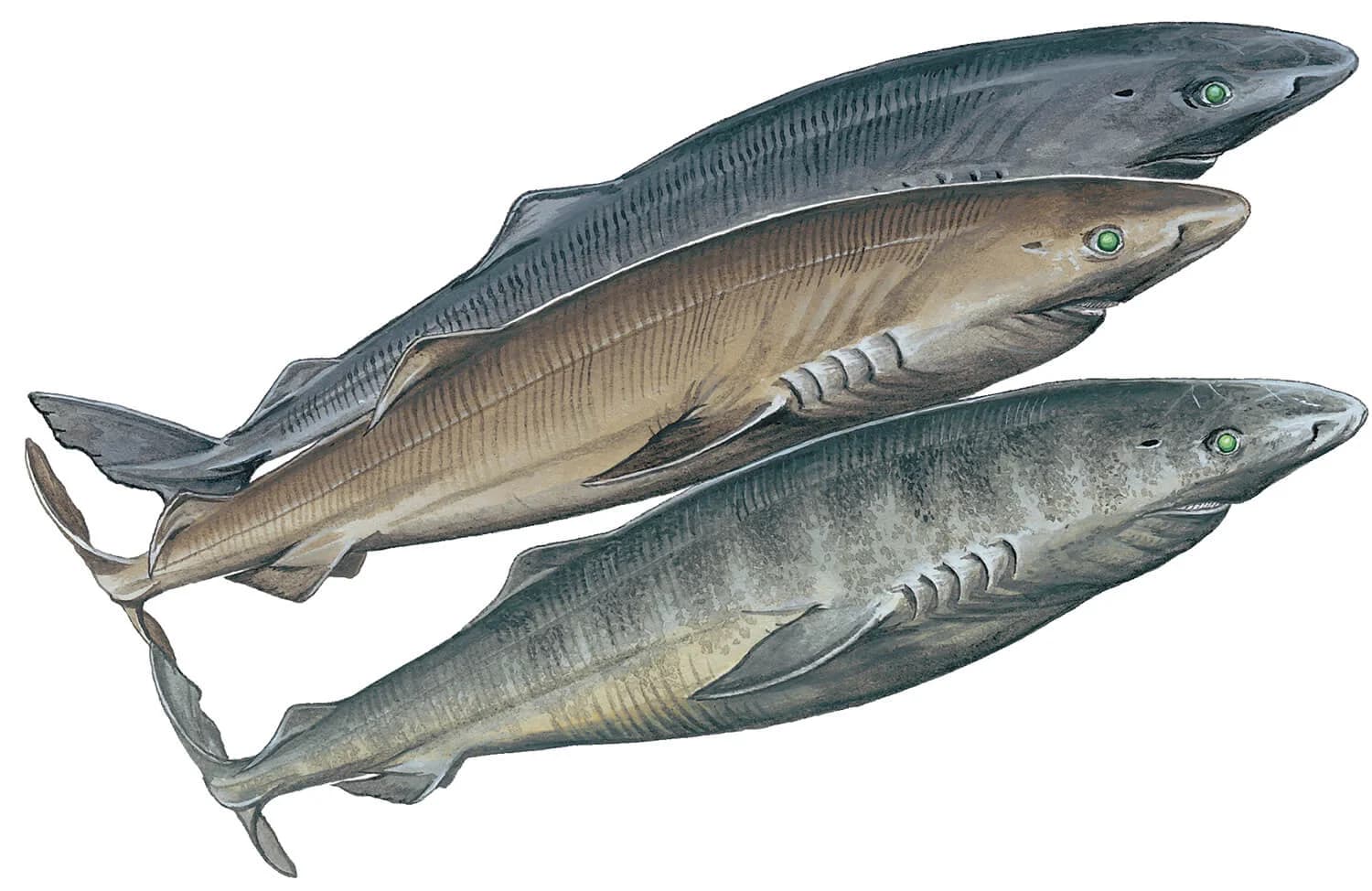
Somniosus microcephalus
Max Length
7.3m
Litter Size
10 pups
Overview
The longest-lived vertebrate on Earth — some individuals exceed 500 years old, reaching sexual maturity at around 150 years. Moves extremely slowly through frigid Arctic and North Atlantic waters. Flesh is toxic if not specially prepared.
Habitat
These sharks prefer continental and insular shelves and upper slopes to at least 3937 ft [1200 m] deep. They also prefer water temperatures between 33 and 53.6ºF [0.6 and12ºC]. They tend to move inshore during the Arctic winter (from intertidal and surface in shallow bays and river mouths), and retreat to 591 to 1804 ft [180 to 550 m] when temperatures rise. In the north Atlantic, these sharks may move into shallower water in the spring and summer.
Distribution
North Atlantic and Arctic oceans, occasionally extending to Portugal.
Behavior
These sharks are sluggish and offer little resistance to capture. They are easily fished through iceholes, but they are able to capture large and active prey.
Biology
Appearance
 Shark Data Lab