
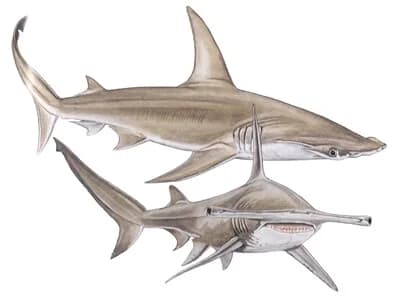
Sphyrna mokarran
Max Length
6.1m
Overview
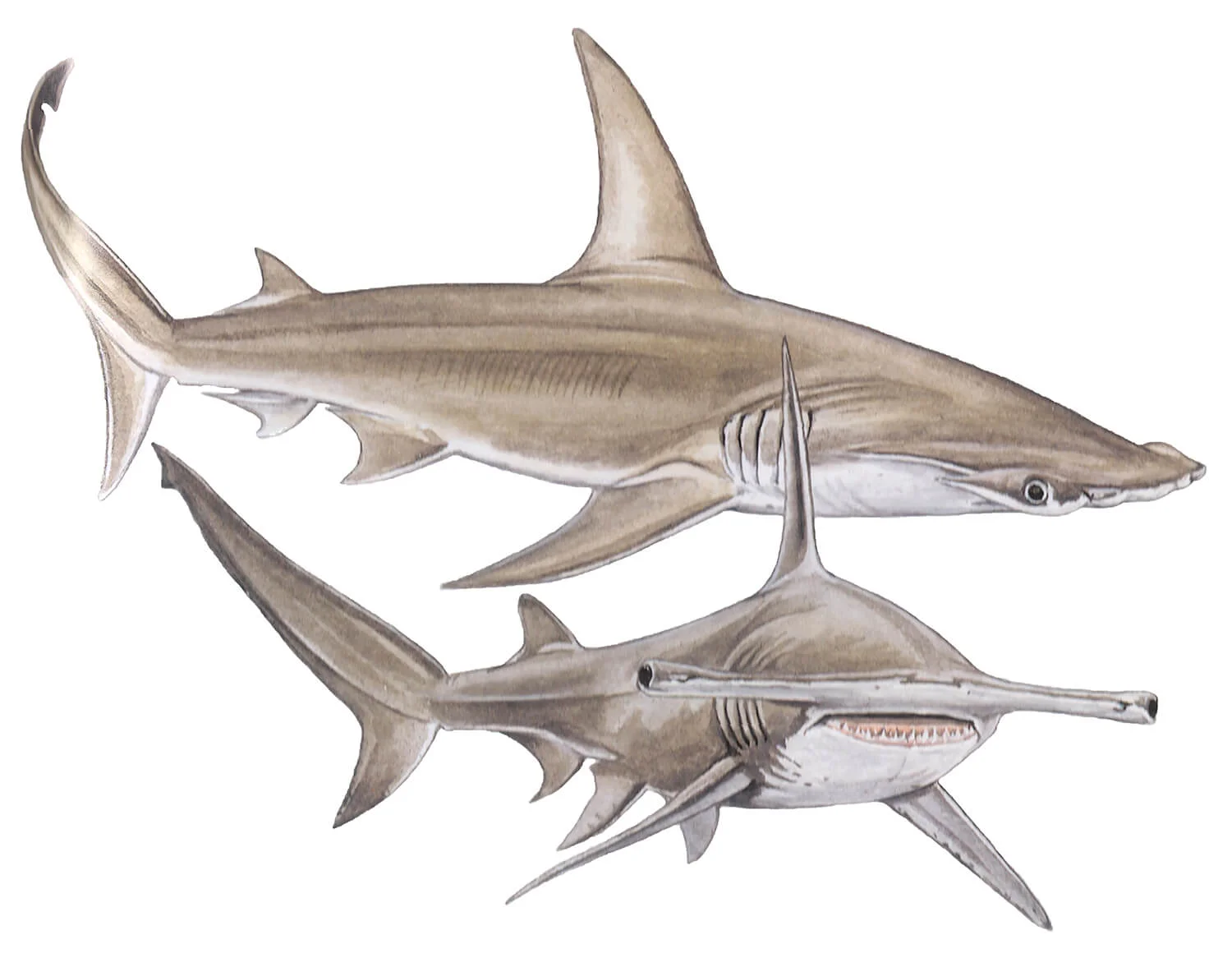
The largest hammerhead species, distinguished by a nearly straight cephalofoil front edge and a very tall first dorsal fin. A specialist stingray predator — its electroreception can detect rays buried under sand. Critically endangered.
Habitat
Coastal-pelagic and semi-oceanic shark occurring close inshore and well offshore. Found over the continental shelves, island terraces and in passes and lagoons of coral atolls, as well as over deep water near land. It is found near the surface and from depths of 3 ft to more than 262 ft [1 to 80 m]. It often favors continental and insular coral reefs.
Distribution
Circumtropical.
Behavior
General – A solitary, nomadic and migratory species. Some populations move poleward during the winter. Feeding – The shark feeds mostly at dusk. A shark was seen to use the underside of its hammer-shaped head to bludgeon and pin a stingray to the seabed, then the shark pivoted and bit a chunk out of the ray’s pectoral fin. Mating – Mating great hammerheads were reportedly witnessed in 70 ft [21 m] in the Bahamas. The sharks ascended, spiraling slowly around each other and copulated at the surface. While synchronous swimming as a prelude to mating has been observed with other species of sharks, copulation at the surface has not. Most species are thought to mate at or near the seafloor.
Human Safety
The species is thought to be dangerous, though relatively few incidents have been attributed to it or any other species of hammerhead sharks. The shark has approached divers without displaying aggression. However, due to its size and broad food spectrum the shark should be treated with caution.
Biology
Appearance
Dentition
Recorded
1
Fatal
0
Fatality rate
0.0%
Years
2003–2003
Top countries
Years with most incidents
Counts are based on the species field of the Global Shark Attack File. Identifications by witnesses are often uncertain; treat figures as recorded incidents, not authoritative totals.
 Shark Data Lab