 Shark Data Lab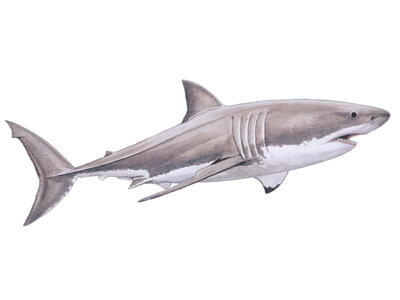
In the summer of 1916, a string of shark attacks along the New Jersey coastline shattered the prevailing belief that sharks posed no serious threat to swimmers in temperate Atlantic waters. Over the span of just twelve days, five people were struck — four of them fatally — in incidents that reached from the open ocean beaches to a narrow tidal creek far inland. The episode ignited a national panic, reshaped public policy around beach safety, and embedded the idea of the "rogue shark" so deeply into American consciousness that it would echo through popular culture for generations.
The sequence began on June 30 at Beach Haven, a resort community in Ocean County, when a 24-year-old man was attacked while swimming in the surf. A white shark bit into his left leg, and despite efforts to help him ashore, he did not survive. At the time, many observers struggled to accept what had happened — the notion that a shark might deliberately target a human swimmer was widely dismissed by the scientific establishment of the era. The attack was treated as a freak occurrence, and the beaches remained open.
Five days later, on July 5, the illusion of safety collapsed again. At Spring Lake in Monmouth County, another swimmer was fatally attacked, again attributed to a white shark. Spring Lake was a fashionable resort, and the death of a guest there was impossible to explain away. Hotels faced cancellations, and newspapers that had initially been cautious with their coverage now ran the story prominently. Still, the attacks had occurred in the open ocean, and some continued to argue that staying close to shore — or avoiding the breakers entirely — offered adequate protection.
That assumption was devastated on July 11, when the violence moved somewhere no one had anticipated: Matawan Creek, a brackish tidal waterway winding through Monmouth County roughly ten miles from the open sea. A ten-year-old boy swimming in the creek was seized and killed, his legs and torso badly injured. When a 24-year-old local man entered the water to recover the child's remains, he too was attacked — bitten on the thigh — and later died from his wounds. The same day, slightly farther upstream near a brickyard at Cliffwood, a 12-year-old boy suffered a severe bite to his lower left leg; witnesses reported a shark measuring around nine feet in length. The boy survived, but his leg required surgical amputation. Three attacks in a single creek, in a single afternoon, in water miles from the ocean — the event defied every working assumption about where sharks could or would go.
The Matawan incidents triggered an immediate and dramatic response. Local residents organized armed hunts along the creek, stringing nets and dragging boats through the murky water. The federal government became involved, with President Woodrow Wilson convening a cabinet-level discussion. A bounty was effectively placed on sharks along the coast, and hundreds were killed in the weeks that followed. A large white shark and at least one bull shark — a species well adapted to freshwater environments — were caught in the area, and debate over which animal was responsible for the Matawan attacks has continued ever since. The creek incidents are frequently cited as evidence for bull shark involvement, given that species' documented ability to travel far up rivers and estuaries, though the record does not conclusively identify the species responsible for those three strikes.
In total, the twelve-day sequence claimed four lives and left one survivor with a permanent disability. The cultural weight of the events, however, extended far beyond the immediate tragedy. The 1916 attacks were later identified by author Peter Benchley as a primary inspiration for his 1974 novel about a great white shark terrorizing a coastal community — a novel that became one of the most famous thrillers ever written and the basis for a landmark film. The concept of a single, persistent predator returning to the same stretch of coastline — the "rogue shark" hypothesis — gained its popular footing in the summer of 1916, even as marine scientists have spent decades debating whether the attacks reflected the behavior of one animal or several.
What the Jersey Shore attacks indisputably accomplished was a fundamental shift in the relationship between the American public and the ocean. Before July 1916, sharks were largely regarded as remote curiosities. Afterward, the beach itself became a place where the water's edge marked the boundary of a genuine, if statistically remote, danger — a perception that no amount of scientific reassurance has ever entirely erased.