
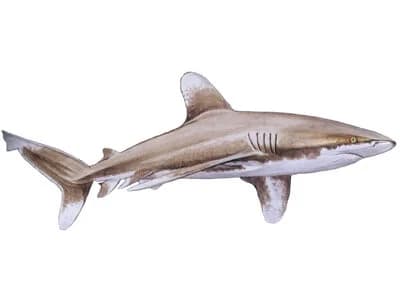
Carcharhinus longimanus
Max Length
3.9m
Litter Size
1 to 15 pups
Overview
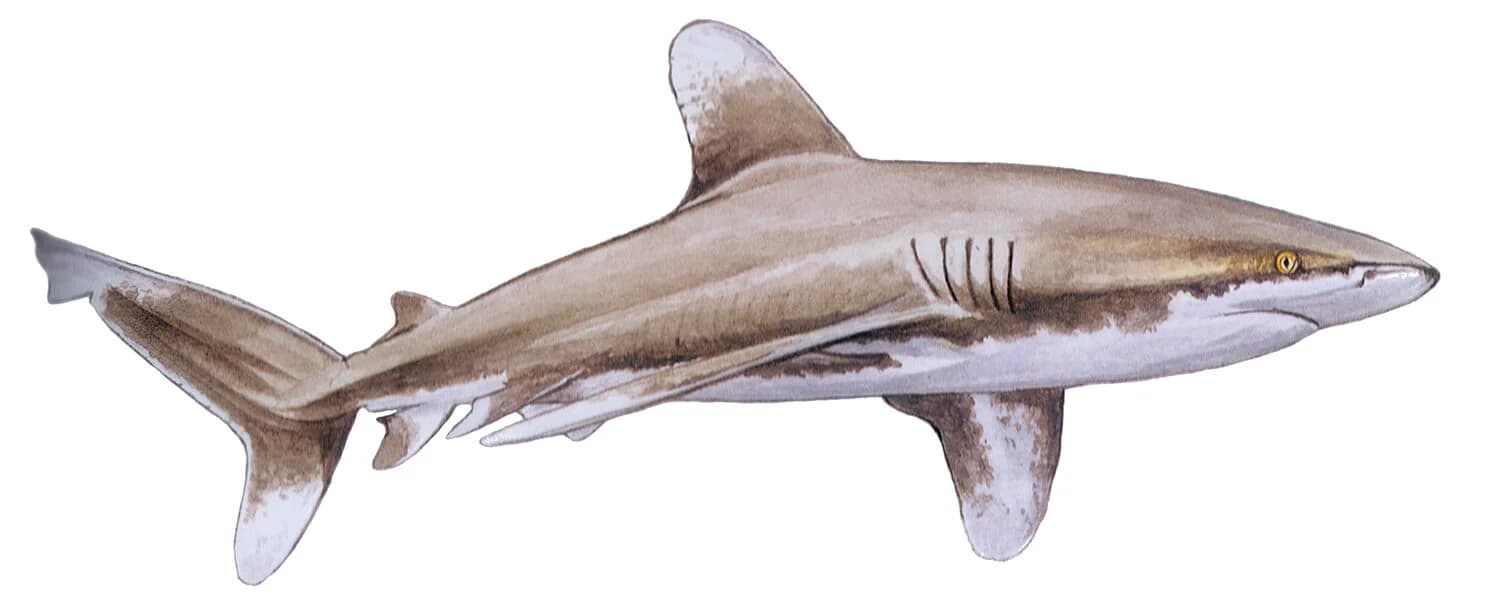
Historiquement responsable d'incidents à forte mortalité lors de naufrages en haute mer et d'accidents aériens. Autrefois extrêmement abondant ; désormais gravement menacé en raison de la surpêche pour le commerce des nageoires. Caractérisé par des nageoires distinctives arrondies avec des extrémités blanches.
Habitat
Océanique, épipélagique, mais occasionnellement côtier. Cette espèce se trouve généralement au large en haute mer, mais elle est parfois observée près des îles océaniques où l'eau est profonde de 120 pieds [37 m]. Le requin se rencontre régulièrement dans des eaux de 64°F à 82°F [18°C à 28°C], mais préfère les températures marines supérieures à 68°F [20°C].
Distribution
Circumglobale dans les mers tropicales et tempérées chaudes. Autrefois abondant dans le Golfe du Mexique, l'espèce a pratiquement disparu en raison de la surpêche.
Behavior
Le requin croise nonchalamment près de la surface avec ses énormes nageoires pectorales déployées. Il peut être extrêmement rapide et agressif en compétition pour la nourriture.
Human Safety
Le requin océanique pointe blanche est souvent très audacieux et persistant lorsqu'il inspecte une source de nourriture potentielle.
Biology
Appearance
Conservation
The shark has been implicated in a number of unprovoked attacks on swimmers and divers. Divers report that it is very persistent in baited and unbaited situations. When fended off, an Oceanic whitetip shark often returns, circles and approaches again. Its opportunistic feeding habits, heavy build, strong jaws and teeth, and its stubborn aggressiveness indicate that it should be treated with caution.
Recorded
30
Fatal
5
Fatality rate
16.7%
Years
1942–2023
Top countries
Counts are based on the species field of the Global Shark Attack File. Identifications by witnesses are often uncertain; treat figures as recorded incidents, not authoritative totals.
 Shark Data Lab