
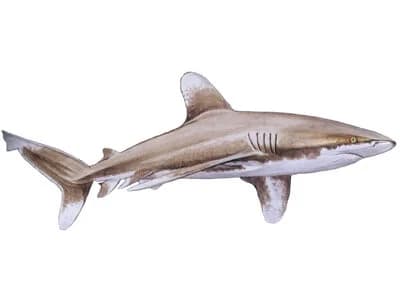
Carcharhinus longimanus
Max Length
3.9m
Litter Size
1 to 15 pups
Overview
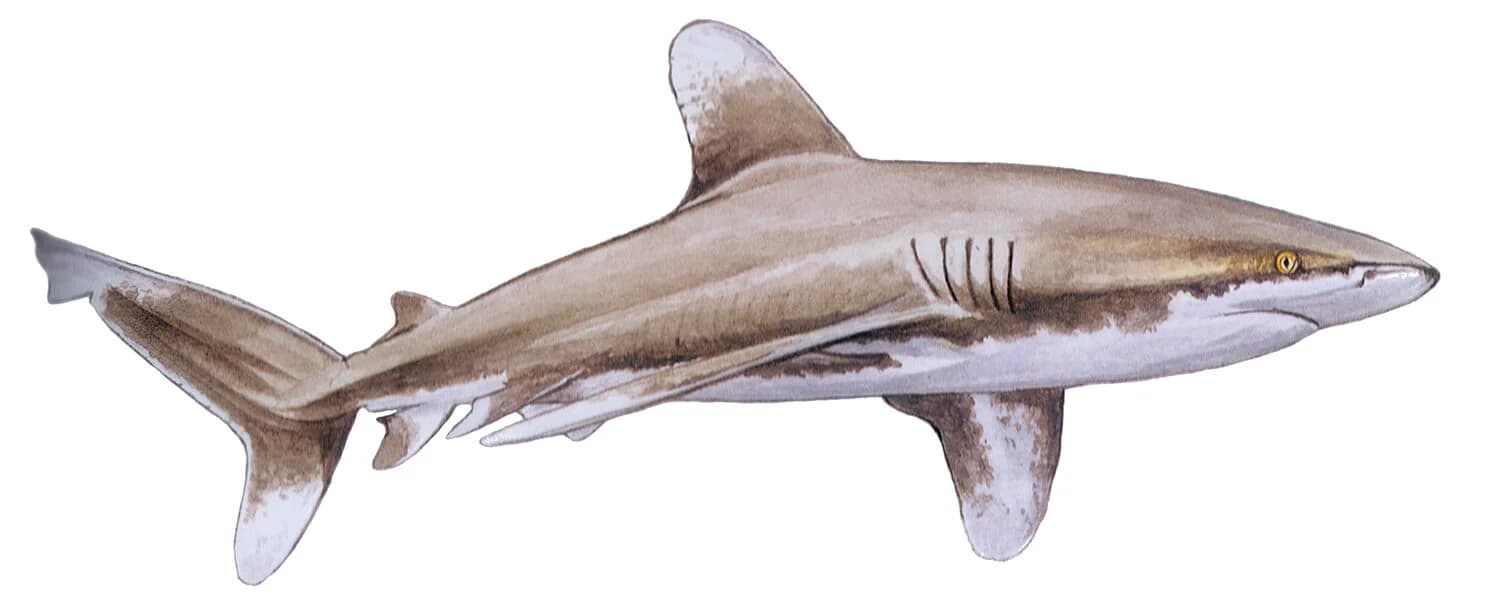
Historically responsible for mass-casualty incidents at open-ocean shipwrecks and air crashes. Once extremely abundant; now critically endangered due to overfishing for the fin trade. Characterized by distinctive rounded, white-tipped fins.
Habitat
Oceanic, epipelagic, but occasionally coastal. This species is usually found far offshore in the open sea, but it is sometimes found near oceanic islands where the water is 120 ft [37 m] deep. The shark is regularly found in waters 64°F to 82°F [18°C to 28°C], but prefers sea temperatures above 68°F [20°C].
Distribution
Circumglobal in tropical and warm temperate seas. Once abundant in the Gulf of Mexico, the species has virtually disappeared due to overfishing.
Behavior
The shark cruises leisurely near the surface with its huge pectoral fins outspread. It can be extremely fast and aggressive when competing for food.
Human Safety
The Oceanic whitetip shark is often very bold and persistent when it is inspecting a potential food source.
Biology
Appearance
Conservation
The shark has been implicated in a number of unprovoked attacks on swimmers and divers. Divers report that it is very persistent in baited and unbaited situations. When fended off, an Oceanic whitetip shark often returns, circles and approaches again. Its opportunistic feeding habits, heavy build, strong jaws and teeth, and its stubborn aggressiveness indicate that it should be treated with caution.
Recorded
30
Fatal
5
Fatality rate
16.7%
Years
1942–2023
Top countries
Counts are based on the species field of the Global Shark Attack File. Identifications by witnesses are often uncertain; treat figures as recorded incidents, not authoritative totals.
 Shark Data Lab