Utilise ses nageoires pectorales musclées pour « marcher » sur les platiers récifaux et à travers les bassins de marée. Peut survivre à une brève exposition à l'air et aux conditions hypoxiques — une adaptation pour la chasse dans les bassins isolés à marée basse. Inoffensif.
Habitat
Ces requins préfèrent les récifs de corail en eaux peu profondes et les bassins de marée, et sont parfois à peine submergés.
Distribution
Pacifique sud-ouest, de la Nouvelle-Guinée à l'Australie (et peut-être aux îles Salomon et en Malaisie).
Behavior
Ces petits requins sont plus actifs au crépuscule et la nuit, et se nourrissent souvent à marée basse. Ils rampent, grimpent et nagent, tout en battant leur queue pour enfoncer leur museau dans le sable. Ils n'ont pas peur des humains et peuvent mordre lorsqu'ils sont capturés.
Biology
Diet
Vers, crustacés et petits poissons.
Reproduction
Ovipares, et leurs œufs éclosent en environ 120 jours
Appearance
Dorsal
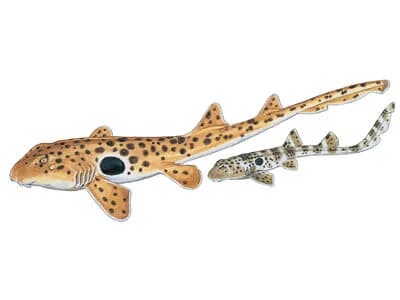
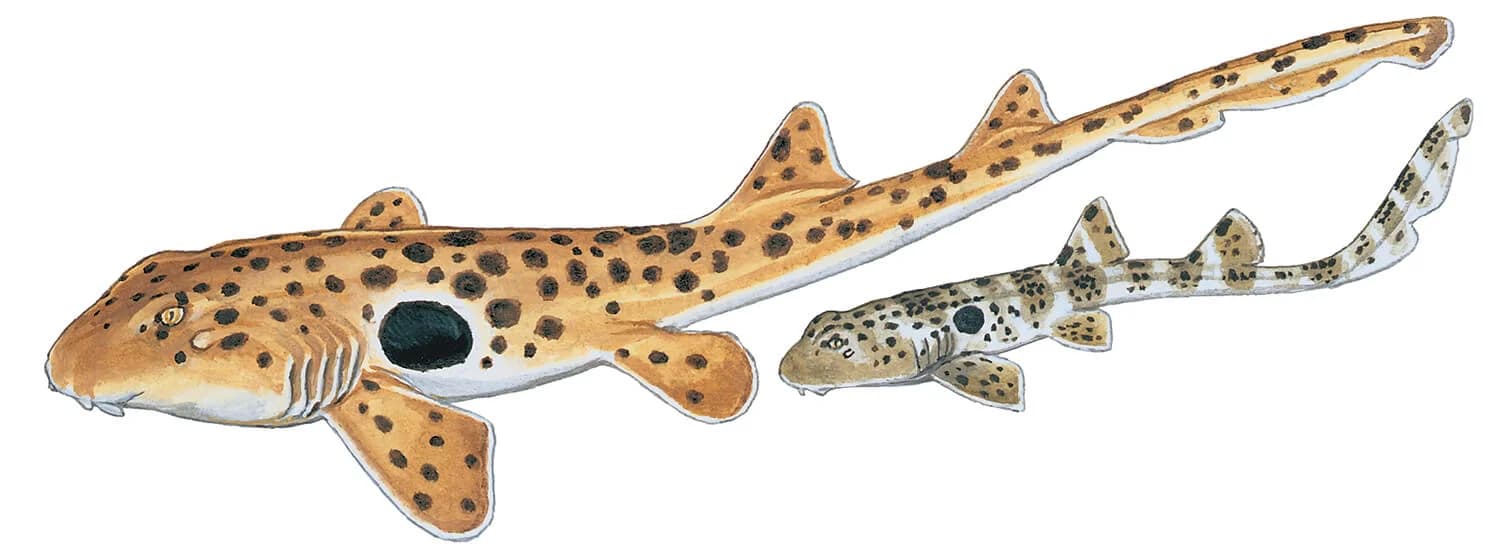
The shark has a large, black, epaulette spot ringed with white, and inconspicuous small dark spots behind and below it. It has no white spots or reticular network.
Counts are based on the species field of the Global Shark Attack File. Identifications by witnesses are often uncertain; treat figures as recorded incidents, not authoritative totals.
Frequently Asked Questions
How many shark attacks have been recorded involving the epaulette shark?▾
1 incidents in the Global Shark Attack File mention the epaulette shark, of which 0 were fatal (0.0%). Note that witness species identifications are often uncertain, so this is the count of recorded incidents.
Where do most epaulette shark incidents occur?▾
The countries with the most recorded epaulette shark incidents are United States.
Is the epaulette shark dangerous to humans?▾
The epaulette shark is not considered dangerous to humans under normal conditions. There are few or no recorded incidents involving this species.
Where does this species data come from?▾
Species profiles are compiled from peer-reviewed taxonomy and published references. Incident data is sourced from the Global Shark Attack File and joined to species records by name match.

 Shark Data Lab