Uses its muscular pectoral fins to "walk" across reef flats and through tide pools. Can survive brief exposure to air and hypoxic conditions — an adaptation for hunting in isolated pools at low tide. Harmless.
Habitat
These sharks prefer coral reefs in shallow water and tide pools, and are sometimes barely submerged.
Distribution
Southwest Pacific from New Guinea to Australia (and possible to the Solomon Islands and Malaysia).
Behavior
These small sharks are more active at dusk and by night, and they often feed at low tide. They crawl, clamber, and swim about, while thrashing their tail to dig their snout into the sand. They are unafraid of humans and may nip when captured.
Biology
Diet
Worms, crustaceans, and small fishes.
Reproduction
Oviparous, and their eggs hatch in approximately 120 days
Appearance
Dorsal
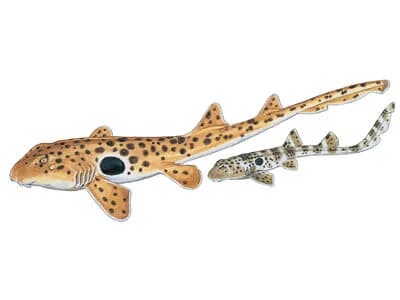
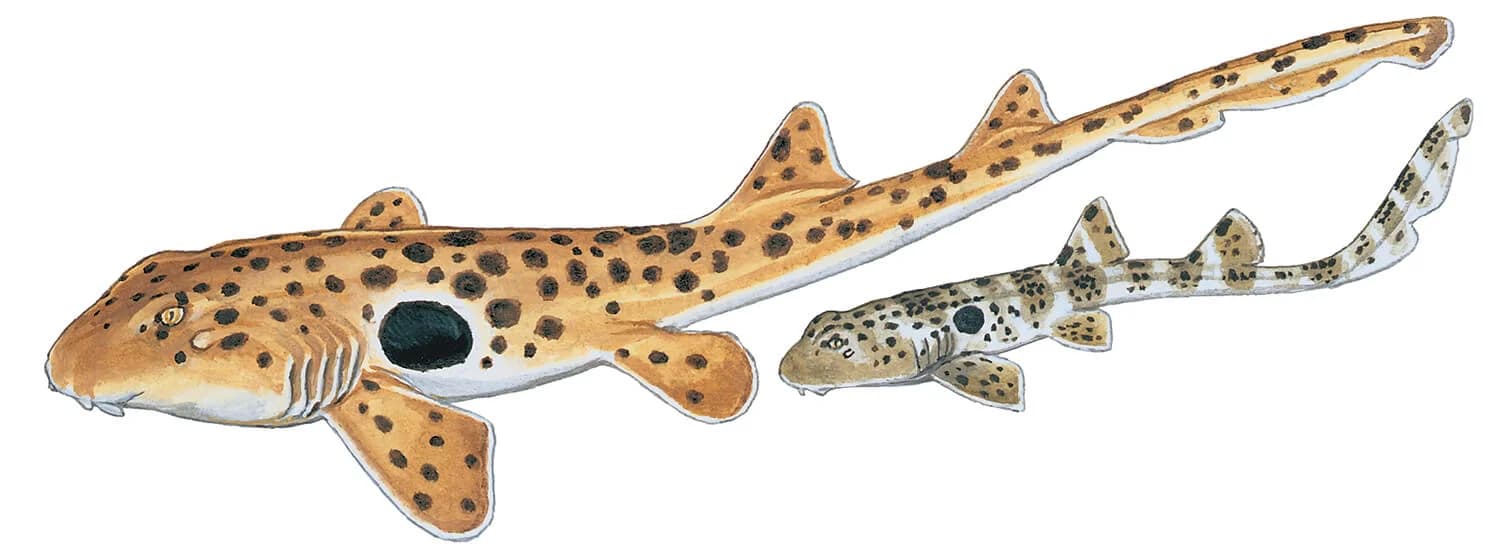
The shark has a large, black, epaulette spot ringed with white, and inconspicuous small dark spots behind and below it. It has no white spots or reticular network.
Counts are based on the species field of the Global Shark Attack File. Identifications by witnesses are often uncertain; treat figures as recorded incidents, not authoritative totals.
Frequently Asked Questions
How many shark attacks have been recorded involving the epaulette shark?▾
1 incidents in the Global Shark Attack File mention the epaulette shark, of which 0 were fatal (0.0%). Note that witness species identifications are often uncertain, so this is the count of recorded incidents.
Where do most epaulette shark incidents occur?▾
The countries with the most recorded epaulette shark incidents are United States.
Is the epaulette shark dangerous to humans?▾
The epaulette shark is not considered dangerous to humans under normal conditions. There are few or no recorded incidents involving this species.
Where does this species data come from?▾
Species profiles are compiled from peer-reviewed taxonomy and published references. Incident data is sourced from the Global Shark Attack File and joined to species records by name match.

 Shark Data Lab