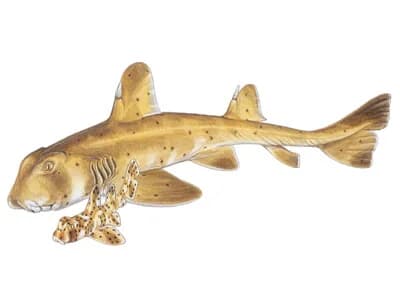
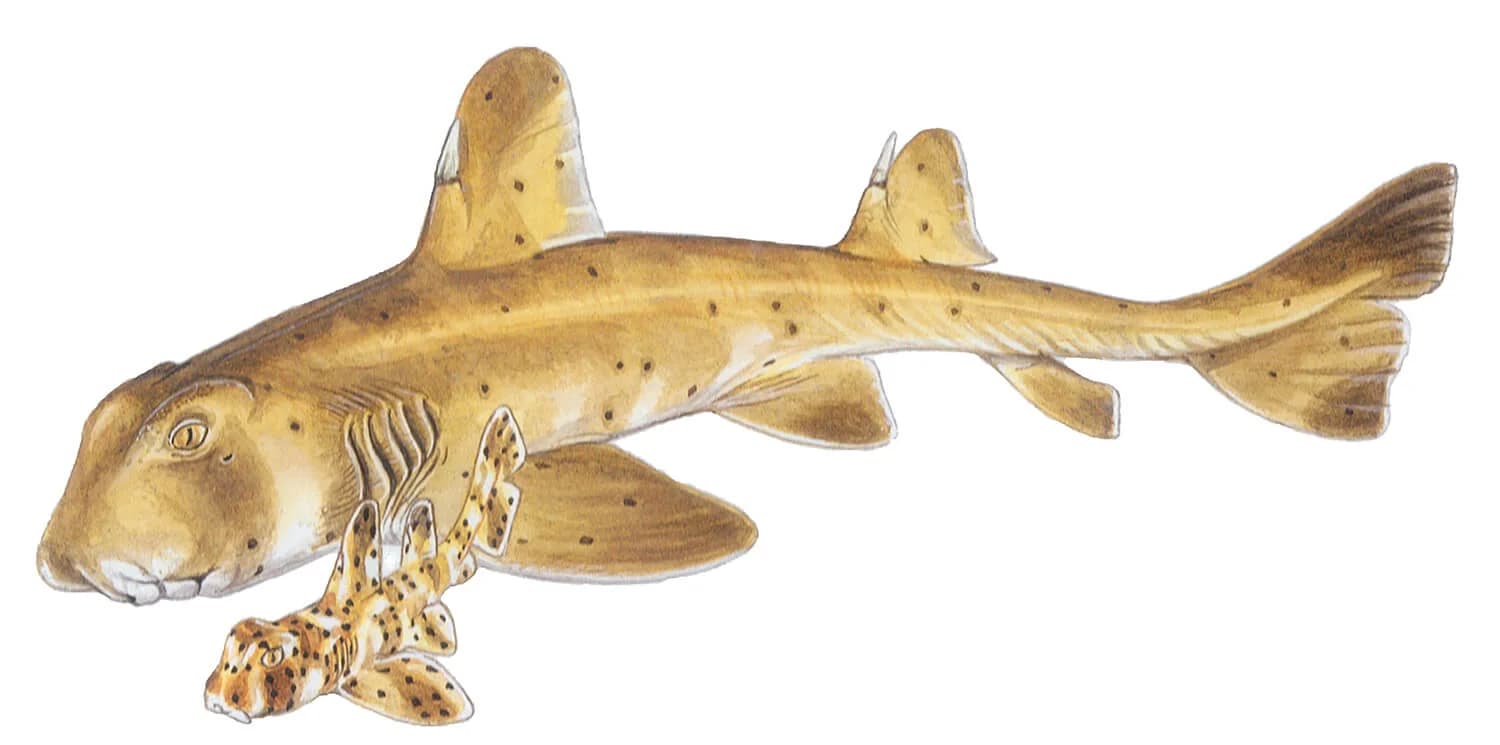
Un habitant du fond lent natif de la côte du Pacifique de l'Amérique du Nord. Possède deux types de dents différents : des dents pointues à l'avant pour saisir et des dents molaires à l'arrière pour broyer les invertébrés à coquille dure. Inoffensif.
Habitat
Les adultes se trouvent généralement sur les récifs rocheux peu profonds ou les lits d'algues entre 2 et 11 mètres (6,6 à 36 pieds) et en hiver, ils migrent vers des eaux plus profondes.
Distribution
Northeast Pacific
Côte ouest de l'Amérique du Nord, de la Californie au Golfe de Californie.
Behavior
À mouvement lent et généralement solitaire.
Biology
Diet
Les adultes se nourrissent principalement de mollusques et de crustacés à coquille dure, mais peuvent se nourrir d'invertébrés et de petits poissons.
Counts are based on the species field of the Global Shark Attack File. Identifications by witnesses are often uncertain; treat figures as recorded incidents, not authoritative totals.
Frequently Asked Questions
How many shark attacks have been recorded involving the horn shark?▾
2 incidents in the Global Shark Attack File mention the horn shark, of which 0 were fatal (0.0%). Note that witness species identifications are often uncertain, so this is the count of recorded incidents.
Where do most horn shark incidents occur?▾
The countries with the most recorded horn shark incidents are United States.
Is the horn shark dangerous to humans?▾
The horn shark is not considered dangerous to humans under normal conditions. There are few or no recorded incidents involving this species.
Where does this species data come from?▾
Species profiles are compiled from peer-reviewed taxonomy and published references. Incident data is sourced from the Global Shark Attack File and joined to species records by name match.

 Shark Data Lab