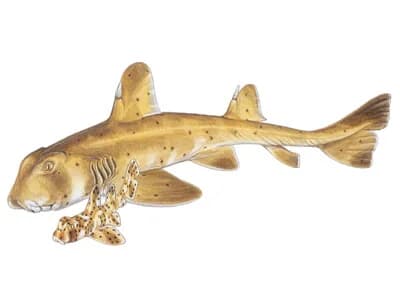
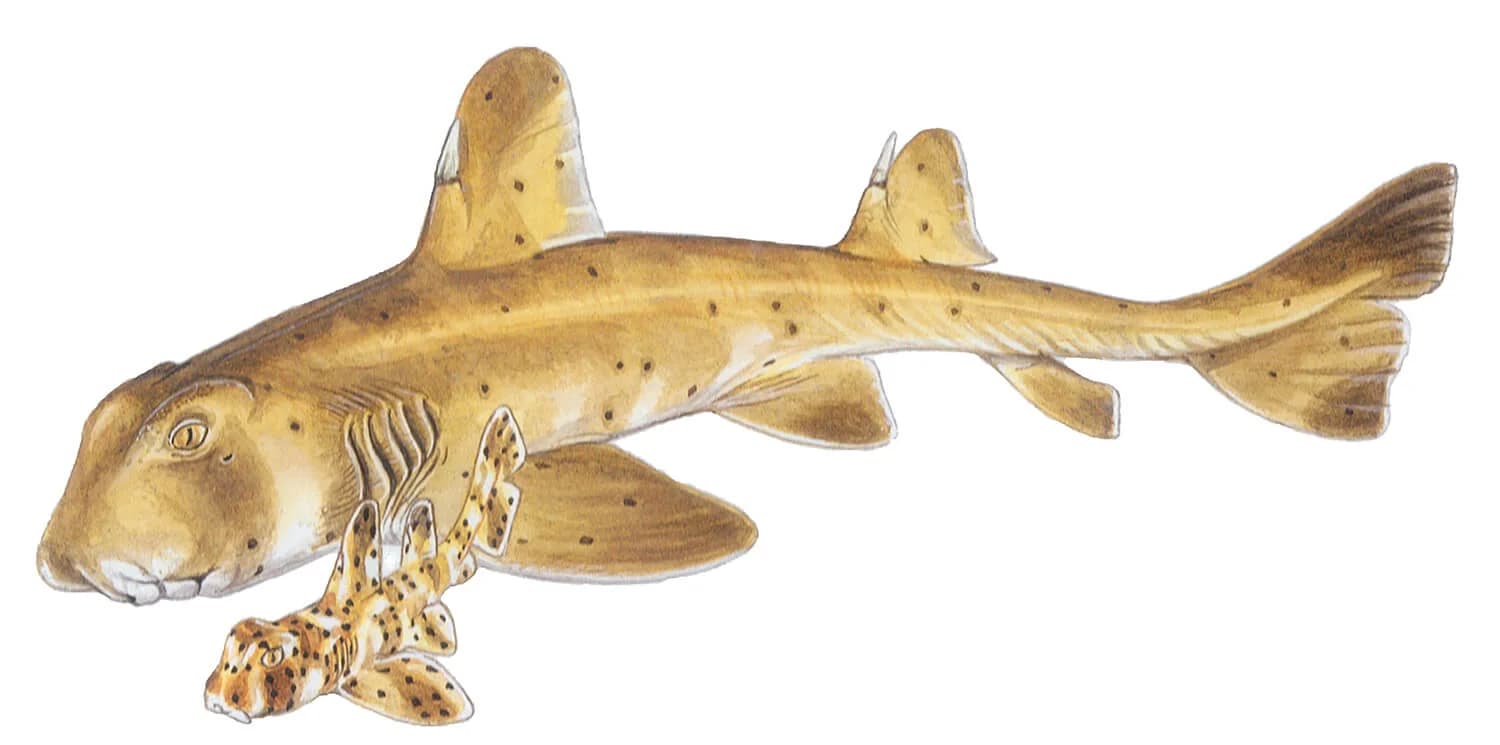
A sluggish bottom-dweller native to the Pacific coast of North America. Has two different tooth types — pointed front teeth for grabbing and molariform rear teeth for crushing hard-shelled invertebrates. Harmless.
Habitat
Adults are usually found on shallow rocky reefs or algal beds from 2 to 11 metres (6.6 to 36 feet) and in winter they migrate to deeper water.
Distribution
Northeast Pacific
Western coast of North America from California to the Gulf of California.
Behavior
Slow moving and generally solitary.
Biology
Diet
Adults feed primarily on hard-shelled mollusks and crustaceans, but may feed on invertebrates and small fishes.
Counts are based on the species field of the Global Shark Attack File. Identifications by witnesses are often uncertain; treat figures as recorded incidents, not authoritative totals.
Frequently Asked Questions
How many shark attacks have been recorded involving the horn shark?▾
2 incidents in the Global Shark Attack File mention the horn shark, of which 0 were fatal (0.0%). Note that witness species identifications are often uncertain, so this is the count of recorded incidents.
Where do most horn shark incidents occur?▾
The countries with the most recorded horn shark incidents are United States.
Is the horn shark dangerous to humans?▾
The horn shark is not considered dangerous to humans under normal conditions. There are few or no recorded incidents involving this species.
Where does this species data come from?▾
Species profiles are compiled from peer-reviewed taxonomy and published references. Incident data is sourced from the Global Shark Attack File and joined to species records by name match.

 Shark Data Lab