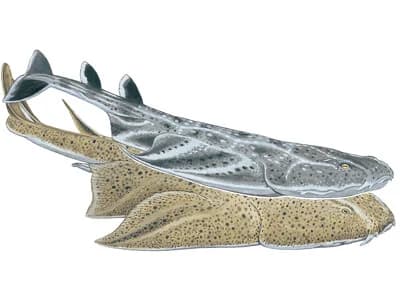
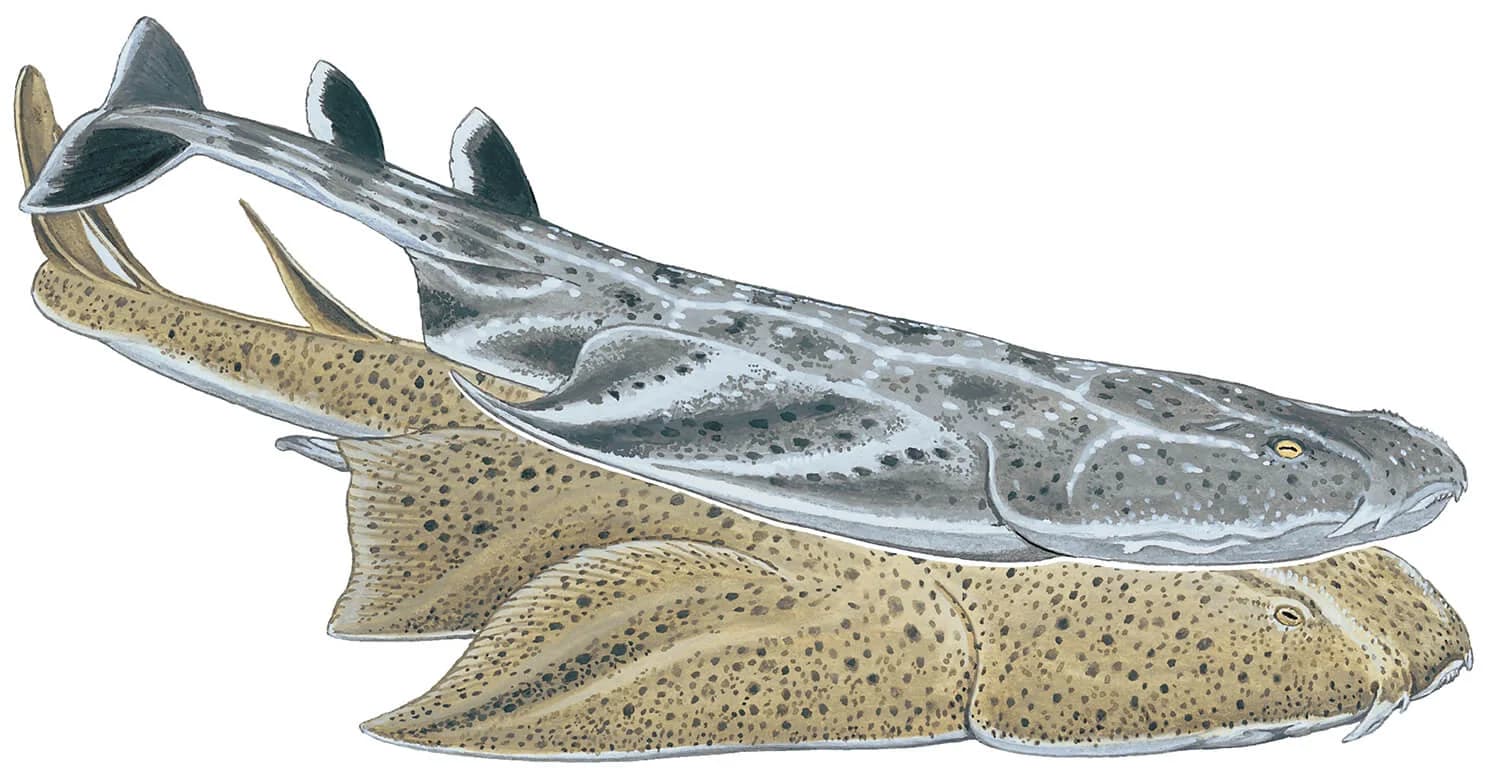
Un requin aplati, semblable à une raie, qui se cache dans le sable pour embusquer les proies qui passent. Gravement menacé en Méditerranée et dans l'Atlantique oriental. Responsable de morsures occasionnelles sur les plongeurs qui le dérangent. Autrefois répandu ; maintenant localement éteint dans une grande partie de son aire de répartition historique.
Habitat
Le requin préfère les fonds vaseux et sablonneux près des côtes à 16,4 pieds [5 m] sur les côtes et estuaires jusqu'à plus de 492,1 [150 m] sur le plateau continental.
Distribution
Northeast Atlantic & Mediterranean
Atlantique nord-est : historiquement de la Norvège à la Mauritanie, îles Canaries, Méditerranée et mer Noire. Ils ont maintenant disparu de certaines de ces zones.
Behavior
Léthargique pendant le jour, enfoui dans le sable ou la vase les yeux protubérants. Ils nagent fortement au-dessus du fond la nuit. Ils sont migrateurs saisonnièrement dans les eaux froides, se déplaçant vers le nord en été.
Biology
Diet
Se nourrit principalement de poissons plats, raies, crustacés et mollusques.
Reproduction
7-25 petits par portée, augmentant avec la taille de la femelle
Appearance
Dorsal
Grey to reddish or greenish-brown on the back with scattered small white spots and blackish dots and spots. A white nuchal spot may be present, and no ocelli. Its young often have white reticulations and large dark blotches, while the adults are plainer.
Counts are based on the species field of the Global Shark Attack File. Identifications by witnesses are often uncertain; treat figures as recorded incidents, not authoritative totals.
Frequently Asked Questions
How many shark attacks have been recorded involving the angel shark?▾
7 incidents in the Global Shark Attack File mention the angel shark, of which 0 were fatal (0.0%). Note that witness species identifications are often uncertain, so this is the count of recorded incidents.
Where do most angel shark incidents occur?▾
The countries with the most recorded angel shark incidents are Spain, Scotland, United States.
Is the angel shark dangerous to humans?▾
The angel shark is not considered dangerous to humans under normal conditions. There are few or no recorded incidents involving this species.
Where does this species data come from?▾
Species profiles are compiled from peer-reviewed taxonomy and published references. Incident data is sourced from the Global Shark Attack File and joined to species records by name match.

 Shark Data Lab