Shark Data Lab logoShark Data Lab
Angel Shark
Squatiniformes

Angel Shark

Squatina squatina

Back to species

Max Length

2.4m

Litter Size

7-25 pups

Overview

A flat, ray-like shark that lies buried in sand to ambush passing prey. Critically endangered in the Mediterranean and eastern Atlantic. Responsible for occasional bites on divers who disturb it. Once widespread; now locally extinct across much of its historic range.

Habitat

The shark prefers mud and sand bottoms inshore 16.4 ft [5 m] on coasts and estuaries up to over 492.1 [150 m] on the continental shelf.

Distribution

Northeast Atlantic & Mediterranean

Northeast Atlantic: historically from Norway to Mauritania, Canary Islands, Mediterranean and Black Sea. They have now vanished from some of these areas.

Behavior

Torpid by day, lying buried with eyes protruding out of the sand or mud. They swim strongly off of the bottom at night. They are seasonally migratory in colder water, moving northwards in the summer.

Biology

Diet
Feeds mainly on flatfishes, skates, crustaceans, and mollusks.
Reproduction
7-25 pups per litter, increasing with female size

Appearance

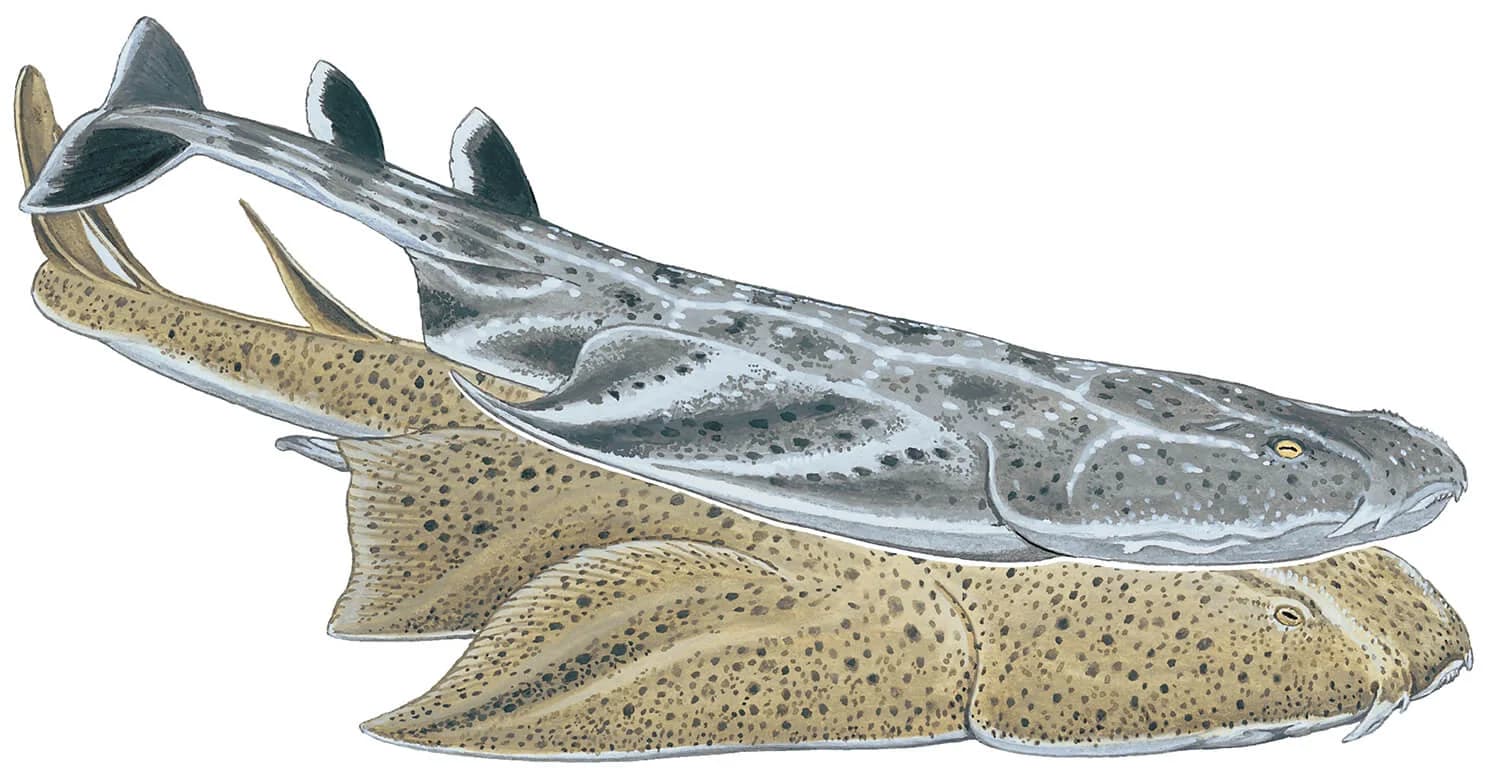
Angel Shark illustration
Dorsal
Grey to reddish or greenish-brown on the back with scattered small white spots and blackish dots and spots. A white nuchal spot may be present, and no ocelli. Its young often have white reticulations and large dark blotches, while the adults are plainer.
Sources:sharksorg

Recorded incidents involving the angel shark

Recorded

7

Fatal

0

Fatality rate

0.0%

Years

1910–2020

Years with most incidents

Counts are based on the species field of the Global Shark Attack File. Identifications by witnesses are often uncertain; treat figures as recorded incidents, not authoritative totals.

Frequently Asked Questions

How many shark attacks have been recorded involving the angel shark?
7 incidents in the Global Shark Attack File mention the angel shark, of which 0 were fatal (0.0%). Note that witness species identifications are often uncertain, so this is the count of recorded incidents.
Where do most angel shark incidents occur?
The countries with the most recorded angel shark incidents are Spain, Scotland, United States.
Is the angel shark dangerous to humans?
The angel shark is not considered dangerous to humans under normal conditions. There are few or no recorded incidents involving this species.
Where does this species data come from?
Species profiles are compiled from peer-reviewed taxonomy and published references. Incident data is sourced from the Global Shark Attack File and joined to species records by name match.