
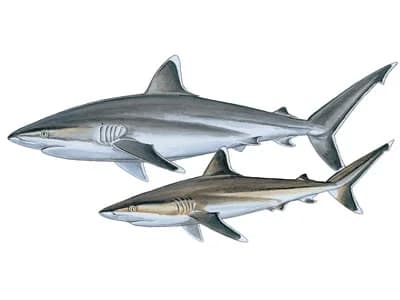
Carcharhinus albimarginatus
Max Length
3.0m
Litter Size
1-11 pups
Overview
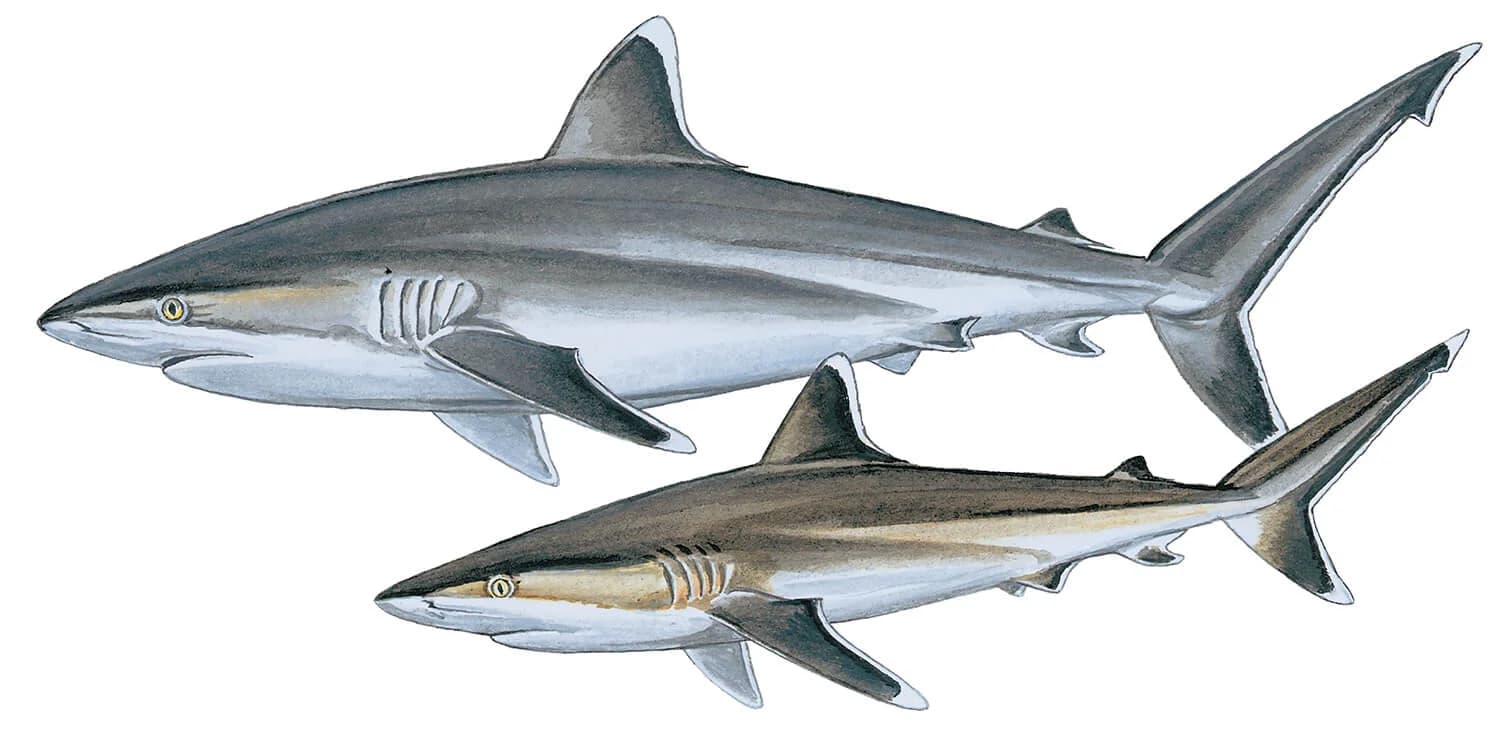
Recognized by prominent white tips and margins on all fins. Typically dominant over other reef sharks of similar size. Found around islands and offshore reefs throughout the Indo-Pacific.
Habitat
They prefer the continental shelf, offshore islands, coral reefs, and offshore banks. They can also be found inside lagoons, near drop-offs and offshore, from the surface to depths of 1968.5 to 2624.7 ft [600 to 800 m]. These sharks are not oceanic. The young sharks are found more often in shallower water close to the shore, while adults are more wide ranging.
Distribution
Tropical Indo-Pacific Ocean, and are widely but patchily distributed. They are unconfirmed in the west Atlantic.
Behavior
These sharks range from the surface to the bottom, but may not disperse widely between sites. They often follow boats. They are more aggressive and dominant than the Galapagos shark - Carcharhinus galapagensis and the Blacktip shark - Carcharhinus limbatus. Adults are often scarred. These sharks are large, bold, and potentially harmful. There has been one confirmed shark-bite incident. Caution is advised when encountering this shark underwater.
Biology
Appearance
Dentition
Recorded
3
Fatal
0
Fatality rate
0.0%
Years
1989–2007
Top countries
Counts are based on the species field of the Global Shark Attack File. Identifications by witnesses are often uncertain; treat figures as recorded incidents, not authoritative totals.
 Shark Data Lab