
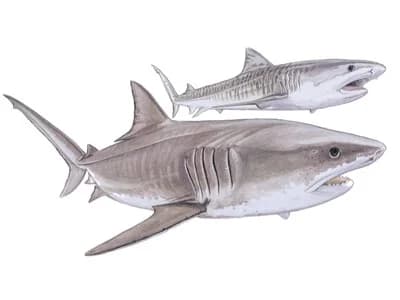
Galeocerdo cuvier
Max Length
5.5m
Litter Size
10 to 82 pups
Overview
Second only to the great white in recorded unprovoked attacks. Indiscriminate diet — the most diverse documented of any shark. Patrols shallow tropical and subtropical coastal reefs.
Habitat
Although the shark occurs off oceanic islands and has been photographed at a depth of 1,007 ft [305 m], it is regarded as a coastal species. The shark tolerates a wide variety of marine habitats and may be found in estuaries, turbid waters at river mouths, around jetties and wharves, coral atolls and lagoons.
Distribution
Circumglobal in tropical and warm temperate seas.
Behavior
General - The shark is usually solitary, but may be found in small groups of up to 6 individuals. This species is nocturnal; it comes inshore at night to feed and retreats offshore by day but often feeds near the surface on overcast days. Feeding - When feeding the shark uses its wide blunt snout to advantage; a tiger shark feeding on a large stingray was filmed pushing the ray's body into the sand and between rocks -- apparently to gain leverage in order to bite off a mouthful of flesh.
Human Safety
A tiger shark is inquisitive, and it may approach submerged divers and circle slowly at close range. Do not be lulled into a sense of security by its slow swimming movement and apparent lack of aggression; this shark may nonchalantly take a bite while remaining cool and casual. Tiger sharks have also become very aggressive toward spearfishermen and divers attracting the sharks in underwater photo sessions. Danger to humans - The tiger shark, like its jungle namesake, can be dangerous; its toll of victims throughout the world is second only to that of the white shark. It is considered the most dangerous tropical shark, and has been blamed for the majority of accidents in Australia and Hawaii. The shark's large
Biology
Appearance
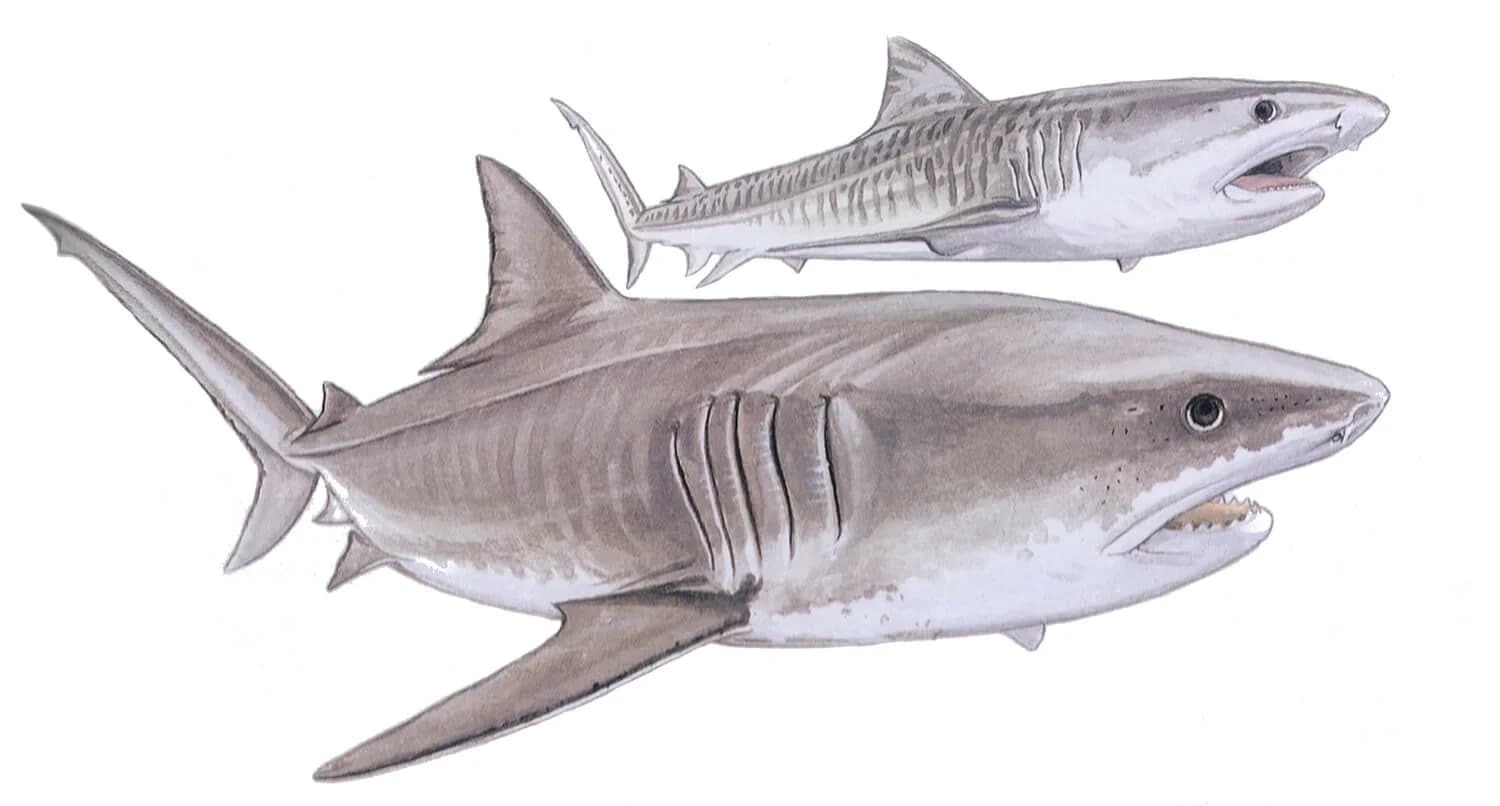
Dentition
Recorded
353
Fatal
90
Fatality rate
25.5%
Years
1000–2026
Top countries
Counts are based on the species field of the Global Shark Attack File. Identifications by witnesses are often uncertain; treat figures as recorded incidents, not authoritative totals.
 Shark Data Lab