Shark Data Lab logoShark Data Lab
Broadnose Sevengill Shark
HexanchiformesAttack Relevant

Broadnose Sevengill Shark

Notorynchus cepedianus

Back to species

Max Length

3.0m

Litter Size

82 pups

Overview

A primitive seven-gilled shark inhabiting cool coastal bays in temperate seas. A powerful pack predator of marine mammals; has been documented in cooperative hunting behavior. Responsible for incidents in San Francisco Bay.

Habitat

Marine, benthic, neritic on continental shelves from the surface to 150 ft [46 m]. This is a coastal species commonly found in shallow bays.

Distribution

Southwest Pacific & Australia

Temperate seas.

Behavior

This is an active, strong shark. It moves inshore at high tide, and retreats off-shore at low tide. Most specimens are seen cruising near the bottom, but they may also be found at the surface. Juveniles are frequently found in shallow water close to shore.

Human Safety

Danger to humans – unknown. The shark is aggressive when provoked. In Australian and New Zealand waters this shark is regarded as dangerous.

Biology

Diet
Bony fishes, rays and other sharks
Reproduction
Ovoviviparous
Birth Size
53cm
Male Maturity
1.8m

Appearance

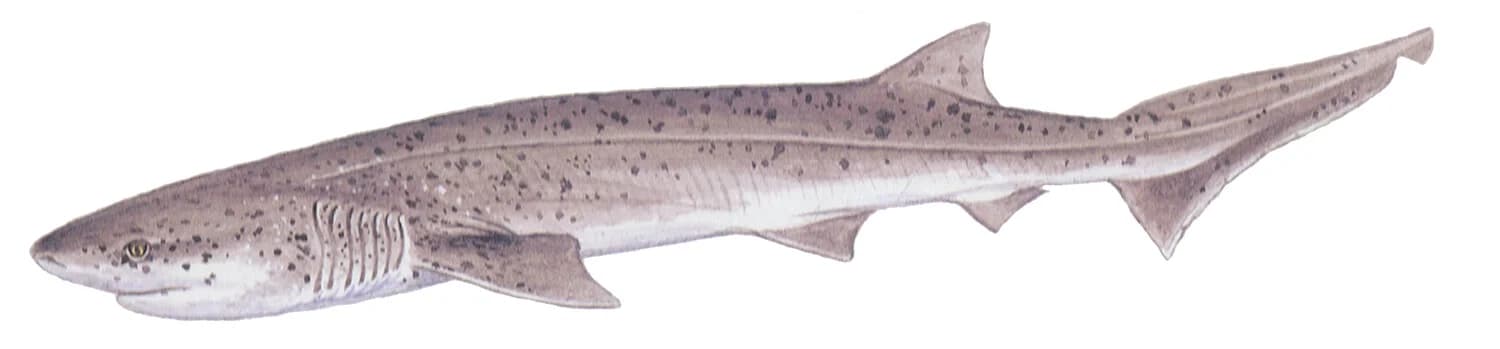
Broadnose Sevengill Shark illustration
Dorsal
Pale gray above; white below. Small black spots on body.

Dentition

Upper jaw
Teeth of the upper jaw are blunt and pointed; teeth of the
Lower jaw
jaw are large broad and saw-like with 5 or 6 distal cusplets.
Sources:sharksorg

Recorded incidents involving the broadnose sevengill shark

Recorded

18

Fatal

0

Fatality rate

0.0%

Years

1890–2023

Years with most incidents

Counts are based on the species field of the Global Shark Attack File. Identifications by witnesses are often uncertain; treat figures as recorded incidents, not authoritative totals.

Frequently Asked Questions

How many shark attacks have been recorded involving the broadnose sevengill shark?
18 incidents in the Global Shark Attack File mention the broadnose sevengill shark, of which 0 were fatal (0.0%). Note that witness species identifications are often uncertain, so this is the count of recorded incidents.
Where do most broadnose sevengill shark incidents occur?
The countries with the most recorded broadnose sevengill shark incidents are New Zealand, United States, Australia.
Is the broadnose sevengill shark dangerous to humans?
The broadnose sevengill shark is considered relevant to human-shark incidents and has been recorded in the Global Shark Attack File. As with any large shark, encounters in the wild should be avoided.
Where does this species data come from?
Species profiles are compiled from peer-reviewed taxonomy and published references. Incident data is sourced from the Global Shark Attack File and joined to species records by name match.