Shark Data Lab logoShark Data Lab
Spotted Wobbegong
OrectolobiformesAttack Relevant

Spotted Wobbegong

Orectolobus maculatus

Back to species

Max Length

1.25m

Overview

Un prédateur embuscadeur hautement camouflé des récifs côtiers australiens. Utilise des replis cutanés élaborés et un motif tacheté pour se fondre dans le fond marin. Responsable d'un petit nombre d'incidents, presque toujours lorsqu'on marche dessus accidentellement.

Habitat

Récifs côtiers tropicaux et bassins de marée.

Distribution

Southwest Pacific & Australia

Pacifique occidental, incluant la Nouvelle-Guinée et le nord de l'Australie.

Behavior

Le requin est nocturne ; il se repose sur le fond le jour et patrouille le récif la nuit, se déplaçant en utilisant ses nageoires paires.

Human Safety

Habituellement non agressif sauf s'il est provoqué.

Biology

Diet
Poissons benthiques et invertébrés
Reproduction
Ovovivipare

Appearance

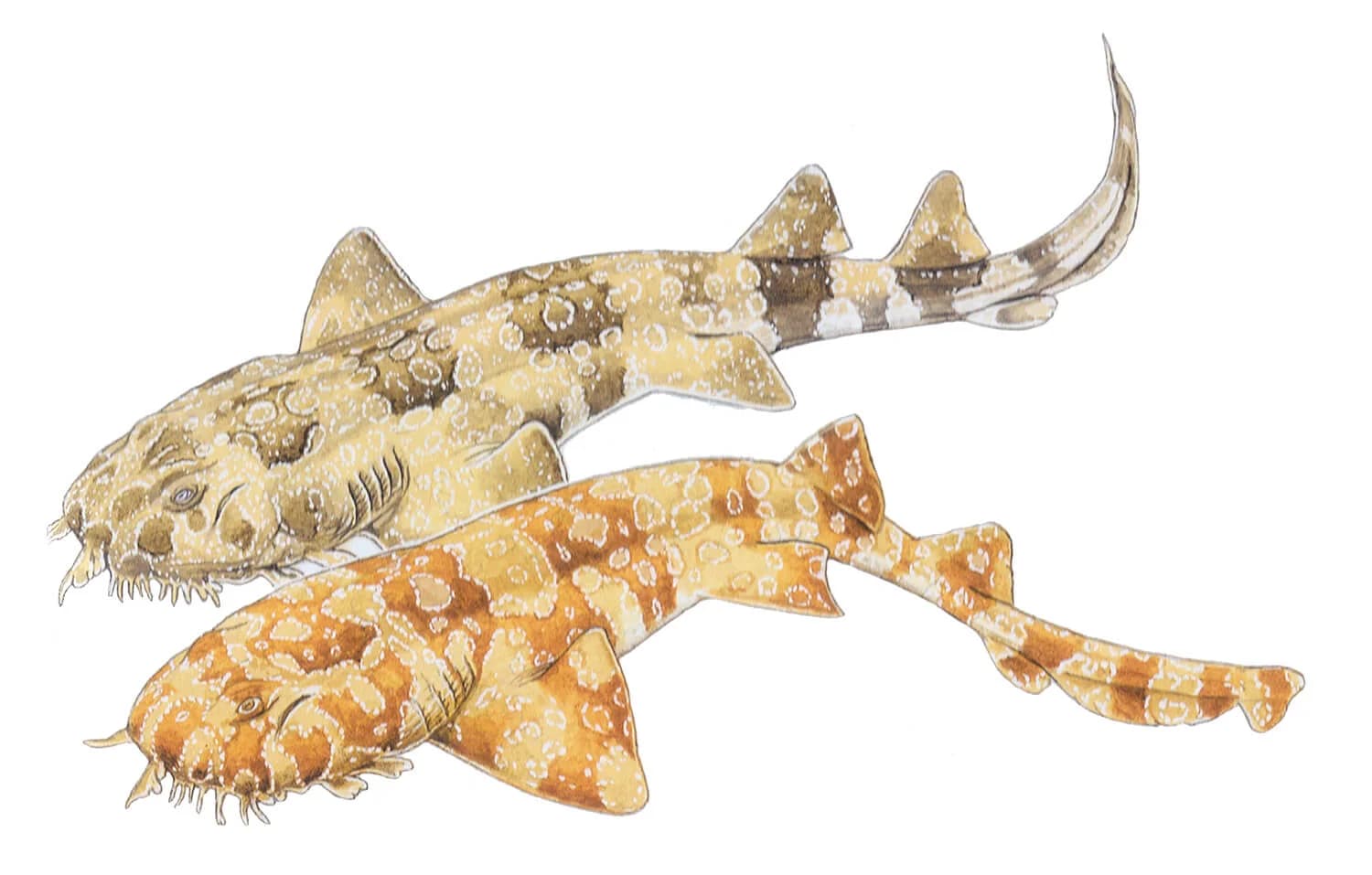
Spotted Wobbegong illustration
Dorsal
A well-camouflaged shark. It is pale with a meshwork of darker narrow lines and spots.

Dentition

Upper jaw
Enlarged very sharp fang-like teeth.
Sources:sharksorg

Recorded incidents involving the spotted wobbegong

Recorded

56

Fatal

0

Fatality rate

0.0%

Years

1871–2023

Years with most incidents

Counts are based on the species field of the Global Shark Attack File. Identifications by witnesses are often uncertain; treat figures as recorded incidents, not authoritative totals.

Frequently Asked Questions

How many shark attacks have been recorded involving the spotted wobbegong?
56 incidents in the Global Shark Attack File mention the spotted wobbegong, of which 0 were fatal (0.0%). Note that witness species identifications are often uncertain, so this is the count of recorded incidents.
Where do most spotted wobbegong incidents occur?
The countries with the most recorded spotted wobbegong incidents are Australia, Solomon Islands, Papua New Guinea.
Is the spotted wobbegong dangerous to humans?
The spotted wobbegong is considered relevant to human-shark incidents and has been recorded in the Global Shark Attack File. As with any large shark, encounters in the wild should be avoided.
Where does this species data come from?
Species profiles are compiled from peer-reviewed taxonomy and published references. Incident data is sourced from the Global Shark Attack File and joined to species records by name match.