Shark Data Lab logoShark Data Lab
Spotted Wobbegong
OrectolobiformesAttack Relevant

Spotted Wobbegong

Orectolobus maculatus

Back to species

Max Length

1.25m

Overview

A highly camouflaged ambush predator of Australian coastal reefs. Uses elaborate skin flaps and a mottled pattern to blend into the seafloor. Responsible for a small number of incidents, nearly always when inadvertently stepped on.

Habitat

Tropical inshore reefs and tidepools.

Distribution

Southwest Pacific & Australia

Western Pacific, including New Guinea and northern Australia.

Behavior

The shark is nocturnal; it rests on the bottom by day and prowls the reef at night, clambering about using its paired fins.

Human Safety

Usually unaggressive unless provoked.

Biology

Diet
Bottom fish and invertebrates
Reproduction
Ovoviviparous

Appearance

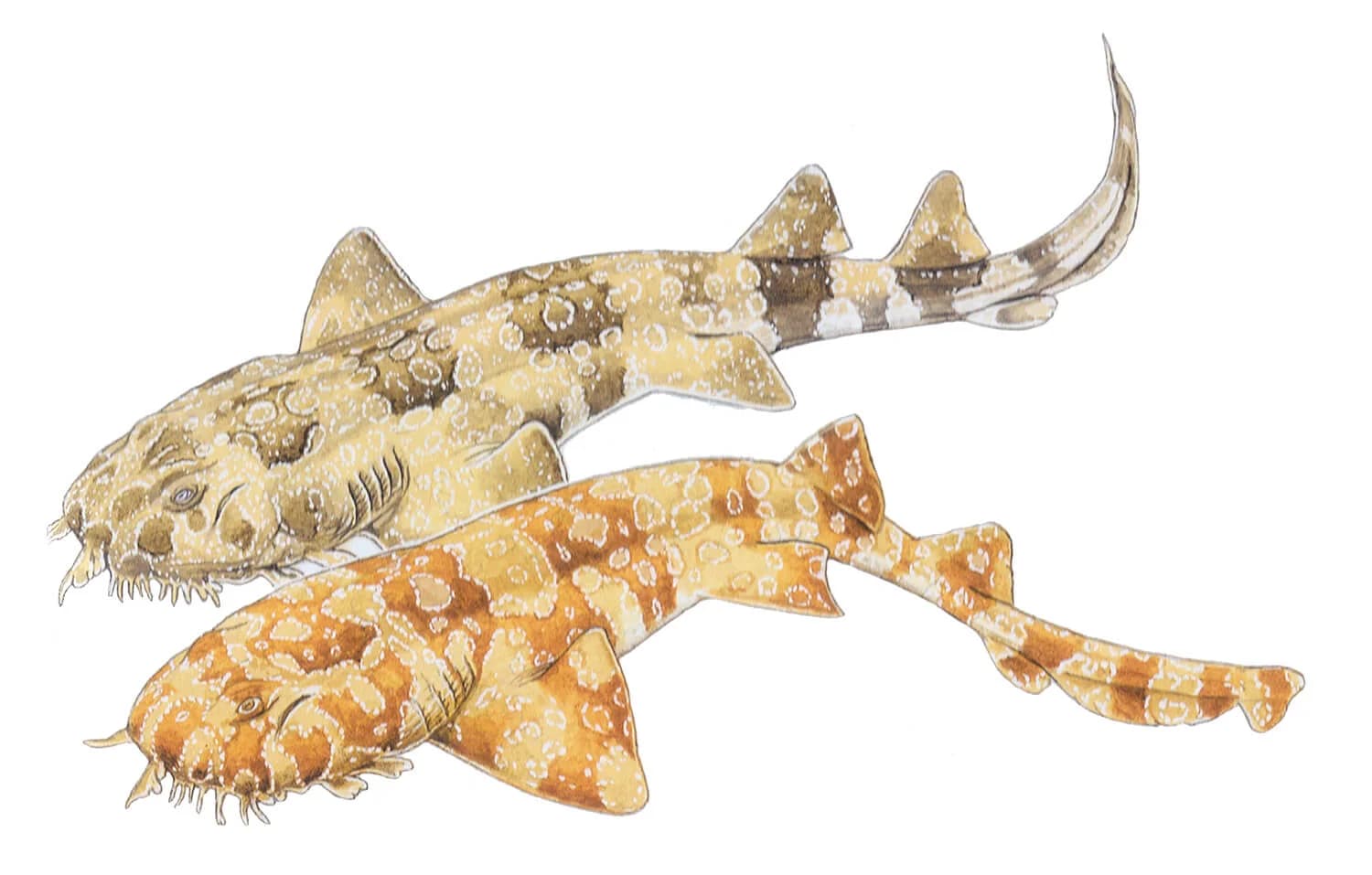
Spotted Wobbegong illustration
Dorsal
A well-camouflaged shark. It is pale with a meshwork of darker narrow lines and spots.

Dentition

Upper jaw
Enlarged very sharp fang-like teeth.
Sources:sharksorg

Recorded incidents involving the spotted wobbegong

Recorded

56

Fatal

0

Fatality rate

0.0%

Years

1871–2023

Years with most incidents

Counts are based on the species field of the Global Shark Attack File. Identifications by witnesses are often uncertain; treat figures as recorded incidents, not authoritative totals.

Frequently Asked Questions

How many shark attacks have been recorded involving the spotted wobbegong?
56 incidents in the Global Shark Attack File mention the spotted wobbegong, of which 0 were fatal (0.0%). Note that witness species identifications are often uncertain, so this is the count of recorded incidents.
Where do most spotted wobbegong incidents occur?
The countries with the most recorded spotted wobbegong incidents are Australia, Solomon Islands, Papua New Guinea.
Is the spotted wobbegong dangerous to humans?
The spotted wobbegong is considered relevant to human-shark incidents and has been recorded in the Global Shark Attack File. As with any large shark, encounters in the wild should be avoided.
Where does this species data come from?
Species profiles are compiled from peer-reviewed taxonomy and published references. Incident data is sourced from the Global Shark Attack File and joined to species records by name match.